







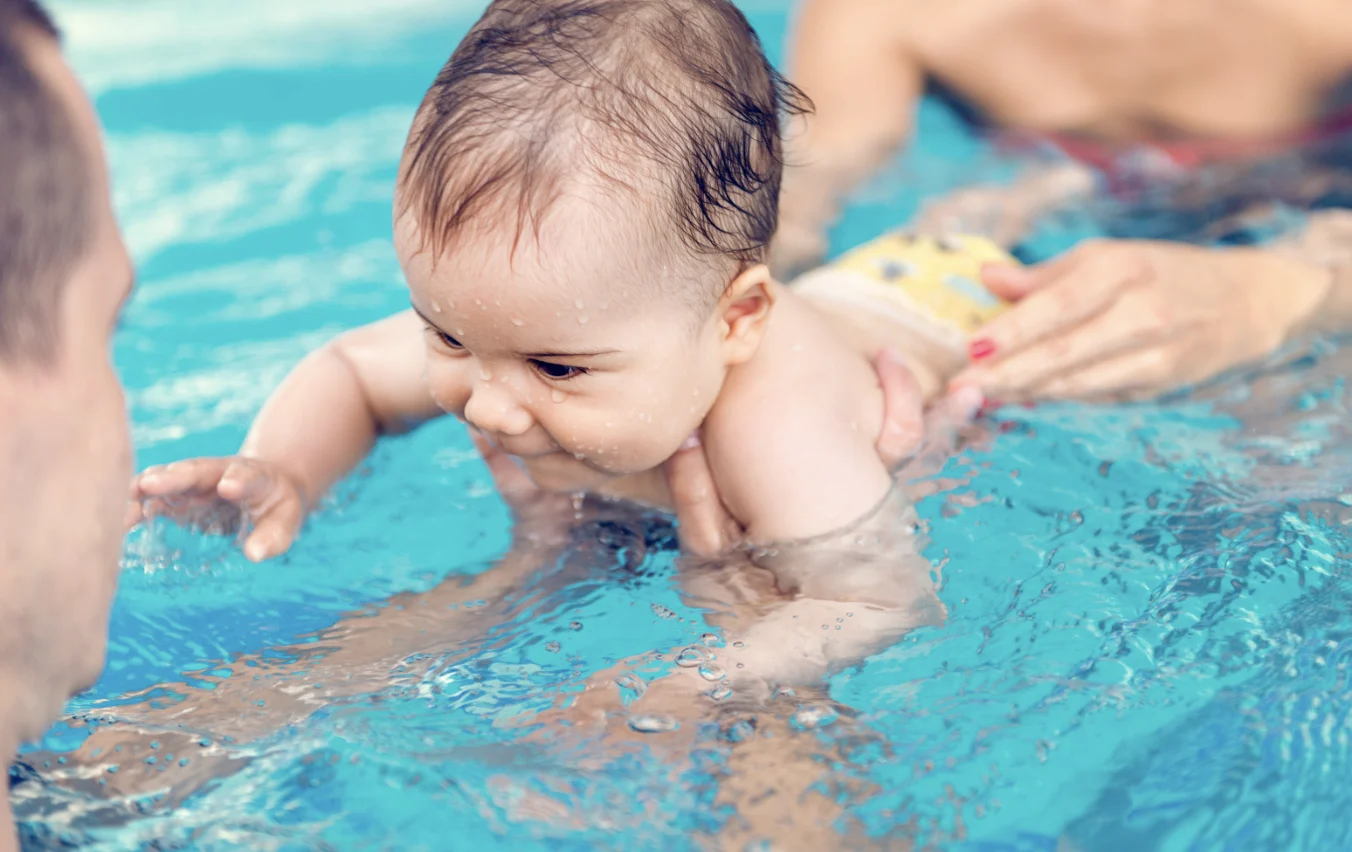
Watch a six-month-old in a warm pool for the first time, and you will see one of two things: wide-eyed curiosity, or a brief moment of surprise that quickly settles into calm. Rarely will you see fear. Fear of water is not something babies are born with. It develops gradually, through unfamiliarity, through startling experiences, and through limited early exposure to aquatic environments.
That developmental window, before water becomes unfamiliar territory, is exactly why early aquatic training has grown into a recognized practice supported by pediatric and aquatic safety research.
Parents in Colorado who want to take advantage of it can enroll their infants in structured parent-child programs early. Families looking for Swimming Lessons For Babies And Toddlers Boulder CO will find that Blue Dolphin Swim School’s infant and toddler program is built around the developmental principles that make early aquatic exposure effective.
The question most parents carry into their first class is whether lessons at this age actually accomplish anything. The answer is yes, and understanding why helps set the right expectations.
What Age Babies Can Start Swim Lessons
The American Red Cross Learn-to-Swim program accepts infants as young as six months for its Parent and Child Aquatics curriculum. The American Academy of Pediatrics, in updated guidance, acknowledges that formal swim lessons for children beginning around age one can be appropriate when offered through certified programs with qualified instructors.
The distinction the research draws is between aquatic readiness programs, which are appropriate from infancy, and formal stroke instruction, which requires the motor and cognitive development that typically emerges around age four. Early baby swim classes are not designed to teach the freestyle stroke. They are designed to build the foundational relationship with water that makes all future skill learning faster, safer, and more comfortable.
At six months, infants have the head and trunk control that makes supported water entry safe. Between six and twelve months, structured water exposure through certified parent-child programs introduces the sensory, motor, and behavioral foundations of aquatic readiness.
Can Babies Naturally Swim?
Newborns display a reflex sometimes called the swim reflex or diving reflex, in which brief facial submersion triggers a slowing of the heart rate and rhythmic arm and leg movements. This reflex fades within the first six to twelve months of life. It is not voluntary swimming. It does not produce propulsion, and it cannot prevent drowning.
The distinction matters because parents sometimes interpret early water exposure as tapping into a natural ability. Developmental aquatics research details that voluntary swimming behavior, meaning intentional movement through water for self-propulsion or self-rescue, requires learning, practice, and physical development that extends well beyond infancy.
What babies do have is a sensory readiness for water that makes early exposure valuable. Consistent, positive aquatic experiences in the first year build neural associations between water and safety rather than water and threat. That early imprinting is much easier to establish than it is to undo later.
How Motor Skills Develop Through Aquatic Training
Water is a unique environment for early motor development because it removes the effect of gravity that limits land-based movement. An infant who cannot yet sit independently can experience supported upright positioning in water. An infant who is just beginning to develop intentional arm movements can practice those movements in a medium that provides gentle resistance and buoyancy feedback.
Aquatic environments support the development of several specific motor capacities:
- Core stability, because maintaining body position in water requires sustained muscle engagement across the trunk
- Bilateral coordination, through supported kicking and arm movement patterns
- Proprioceptive awareness, through sensory input from water pressure and resistance across the whole body surface
- Head control, as infants practice lifting and turning their heads above the water surface during guided exercises
These motor benefits are observed in addition to, not instead of, the primary purpose of aquatic readiness and safety skill building.
Water Acclimation and Sensory Development
Water introduces a concentration of sensory input that most early childhood environments do not replicate. Temperature sensation, pressure, buoyancy, the sound of splashing and movement, and the visual quality of light through water all register as novel sensory experience for infants.
Repeated exposure to these sensory inputs through structured lessons with a consistent instructor builds familiarity and reduces the startle response over time. Infants who attend regular swim classes typically show faster acclimation to submersion, to water on the face, and to position changes in the water compared to infants without structured aquatic exposure.
This sensory familiarity is the mechanism behind water confidence. Confidence in water is not a personality trait. It is a learned state that develops through enough positive, predictable water experiences that the aquatic environment no longer registers as a threat.
What Parent-Child Swim Classes Actually Do
Parent-child swim classes are designed with two learners in mind: the infant and the parent. Certified instructors in parent-child programming teach parents how to hold, support, position, and guide their infant through water in ways that are developmentally appropriate and that the parent can practice safely between class sessions.
The skills parents learn in structured classes include water entry techniques that minimize startling, supported float positioning, gentle submersion approaches consistent with the infant’s readiness, and responsive handling that reads the infant’s cues and adjusts accordingly. These skills matter because the parent is the primary constant in the infant’s aquatic experience. The instructor shapes the lesson, but the parent delivers the daily water confidence that accumulates over time.
Programs that include parents as active participants, rather than observers, produce faster developmental progress and greater parent confidence in handling their child around water. That parental confidence is its own safety factor. A parent who is comfortable and capable in the water with their infant is better prepared to respond in an unexpected water situation than one who has only watched from the pool deck.
Do Infant Swim Lessons Work?
The honest answer is: yes, with the right expectations. Early swim lessons do not produce miniature swimmers. They produce infants and toddlers who are comfortable in water, who have practiced specific safety-relevant behaviors like rolling to a float position, and who approach aquatic environments with familiarity rather than alarm.
The CDC identifies drowning as the leading cause of accidental death for children ages one to four. Structured aquatic programming that begins in infancy is one of the interventions supported by the research on drowning prevention for this age group. The benefit is not the stroke. It is the behavioral foundation, the physical familiarity, and the safety orientation that certified early swim programs build systematically from the first lesson.