


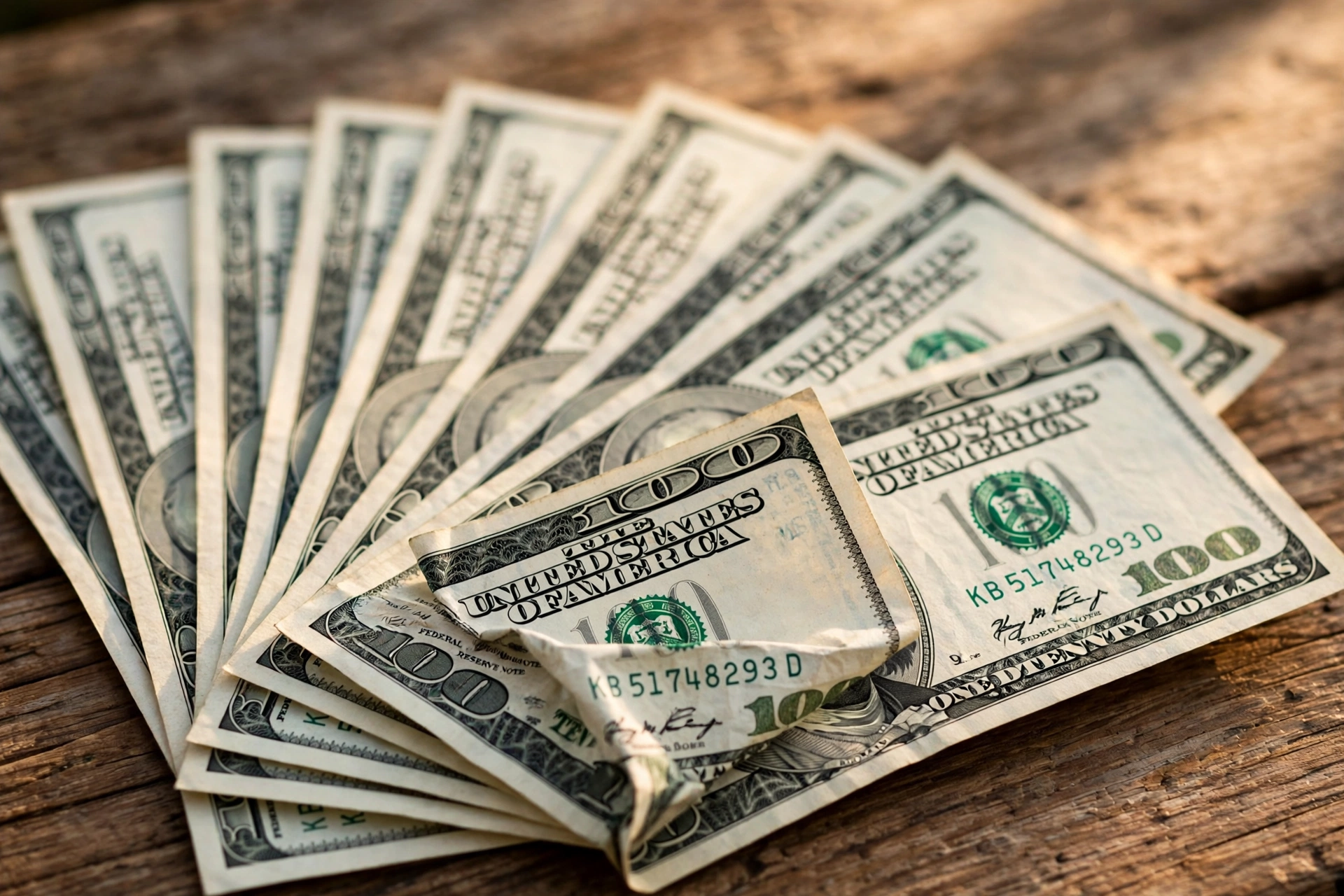




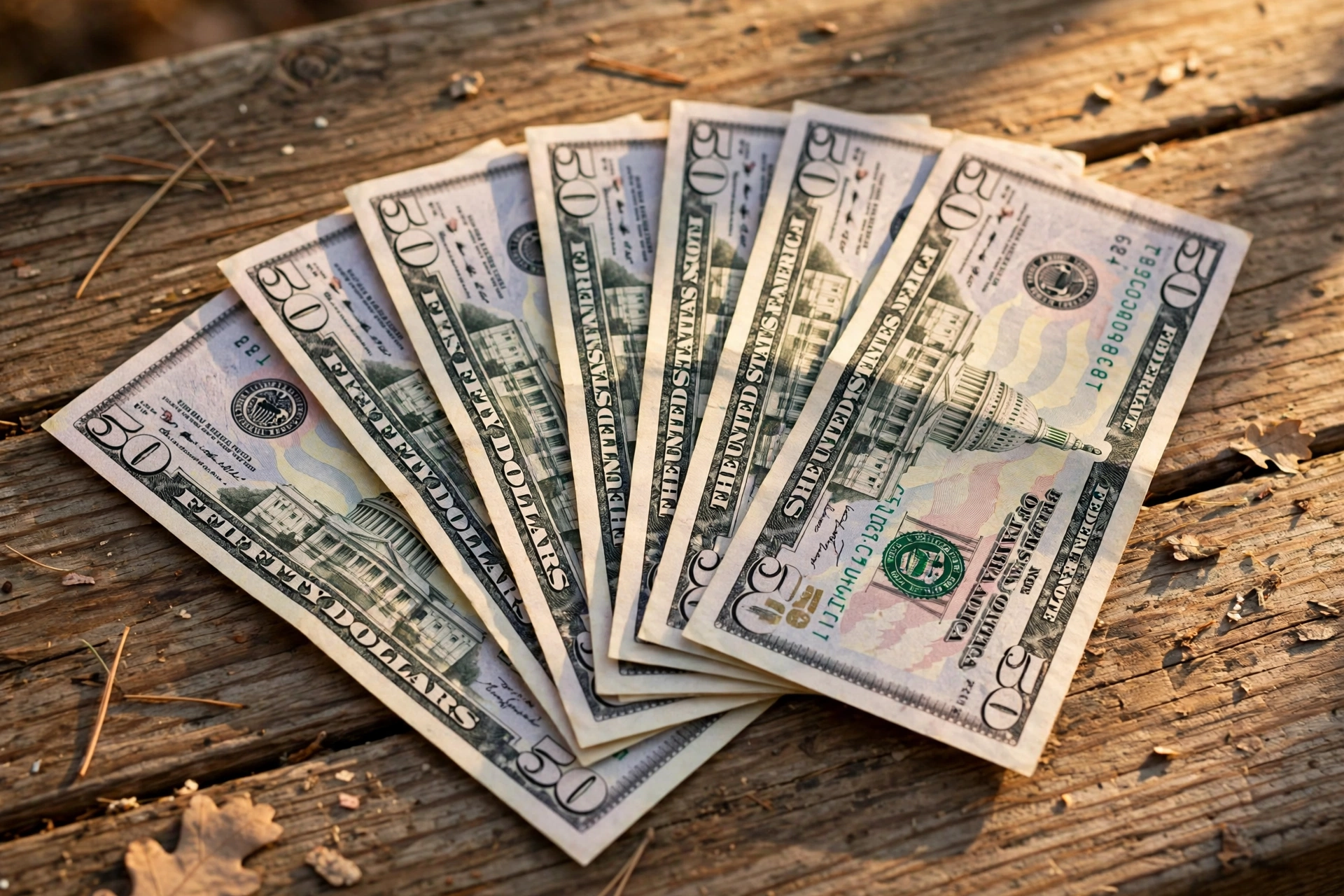
Quick Answer: The person on the 50 dollar bill is Ulysses S. Grant, the Union general who won the American Civil War and later served as the 18th President of the United States from 1869 to 1877. His portrait has appeared on the $50 bill since 1914, and the back of the note shows the United States Capitol building.
Quick Facts: Face on the $50 bill: Ulysses S. Grant, 18th US President (1869–1877). First appeared on the $50: 1913 on gold certificates, 1914 on Federal Reserve Notes. Born: 27 April 1822, Point Pleasant, Ohio; died 23 July 1885. Before Grant: Alexander Hamilton, Benjamin Franklin, Henry Clay and William H. Seward appeared on earlier $50 notes. Back of the bill: The United States Capitol. Latest major redesign: Series 2004, with colour-shifting ink, a watermark and a security thread. Nickname: the $50 is sometimes called a “Grant”.
Who Was Ulysses S. Grant?
Ulysses S. Grant was born Hiram Ulysses Grant on 27 April 1822 in Point Pleasant, Ohio. He graduated from the United States Military Academy at West Point and served in the Mexican-American War, but he left the army in 1854 and struggled in civilian life, working as a farmer and in his father’s leather goods business. When the Civil War began in 1861, he rejoined the army and rose with remarkable speed. His victories at Fort Donelson and Shiloh, then at Vicksburg in 1863, made him the Union’s most successful general. In March 1864 President Abraham Lincoln made him general-in-chief of all Union armies, and Grant’s relentless campaign against Robert E. Lee’s Army of Northern Virginia ended with Lee’s surrender at Appomattox Court House on 9 April 1865.
Grant as President
Grant was elected president in 1868 and served two terms, from 1869 to 1877. His presidency covered the difficult years of Reconstruction after the Civil War. He supported the 15th Amendment, which gave Black men the right to vote, signed laws to protect civil rights, and used federal troops to suppress the Ku Klux Klan in the South. His administration was also damaged by corruption scandals involving people around him, although Grant himself was never accused of taking money. Historians still argue about his presidency, but his reputation has improved in recent decades: modern historians praise his defence of civil rights and his foreign policy, while still noting the scandals of his second term.
How Did Grant End Up on the $50 Bill?
Grant did not appear on the $50 bill straight away. The first $50 notes, issued during the Civil War in 1862, featured Alexander Hamilton. Later 19th-century versions carried portraits of Henry Clay, Benjamin Franklin and William H. Seward, among others. In 1913 the Treasury began standardising American paper money, and Grant’s portrait was put on the $50 gold certificate that year, followed by the $50 Federal Reserve Note in 1914. He was chosen because he was both a war hero who had preserved the Union and a two-term president — a figure who symbolised national unity in the decades after the Civil War. Since then his portrait has never left the $50, even as the design around it changed.
What Is on the Back of the $50 Bill?
The reverse of the $50 bill shows the United States Capitol building in Washington, D.C., the seat of Congress. Early versions showed the east front of the Capitol; the 2004 redesign shows the west front. The choice fits the note’s theme: Grant the general and president on the front, and the home of American democracy on the back. The $50 is one of the less common notes in everyday use — people see far more $20 and $100 bills — but it remains an important denomination for banks and large cash payments.
Security Features on the Modern $50
Like other modern US banknotes, the $50 has several features designed to stop counterfeiting. Hold the bill up to the light and a faint watermark of Grant appears in the blank space to the right of his portrait. A security thread runs through the note and glows yellow under ultraviolet light. The number “50” in the lower right corner uses colour-shifting ink that changes from copper to green when the note is tilted. Microprinting, fine lines and a larger, off-centre portrait of Grant were added in the 2004 redesign. These features matter because the $50 is a useful target for counterfeiters: it is valuable enough to be worth faking, but common enough that shopkeepers do not always check it as carefully as a $100.
Grant’s Memoirs and Legacy
After leaving office, Grant travelled the world and then faced financial ruin when a business partner defrauded him. Dying of throat cancer, he wrote his Personal Memoirs to provide for his family, finishing them just days before his death in 1885. Published with the help of his friend Mark Twain, the memoirs were a huge success and are still regarded as one of the finest military autobiographies ever written. Today Grant is remembered in three ways at once: as the general who won the Civil War, as a president who fought for civil rights during Reconstruction, and as the face on the $50 bill — a portrait most Americans handle without ever thinking about the man behind it.
FAQs
Q: Who is on the 50 dollar bill right now?
A: Ulysses S. Grant, the 18th President of the United States and the Union general who won the Civil War.
Q: When did Grant first appear on the $50 bill?
A: In 1913 on gold certificates and 1914 on Federal Reserve Notes, during a standardisation of US currency.
Q: Who was on the $50 bill before Grant?
A: Several people appeared on earlier versions, including Alexander Hamilton, Benjamin Franklin, Henry Clay and William H. Seward.
Q: What is on the back of the $50 bill?
A: The United States Capitol building in Washington, D.C.
Q: Is there a plan to replace Grant on the $50?
A: No. Unlike the $20, where Harriet Tubman was announced as a replacement for Andrew Jackson in 2016, there is no official plan to change the $50. A 2005 proposal to put Ronald Reagan on the $50 never left the House Financial Services Committee.
Q: Why is the $50 less common than the $20?
A: Most cash machines dispense $20 bills, and shops keep fewer $50s in the till. The $50 is still printed and widely accepted, but it circulates less than smaller notes.
Related reading: Who Is on the 20 Dollar Bill? and Who Is the Smartest Person in the World?
Sources: United States fifty-dollar bill — Wikipedia and Ulysses S. Grant — Wikipedia