






For decades, mattress shoppers were forced to choose between two extremes: the traditional bounce of an innerspring or the deep, contouring “hug” of memory foam. However, the rise of the hybrid mattress has fundamentally changed the sleep industry by offering a middle ground that refuses to compromise.
In this exhaustive 2026 guide, we will dive deep into what a hybrid mattress actually is, how it stacks up against traditional materials, and whether it’s the right investment for your health.
What is a Hybrid Mattress? The “Best of Both Worlds” Defined
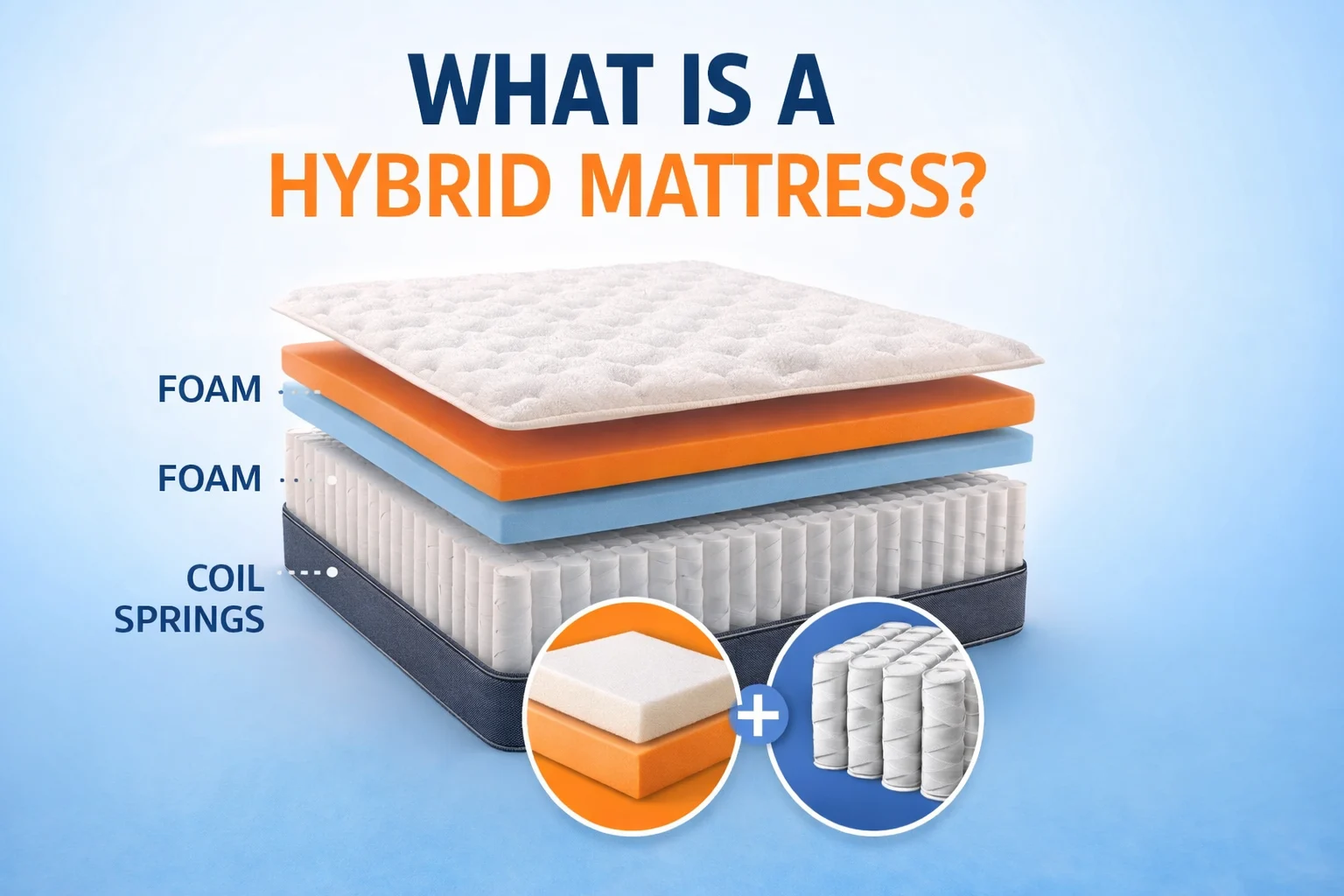
At its core, a hybrid mattress is a multi-layer bed that combines two distinct support technologies: individually wrapped steel coils and thick comfort layers of foam or latex.
The goal of a hybrid is to provide the pressure relief of a specialty foam mattress while retaining the structured support and airflow of an innerspring. For a bed to be technically classified as a “hybrid,” it must feature a significant layer of both materials—usually at least two inches of foam over a full-sized coil system.
Quick Answer: What Does a Hybrid Mattress Mean?
If you are looking for the “cliff notes” on what makes these beds unique, it comes down to these three pillars:
- The Foundation: A core of 6 to 8 inches of pocketed coils.
- The Comfort: Multiple layers of memory foam, polyfoam, or natural latex.
- The Feel: A “sleeping on” rather than “sleeping in” sensation, providing bounce without the stiffness of old-school coils.
Hybrid Mattress vs. Memory Foam: The Ultimate Comparison
Choosing between these two is the most common dilemma for modern shoppers. Here is how they compare in the categories that matter most:
| Feature | Hybrid Mattress | Memory Foam Mattress |
| Cooling | Superior (Air flows through coils) | Tends to trap body heat |
| Support | High (Steel coils reinforce weight) | Moderate (Relies on high-density foam) |
| Ease of Movement | High (Responsive bounce) | Low (The “quicksand” feeling) |
| Edge Support | Strong (Reinforced perimeters) | Often weak or sagging at the edges |
| Durability | 7–10 Years | 6–8 Years |
The Anatomy of a Modern Hybrid Mattress
To understand why these beds perform so well, you have to look under the cover. Modern hybrids are masterpieces of engineering.
1. The Support Core (Pocketed Coils)
Unlike old innersprings where coils were wired together, hybrids use “pocketed” coils. Each spring is encased in its own fabric sleeve. This allows the springs to move independently, meaning when your partner rolls over, you won’t feel the movement on your side of the bed.
2. The Comfort Layers (Foam & Latex)
This is where the pressure relief happens. High-end hybrids use gel-infused memory foam to pull heat away from the body or copper-infused foams for antimicrobial properties. Interestingly, the precision engineering in these layers is often compared to the tech industry; advanced gaming technologies like echo tech share a similar philosophy of using specific, layered components to optimize a user’s physical experience.
3. The Transition Layer
This is a thin, high-density foam layer that sits between the soft comfort foam and the hard steel coils. Its job is to ensure you never “bottom out” and feel the metal springs against your joints.
Why Choose a Hybrid Mattress in a Box?
The “Mattress in a Box” revolution has made hybrids more accessible than ever. Because steel coils can now be compressed, rolled, and shipped in a compact carton, you can get a high-quality hybrid delivered to your doorstep without a bulky delivery truck.
When setting up your new bedroom, physical dimensions are everything. Much like ensuring you have accurate measurements when you learn how to measure inseam for a proper fit, you must measure your bed frame and room clearance before ordering a hybrid. These beds are often significantly heavier than all-foam models due to the steel content, so ensuring your frame can support the weight is vital.
Who Should Buy a Hybrid?
- Side Sleepers: The foam layers cushion the shoulders and hips, while the coils keep the spine aligned.
- Hot Sleepers: If you wake up sweaty on memory foam, the open-air design of the hybrid’s coil system will be a life-saver.
- Couples: The combination of pocketed coils (for motion isolation) and a bouncy surface (for “active” nighttime use) makes this the gold standard for partners.
- Heavy Sleepers: Individuals over 230 lbs usually require the deep support of steel coils that all-foam beds simply cannot provide over the long term.
Frequently Asked Questions (FAQs)
Is a hybrid mattress good for back pain?
Yes. Most physical therapists recommend hybrids because the coils provide the “push-back” support needed for spinal alignment, while the foam prevents pressure points from forming.
Do I need a box spring with a hybrid?
Most modern hybrids are designed to be used on a flat, solid surface like a platform bed or a slatted frame with gaps no wider than 3 inches. Using an old box spring can actually damage the pocketed coils.
Why are hybrid mattresses more expensive?
You are paying for two types of high-quality materials. Combining a full steel coil system with premium foams is more costly than pouring a single block of foam, but the payoff is usually seen in better sleep quality and increased durability.
Summary: A hybrid mattress is the ultimate solution for the sleeper who wants it all. By blending the cooling responsiveness of coils with the cradling comfort of foam, it addresses the most common sleep complaints of the 21st century. If you’re ready for an upgrade, the hybrid is arguably the most versatile choice on the market today.