







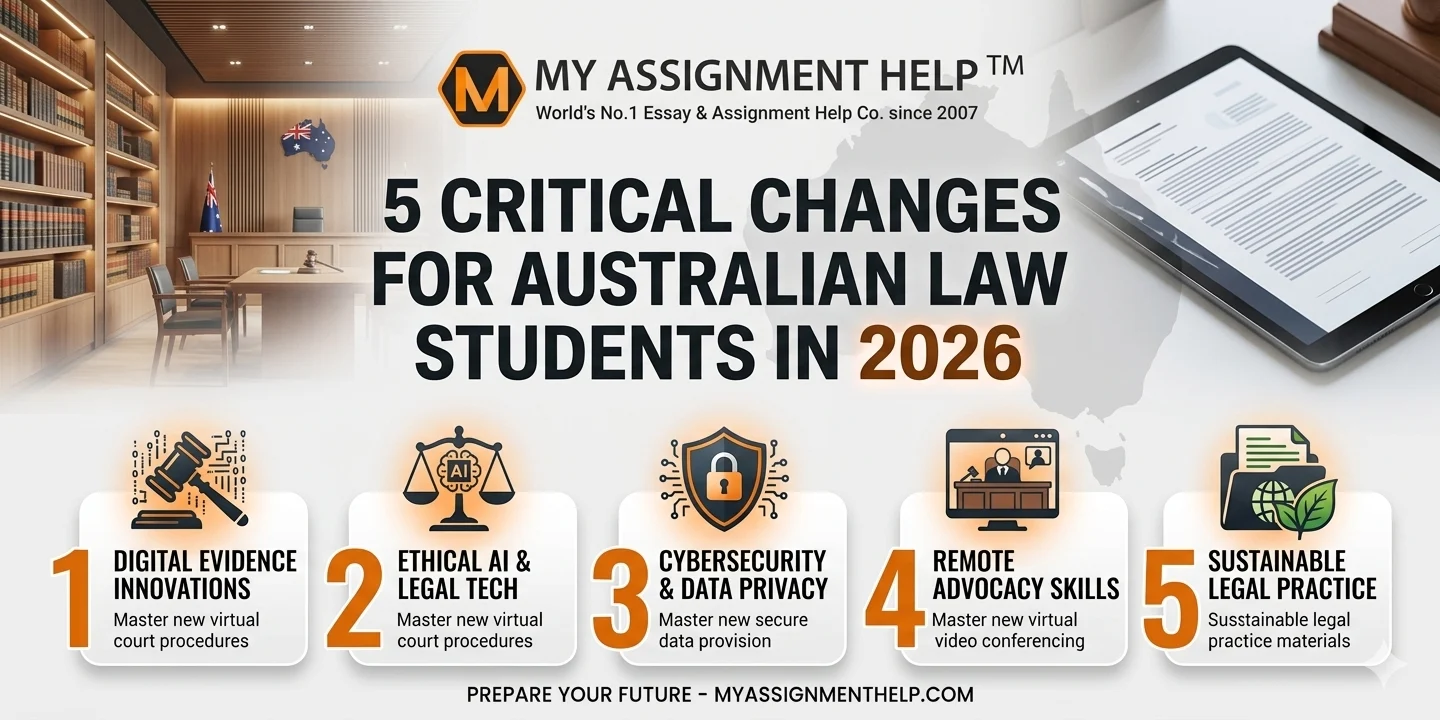
The Australian legal landscape is undergoing a seismic shift. For law students across the Sandstone universities and emerging digital law schools alike, the “black letter law” education of yesterday is no longer sufficient. As the High Court navigates new precedents in digital privacy and the profession grapples with the integration of generative AI, the roadmap to becoming a solicitor or barrister has been rewritten.
To succeed in this climate, students must look beyond the Priestley 11. Staying ahead requires a deep understanding of technological integration, evolving clerkship expectations, and the mental health reforms sweeping through the Office of the Legal Services Commissioner (OLSC).
Navigating these academic pressures often requires more than just long hours in the library. Many students find that seeking professional law assignment help is a strategic way to manage the heavy burden of AGLC4 compliance and complex case note analysis, allowing them to focus on the practical skills that firms now demand. Whether you are in your first year of a JD or finishing your LLB, these five changes are non-negotiable for your career progression.
1. The Integration of Generative AI in Legal Research
The era of manual LexisNexis searches is evolving. In 2026, the Australian legal sector has moved past the “skepticism” phase of AI. Large Language Models (LLMs) are now being used for first-draft document automation and predictive case analysis.
The Change: Law schools are now assessing students on their ability to use AI ethically. The focus has shifted from finding the law to verifying the law. Students must now master “Prompt Engineering for Lawyers” to ensure they aren’t falling victim to “hallucinations” in case citations—a mistake that has already seen practitioners disciplined in the Federal Court.
2. Mandatory Mental Health and “Fitness to Practice” Reforms
Following the Psychosocial Hazards at Work regulations, the Law Council of Australia has doubled down on mental health. There is a growing recognition that the “burnout culture” of the 80s and 90s is a liability.
The Change: Admissions boards are placing a higher emphasis on the “Character and Fitness” component of admission. This isn’t just about criminal records anymore; it’s about demonstrating a sustainable approach to practice. Universities are responding by embedding resilience training into the curriculum, moving away from 100% weighted final exams to more continuous, low-stakes assessments.
3. The Rise of “NewLaw” and Alternative Career Paths
The traditional path from Summer Clerkship to Graduate Associate at a “Big Six” firm is no longer the only (or even the most common) route.
The Change: “NewLaw” firms—which focus on fixed-fee pricing, remote work, and tech-driven delivery—are capturing a significant portion of the market share. Australian law students must now prepare for roles as Legal Operations Managers, Data Privacy Officers, and Legal Technologists. If you find yourself overwhelmed by these shifting career requirements while managing your current workload, you might decide to do my assignment through expert services to free up time for networking in these emerging niches.
4. Enhanced Focus on Indigenous Cultural Competency
Following the continued evolution of Native Title law and the recommendations from various Royal Commissions, there is a renewed mandate for cultural competency in legal practice.
The Change: The Law Admissions Consultative Committee (LACC) has moved toward making Indigenous Cultural Competency a core pillar of legal education. This goes beyond Mabo; it involves understanding the nuances of the Aboriginal Heritage Act and the practicalities of working with First Nations clients in a culturally safe manner.
5. AGLC4 and the Digital Courtroom
The transition to paperless courts in New South Wales and Victoria is nearly complete. The way evidence is presented and how “bundles” are created has changed the nature of advocacy.
The Change: Mooting is no longer just about standing at a lectern. It’s about digital advocacy. Students are now expected to be proficient in e-Discovery platforms and digital evidence presentation software. Furthermore, AGLC4 (Australian Guide to Legal Citation) remains the gold standard, but the focus has shifted toward citing digital-first sources, such as unreported electronic judgments and online databases.
Key Takeaways for the Modern Law Student
| Area of Focus | Action Item |
| Technology | Master AI-assisted research while maintaining strict human oversight. |
| Wellbeing | Prioritize mental health as a core component of your “Fitness to Practice.” |
| Networking | Look beyond the Big Six; explore Legal Tech and NewLaw opportunities. |
| Ethics | Develop deep cultural competency regarding First Nations legal issues. |
| Accuracy | Ensure 100% AGLC4 compliance in all written submissions. |
Frequently Asked Questions (FAQ)
Q: Is the Priestley 11 still relevant in 2026?
A: Yes, the core subjects (Contracts, Torts, Property, etc.) remain the foundation of legal knowledge required for admission. However, the delivery and application of these subjects now include significant tech and ethics components.
Q: How important is AGLC4 in 2026?
A: It remains the mandatory citation style for all Australian law schools and most courts. Precision in citation is often used by markers and employers as a proxy for attention to detail in legal practice.
Q: Can I use AI to write my law assignments?
A: Most Australian universities have strict policies. While AI can be used for brainstorming or structure, “submitting” AI-generated work as your own constitutes academic misconduct. It is always better to seek legitimate academic support or tutoring.
References
- Law Council of Australia (2025). The State of the Legal Profession: Annual Report.
- Victorian Legal Services Board (2026). Mental Health and the Fitness to Practice Mandate.
- Journal of Law, Information and Science (2025). Generative AI and the Future of Australian Legal Education.
- Admissions Committees of Australia (LACC). Revised Standards for Cultural Competency.
About the Author
Senior Academic Consultant at MyAssignmentHelp.
With over a decade of experience in the Australian legal sector, our author specializes in guiding students through the complexities of the LLB and JD pathways. Having worked closely with legal educators and industry experts, they provide data-driven insights into how the next generation of lawyers can stay competitive in a rapidly evolving market. Their work focuses on bridging the gap between academic theory and the practical demands of “NewLaw” in Australia.