






Cooking with a carbon steel or cast iron wok is one of the most efficient ways to prepare food, but these pans require a crucial first step before they ever touch your ingredients: seasoning.
Unlike modern Teflon pans, traditional woks do not come with a chemical non-stick coating. Instead, you have to build a natural, non-stick surface called a patina—often referred to in Chinese cooking as “hei guo” (wok breath). Seasoning the metal serves two major purposes: it physically prevents the raw iron or steel from rusting, and it creates a slick surface where eggs and noodles glide instead of sticking.
Here is exactly how to build that foundation from scratch.
5 Steps to Season a New Wok
Building a solid patina takes a bit of time, but the process is straightforward. Make sure your kitchen is well-ventilated before you begin, as the process will produce some smoke.
1. Scrub Off the Factory Coating
New woks are shipped with a thick, protective machine oil coating to prevent them from rusting in transit. You must remove 100% of this coating. Wash the wok vigorously with hot, soapy water and a harsh scouring pad until the metal feels completely bare. Note: Heavy industrial grease and soap can build up in your pipes during this initial wash, so be careful with what goes down the drain unless you already know how to unclog a kitchen sink. Dry the wok thoroughly with a towel.
2. The First High-Heat Burn
Place the completely dry, bare wok on your stovetop burner over high heat. Watch the metal closely. As it heats up, you will see the steel change color, usually turning a dark blue, brown, or black. Using a heat-proof mitt, carefully tilt and rotate the wok over the flame until every inch of the interior surface has changed color. This opens the pores of the metal.
3. Apply a High-Smoke-Point Oil
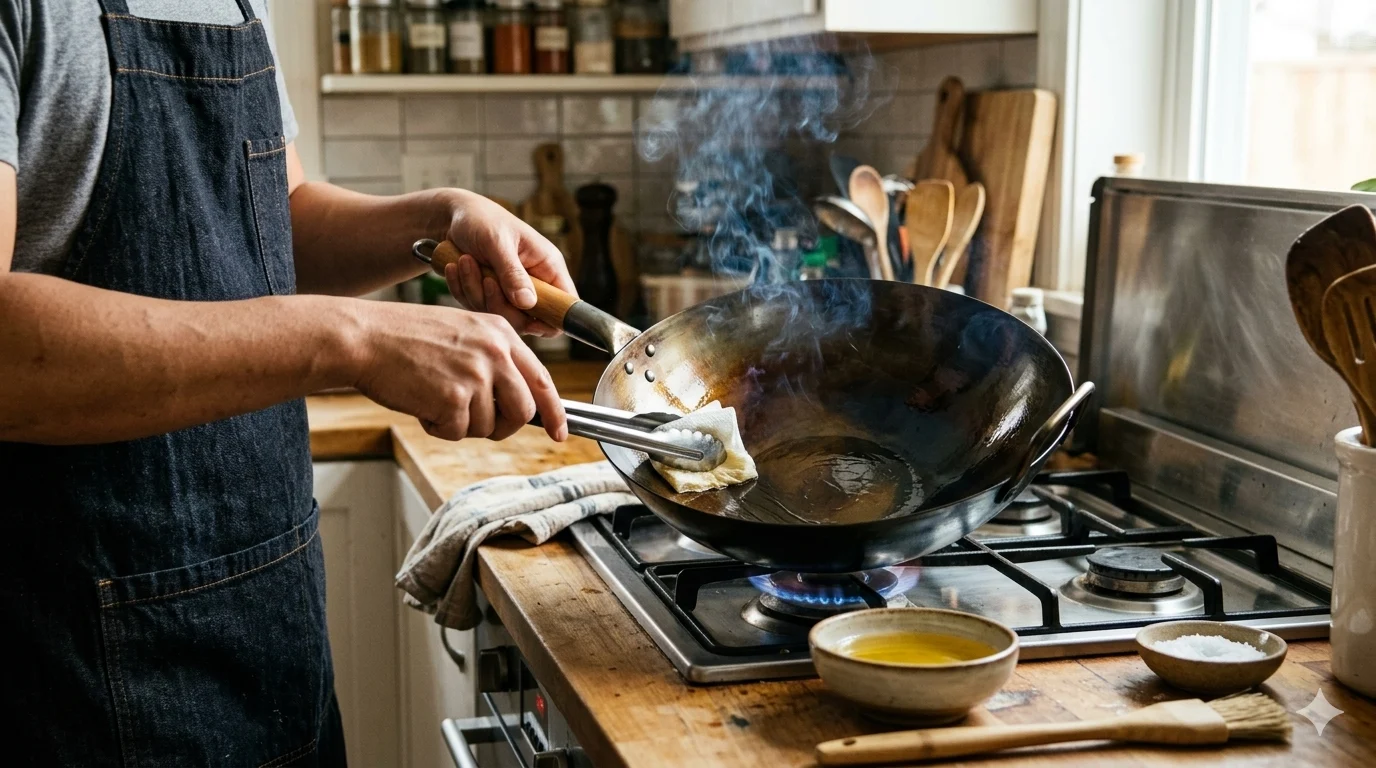
Reduce the heat to low. Add exactly one tablespoon of a high-smoke-point oil (such as vegetable, peanut, or flaxseed oil) to the pan. Grab a folded paper towel with a pair of long metal tongs and use it to carefully swirl the oil around, coating the entire interior surface of the wok.
4. Wipe Excess and Cool
You only want a microscopic layer of oil bonding to the metal. Use a fresh paper towel in your tongs to wipe away any excess oil so the pan looks dry, not pooling with grease. Turn off the heat and let the wok cool down. Toss the lightly oiled paper towel in the trash (and if you are ever using larger amounts of oil for deep frying in your wok later, make sure you know how to dispose of cooking oil safely).
5. Repeat the Process
To build a durable base layer, repeat steps 3 and 4 at least two to three more times. Heat the wok, apply a thin layer of oil, wipe it dry, and let it smoke slightly to polymerize the oil into the metal.
Daily Wok Maintenance: How to Keep the Patina
The seasoning you just applied is only the foundation. To maintain the patina long-term, you must follow one strict rule: never use dish soap on your wok again.
- Washing: Clean your wok immediately after cooking while it is still warm. Use only hot water and a bamboo brush or soft sponge to scrub away food particles.
- Drying: Never let a wok air dry, or it will rust. Place the clean wok back on the stove over medium heat until all the water completely evaporates.
- Storing: Once dry, use a paper towel to rub a microscopic layer of oil over the interior surface to protect it from moisture in the air before putting it away.
FAQs on Wok Seasoning
What is the best oil to season a wok? Always use an oil with a high smoke point. Peanut, vegetable, grapeseed, and flaxseed oils are excellent choices. Never use olive oil or butter, as they will burn at low temperatures and turn sticky.
Can I ruin my wok if I mess up the seasoning? No. Carbon steel and cast iron are incredibly resilient. If your wok gets sticky, patchy, or even slightly rusty, you can simply scour it back down to the bare metal with steel wool and restart the seasoning process from step one.
Your wok’s patina is a living surface that will continuously improve and darken with every meal you cook. The best way to break in your newly seasoned wok is to start using it immediately—a simple vegetable stir-fry with lots of aromatics like garlic and ginger is the perfect first dish.