



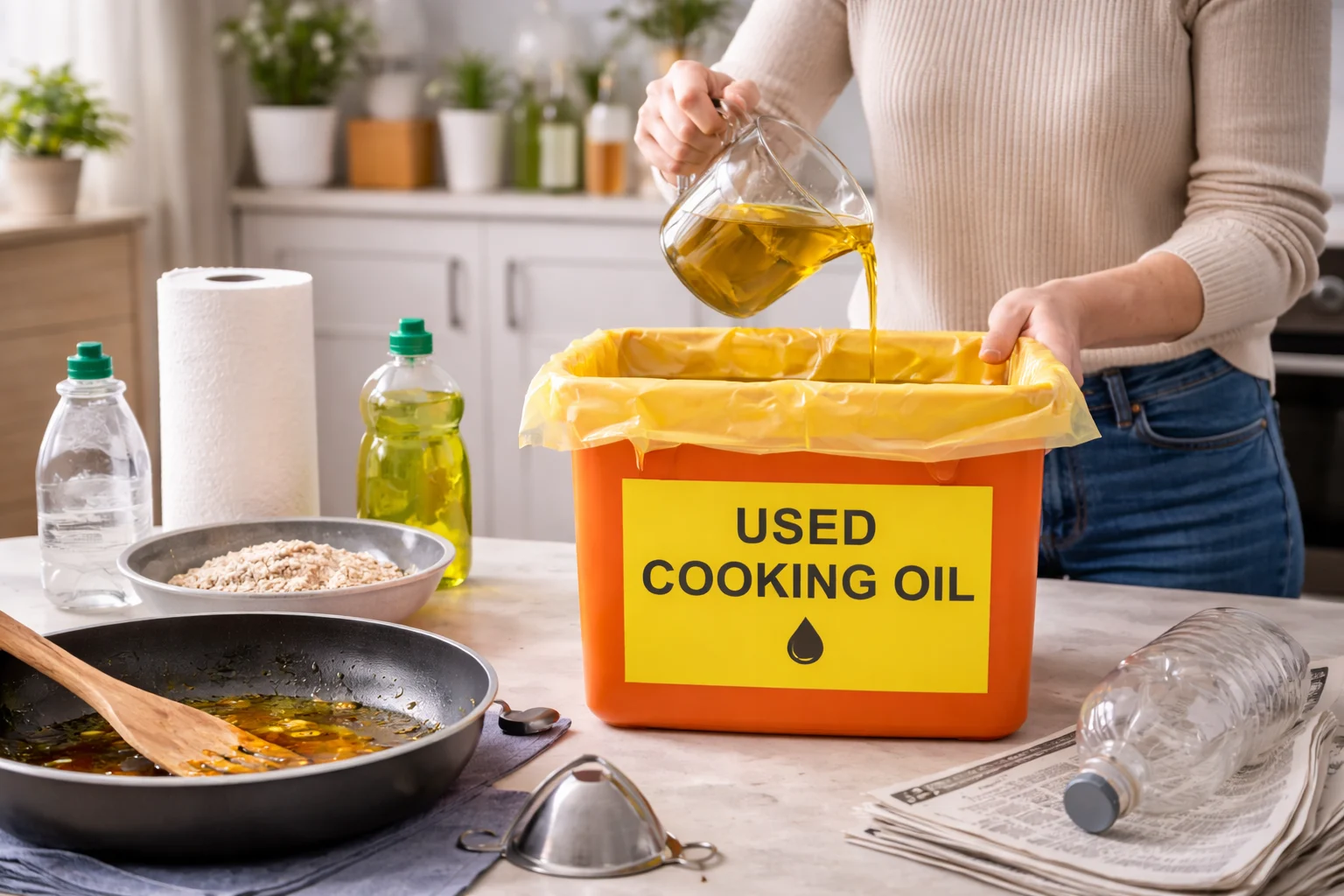



Cooking oil is a common kitchen ingredient, but disposing of it incorrectly can cause serious plumbing and environmental problems. Many people search how to dispose of cooking oil because pouring oil down the sink seems convenient, yet it can damage pipes and lead to major blockages.
The correct disposal method is simple: allow the oil to cool, strain out food particles, place it in a sealed container, and throw it in the rubbish bin or take it to a recycling centre. This guide explains safe disposal methods, how to reuse oil properly, and how to avoid common kitchen mistakes.
Quick Answer
You should never pour cooking oil down the drain because it can solidify inside pipes and create blockages known as fatbergs. Instead, allow the oil to cool completely, strain out food particles, pour it into a sealed container, and dispose of it in the household rubbish bin or a local recycling facility.
Why You Should Never Pour Cooking Oil Down the Drain
Pouring cooking oil down the sink may seem harmless, but it can cause major plumbing issues.
When oil cools, it begins to solidify and stick to the inside of pipes. Over time, this sticky residue collects other debris such as food scraps and grease, eventually forming large blockages.
These blockages are often referred to as fatbergs, which can clog sewer systems and cause expensive plumbing repairs.
Cooking oil can also contribute to clogged drains in your home. If grease buildup occurs in pipes, you may eventually need solutions similar to those discussed in guides about how to unclog a kitchen sink.
For this reason, it is always best to dispose of cooking oil properly.
How to Dispose of Cooking Oil Properly (Step-by-Step)
Follow these simple steps to safely dispose of used cooking oil.
Step 1: Allow the Oil to Cool Completely
After cooking, never attempt to dispose of hot oil immediately.
Allow the oil to cool fully to avoid burns or accidents. This also makes the oil easier to handle.
Step 2: Strain Out Food Particles
Before storing or disposing of oil, remove any leftover food particles.
You can do this by pouring the oil through:
- A fine mesh sieve
- Cheesecloth
- A coffee filter
Removing food particles helps prevent bad odors and keeps oil reusable if you plan to use it again.
Step 3: Pour the Oil Into a Sealable Container
Once the oil has cooled and been strained, pour it into a container that can be sealed.
Common containers include:
- The original cooking oil bottle
- Glass jars
- Plastic containers with lids
Make sure the container is tightly sealed to prevent leaks.
Step 4: Dispose of the Container in the Rubbish Bin
Once the oil is sealed inside a container, place it in your household rubbish bin.
This prevents oil from entering the plumbing system and protects your drains.
Step 5: Consider Recycling Options
Many recycling centres and local councils accept used cooking oil.
Recycled cooking oil is often converted into biodiesel, an environmentally friendly fuel made from organic materials.
Check your local council website to see whether cooking oil recycling programs are available in your area.
Can You Recycle Used Cooking Oil?
Yes, used cooking oil can often be recycled.
Many waste management programs collect used oil and process it into biodiesel fuel.
Benefits of recycling cooking oil include:
- Reducing environmental pollution
- Preventing sewer blockages
- Producing renewable energy
Restaurants commonly recycle cooking oil, but many local recycling centres now accept small amounts from households as well.
Can Cooking Oil Be Reused?
Cooking oil can often be reused multiple times if it is properly handled.
Most oils can be reused 2 to 4 times before they begin to degrade.
To safely reuse cooking oil:
- Allow the oil to cool after cooking
- Strain out food particles
- Store the oil in a sealed container
- Keep it in the refrigerator or a cool, dark place
Reusing oil reduces waste and saves money.
Signs Cooking Oil Should Be Thrown Away
Even if oil can be reused several times, it eventually becomes unsuitable for cooking.
You should discard cooking oil if you notice the following signs.
Dark Color
Oil that becomes significantly darker may have broken down from repeated heating.
Rancid Smell
A strong or unpleasant smell indicates the oil has spoiled.
Lower Smoke Point
If the oil begins to smoke at lower temperatures than usual, it has degraded and should be replaced.
Excessive Foaming
Oil that foams when heated may contain too many food particles or chemical breakdown products.
Different Oils and Their Smoke Points
The smoke point of an oil determines how hot it can be heated before breaking down.
Different oils tolerate different cooking temperatures.
Olive Oil
- Smoke point: about 190–220°C
- Good for sautéing and light frying
Sunflower Oil
- Smoke point: about 225°C
- Suitable for frying
Vegetable Oil
- Smoke point: about 205–230°C
- Versatile for many cooking methods
Peanut Oil
- Smoke point: about 230°C
- Often used for deep frying
Oils with higher smoke points tend to last longer during cooking and may be reused more times.
Eco-Friendly Alternatives for Used Cooking Oil
If you want to reduce kitchen waste, there are several environmentally friendly options for dealing with used oil.
Recycling
Many local councils collect used cooking oil for biodiesel production.
Small Composting Use
Very small amounts of vegetable oil may sometimes be composted, but large quantities should never be added to compost piles.
Reuse in Cooking
As mentioned earlier, properly strained oil can be reused several times before disposal.
Kitchen Maintenance and Cleanliness
Proper kitchen care helps prevent grease buildup and keeps appliances working efficiently.
Maintaining kitchen equipment regularly—such as following cleaning guides like how to clean a coffee maker—helps reduce residue buildup and improves overall kitchen hygiene.
Frequently Asked Questions
Can you pour cooking oil down the sink?
No. Cooking oil should never be poured down the sink because it can solidify and create blockages in pipes and sewer systems.
How do you throw away used cooking oil?
Allow the oil to cool, strain out food particles, place it in a sealed container, and dispose of it in the rubbish bin or a recycling facility.
Can cooking oil be reused?
Yes, most cooking oils can be reused 2–4 times if they are properly strained and stored.
What happens if oil goes down the drain?
Oil can stick to pipes and form grease blockages that eventually clog drains and sewer systems.
How long can used cooking oil be stored?
If stored properly in a sealed container in the refrigerator, used cooking oil can often be kept for several weeks before reuse.
Final Thoughts
Understanding how to dispose of cooking oil safely is important for protecting both your plumbing and the environment. Never pour oil down the drain, as it can cause serious blockages and contribute to sewer system problems.
Instead, allow the oil to cool, strain it, store it in a sealed container, and dispose of it in the bin or at a recycling facility. By following these simple steps, you can keep your kitchen clean, avoid plumbing issues, and reduce environmental waste.