






Tailoring your own clothes is a superpower that saves money and ensures you never have to settle for a “good enough” fit again. Whether you’ve just bought a pair of designer slacks or need to fix a pair of thrifted jeans, knowing how to hem pants is an essential life skill.
In this comprehensive 2026 guide, we will walk through the three most effective methods: hand-sewing for an invisible finish, machine-sewing for durability, and the no-sew method for those in a hurry.
The Golden Rule: Preparation and Measurement
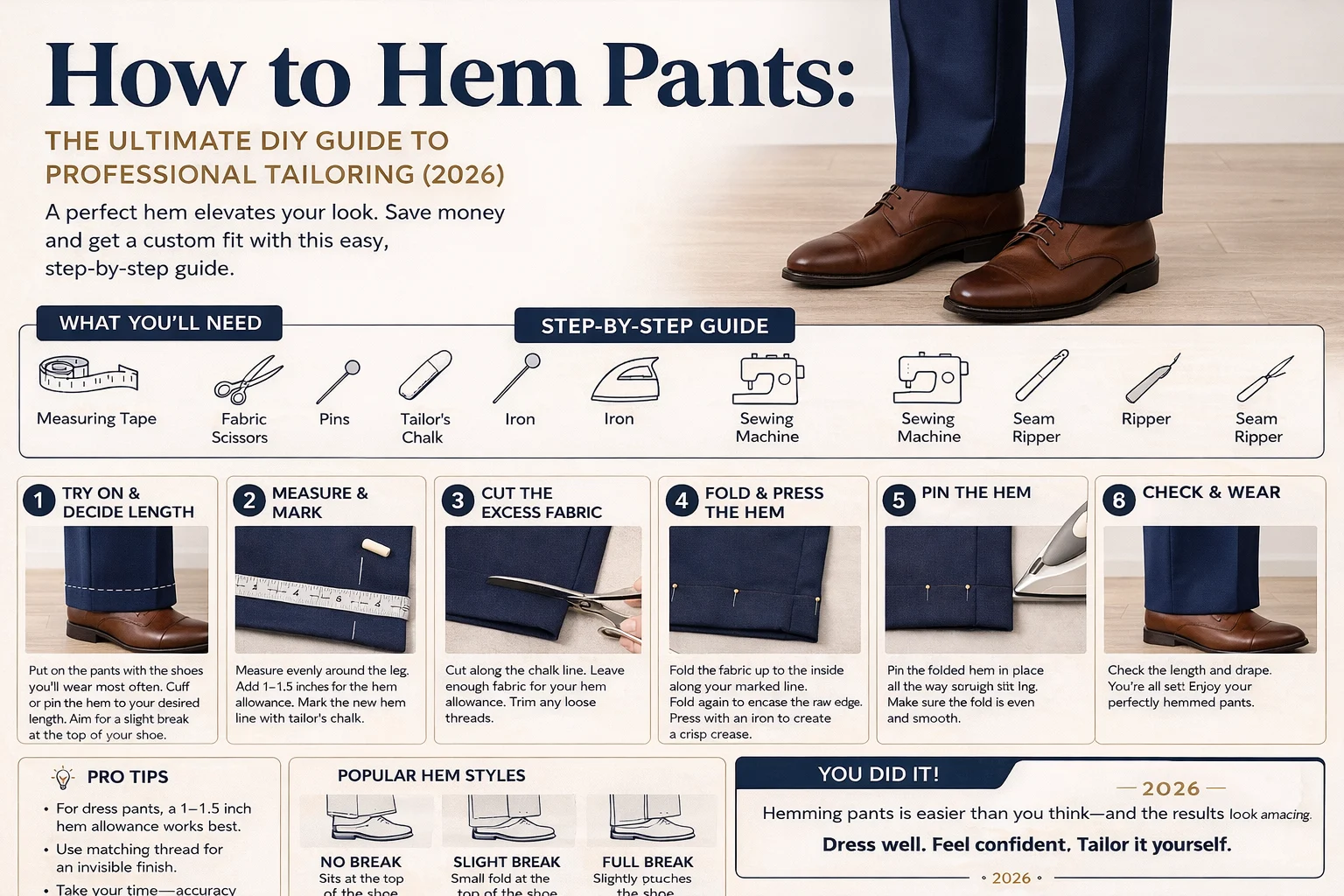
Before you touch a pair of scissors, you must get your measurements right. A common mistake is hemming pants based on a flat measurement. For the best results, you must measure while wearing the pants.
Step 1: Put on Your Shoes
The “break” of your pants (how the fabric folds at the bottom) depends entirely on your footwear. If you are hemming dress pants, wear your dress shoes. If you are fixing jeans, wear your sneakers or boots.
Step 2: Pin the Desired Length
Fold the excess fabric inward and pin it at the desired height. Walk around the room to ensure the fabric doesn’t snag or pull. For a classic look, the back of the hem should hit just above the sole of the shoe.
Step 3: Establish the Inseam
It is vital to maintain symmetry between both legs. To ensure your markings are mathematically sound, it helps to understand accurate measurements when you learn how to measure inseam. This ensures that even if your pinning is slightly off, your final cut is based on the actual geometry of the garment.
Method 1: How to Hem Pants by Hand (The Invisible Stitch)
This is the preferred method for dress pants and formal trousers. It creates a “blind hem,” meaning no stitches are visible from the outside.
- Mark and Cut: Mark 1.5 to 2 inches below your desired length line. Cut off the excess fabric.
- The Double Fold: Fold the edge up 0.5 inches and press it with an iron. Then, fold it again to your desired length line and press again.
- The Slip Stitch: Use a single thread and a fine needle. Anchor the thread in the folded hem. Then, pick up only one or two threads from the main pant leg fabric. Pass the needle back through the fold of the hem.
- Repeat: Keep your stitches loose enough that the fabric doesn’t pucker, but tight enough to hold.
Method 2: Using a Sewing Machine (The Durable Finish)
If you are working with denim, chinos, or workwear, a sewing machine is the way to go. It provides a heavy-duty stitch that can withstand constant movement and washing.
- Choose the Right Needle: Use a denim needle for jeans and a universal needle for cotton.
- The Topstitch: Unlike dress pants, jeans usually have a visible line of stitching. Match your thread color to the original “tobacco” or orange thread found on most denim.
- Maintenance Tip: Before starting a big project, ensure your workspace is clean. Keeping your tools in top shape is a habit of high-level creators—much like learning how to descale a kettle for better appliance maintenance, a well-maintained sewing machine prevents “birds-nesting” of thread and uneven tension.
Method 3: How to Hem Pants Without Sewing (The No-Sew Method)
If you don’t have a needle and thread, or if you’re in a hotel room before a big meeting, hemming tape (fusible web) is your best friend.
- Fold and Press: Fold the pants to the desired length and create a sharp crease with your iron.
- Apply the Tape: Place a strip of hemming tape between the fold and the pant leg.
- Fuse with Heat: Press the iron down firmly on the fabric for 10–15 seconds (check the tape instructions). The heat melts the adhesive, bonding the two layers of fabric together.
Note: This method is semi-permanent. While it survives many washes, the bond may eventually weaken, requiring a quick “re-iron.”
Pro Tips for a Tailored Result
- Steam is Your Friend: Always use a steam iron to set your creases. A sharp, flat hem is what separates a DIY job from a professional tailor’s work.
- The “Double Fold” Technique: Always fold the raw edge of the fabric inside the hem. This prevents the fabric from fraying in the wash and keeps the inside of your pants looking clean.
- Measure Twice, Cut Once: It’s an old cliché for a reason. You can always cut more fabric off, but you can’t put it back once it’s gone.
Frequently Asked Questions
Can I hem stretchy leggings?
Yes, but you must use a zigzag stitch on a sewing machine. A straight stitch will snap as soon as the fabric stretches when you put them on.
How do I hem “Original Hem” Jeans?
This is an advanced technique where you cut the original hem off and sew it back onto the shortened leg. This preserves the distressed look at the bottom of the jeans.
What is the best thread for hemming?
For most trousers, an all-purpose polyester thread is best because it has a slight give and is very strong.
Summary: Hemming pants is a simple process once you master the measurement and the press. Whether you use a needle, a machine, or heat-activated tape, taking that extra 20 minutes to adjust your clothes will significantly elevate your personal style and comfort.