






Maintaining your vehicle’s transmission is the single most effective way to avoid repair bills that can easily climb into the thousands. Unlike engine oil, which is designed to be consumed in small amounts, your transmission is a closed system. If the fluid is low, it’s a sign of a problem that needs immediate attention.
In this guide, we’ll break down exactly how to check transmission fluid, why the “engine running” rule is non-negotiable for most cars, and how to read the signs your car is giving you through the fluid’s color.
Why Checking Your Transmission Fluid is Essential for Car Longevity
The transmission is the “bridge” between your engine and your wheels. It uses hydraulic pressure to shift gears and relies on specialized fluid to lubricate moving parts and dissipate heat. Over time, heat causes the fluid to oxidize, and metal shavings can contaminate the system.
Regularly checking the fluid level and quality ensures that:
- Gears shift smoothly: Prevents grinding or hesitation.
- The system stays cool: Transmission fluid is also a coolant; low levels lead to overheating.
- Component life is extended: Just like knowing how long car batteries last, knowing the health of your transmission helps you predict and prevent total vehicle failure.
Step-by-Step: How to Check Automatic Transmission Fluid Level
Most vehicles with automatic transmissions come equipped with a dipstick, though many modern “sealed” units do not. If you have a dipstick, follow these steps:
Step 1: Warm Up the Vehicle
Transmission fluid expands significantly as it heats up. To get an accurate reading, drive your car for about 10–15 minutes until it reaches normal operating temperature.
Step 2: Park on a Level Surface
Ensure the car is on flat ground. If the car is tilted, the fluid will pool to one side of the pan, giving you a false “low” or “high” reading on the dipstick.
Step 3: Keep the Engine Idling
For the vast majority of cars, you must check the fluid while the engine is running and the gear selector is in Park or Neutral (check your owner’s manual for the specific setting).
Step 4: Locate and Clean the Dipstick
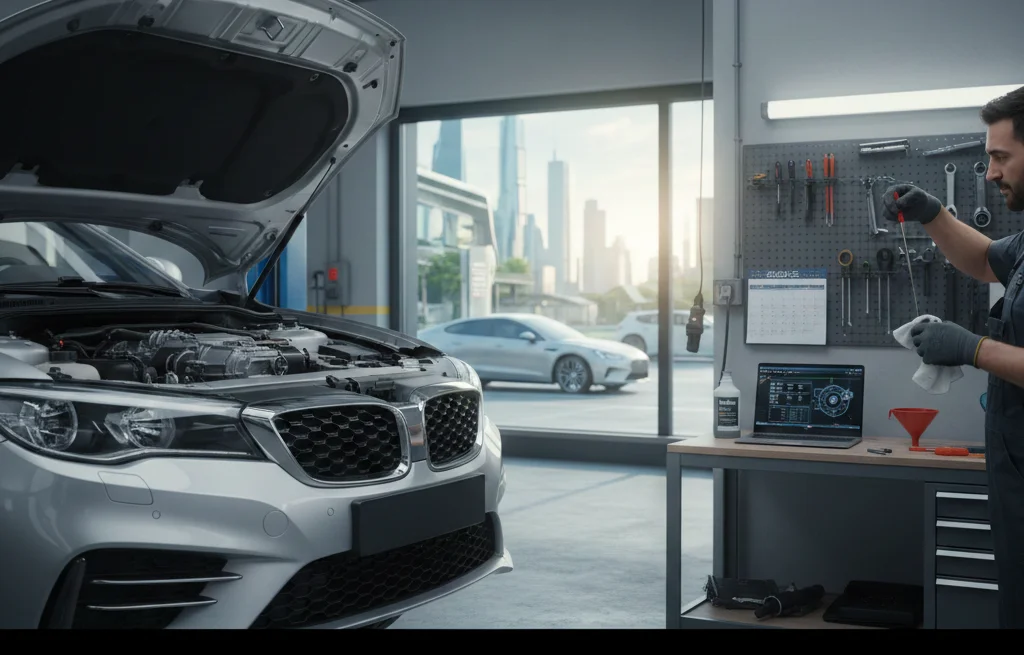
Look for a handle that is usually brightly colored (often red or orange).9 Pull it out, wipe it completely clean with a lint-free rag, and reinsert it fully.
Step 5: Check the Level
Pull the dipstick out again. Look at the markings at the tip. There are usually two sets of marks: “Cold” and “Hot.” Since you’ve warmed up the car, the fluid should be within the “Hot” range.
Important: Why Check Transmission Fluid When the Engine is Running?
This is the most common question DIYers ask. Why can’t you check it with the engine off?
The reason lies in the torque converter. When the engine is off, much of the fluid drains out of the torque converter and back into the transmission pan. If you check the level with the engine off, the dipstick will show a level that is much higher than it actually is during operation. By keeping the engine running, the fluid is actively circulating through the pump, cooler, and torque converter, providing a “real-world” measurement of the fluid available for gear shifts.
Low or Dirty Transmission Fluid? Signs to Watch Out For
If your fluid is low or degraded, your car will let you know. Common symptoms include:
- Slipping Gears: The engine revs up, but the car doesn’t accelerate properly.
- Rough Shifting: You feel a “thud” or “clunk” when the car changes gears.
- Delayed Engagement: You shift into Drive, but it takes a second or two for the car to move.
- Unusual Vibrations: If you’ve ever wondered “why is my car shaking?,” low transmission fluid or a failing torque converter is often a prime suspect.
The Color Test: What Your Fluid Says About Your Car
| Color | Condition | Action Required |
| Bright Red | Brand New / Excellent | None |
| Light Brown | Good / Aging | Schedule a change soon |
| Dark Brown/Black | Burnt / Oxidized | Immediate Flush & Filter Change |
| Pink & Milky | Contaminated with Coolant | Stop Driving Immediately (Internal leak) |
Frequently Asked Questions (FAQ)
Where do I put transmission fluid?
In most cars with a dipstick, you pour the new fluid directly into the same tube the dipstick came out of.15 Use a long-neck funnel to avoid spills.
What if my car doesn’t have a dipstick?
Many newer cars have “sealed” transmissions. These require you to crawl under the car and remove a check plug while the vehicle is level and idling. If you aren’t comfortable with jack stands, this is a job best left to a professional.
How much does it cost to top off?
A quart of ATF (Automatic Transmission Fluid) usually costs between $8 and $20. Always ensure you are using the specific type (e.g., Dexron VI, Mercon V) required by your manufacturer.
This video provides a clear visual demonstration of locating the dipstick and reading the fluid levels to ensure your transmission stays healthy.