






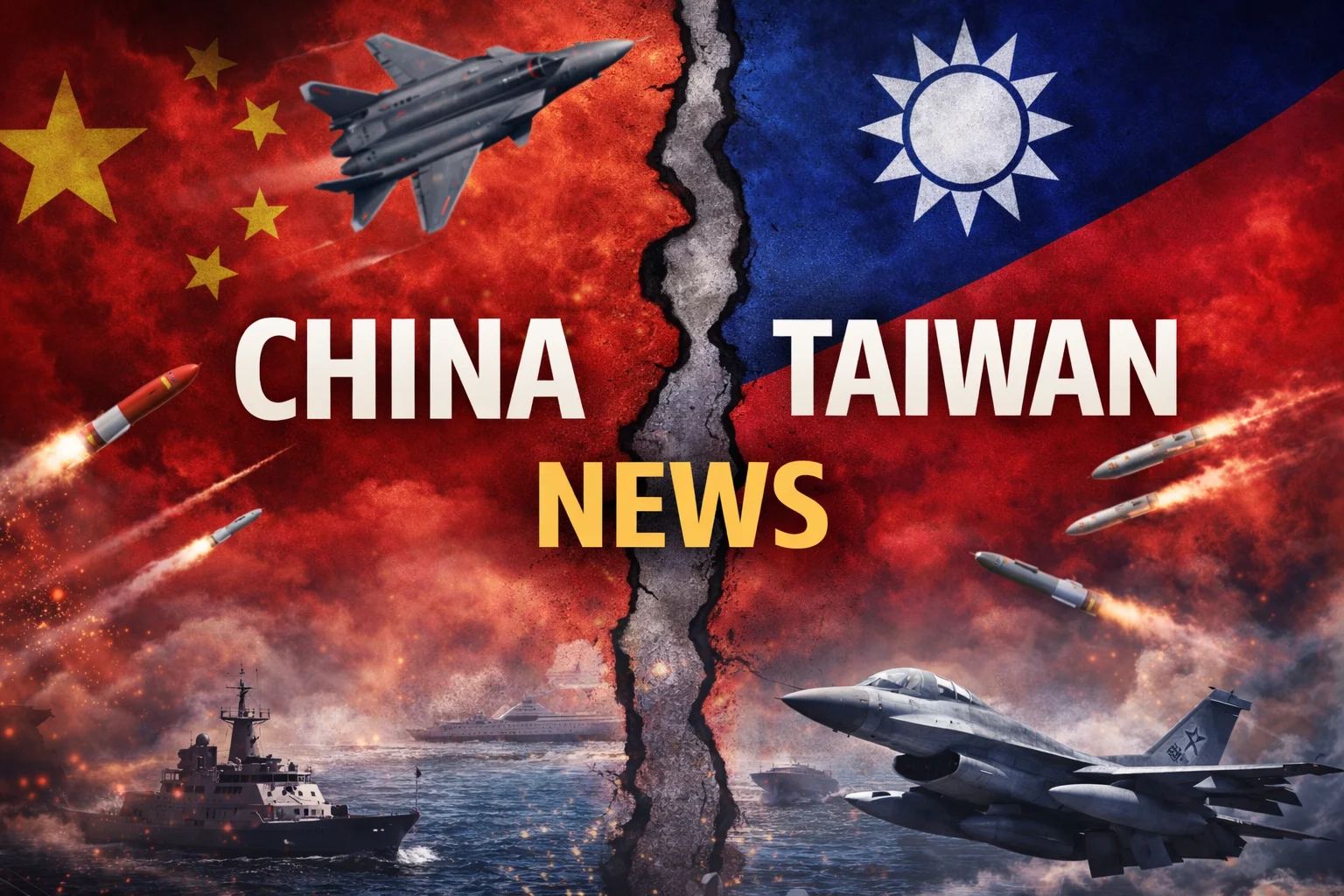
The geopolitical landscape of the Taiwan Strait has entered a critical new phase this April 2026. As the world watches, a series of historic diplomatic meetings, economic “carrots,” and intensifying military maneuvers have redefined the relationship between the People’s Republic of China (PRC) and the Republic of China (Taiwan). If you are following China Taiwan news today, you are witnessing a sophisticated “multi-domain coercion” strategy that combines high-level diplomacy with clandestine maritime pressure.
TL;DR: The State of the Strait (April 2026)
- The Xi-Cheng Summit: KMT Chairwoman Cheng Li-wun met with Xi Jinping in Beijing on April 10—the first leader-to-leader meeting between the parties in a decade.
- The Ten-Point Plan: Beijing unveiled a sweeping integration package, including direct flights to major hubs like Xi’an and Urumqi and infrastructure links to Kinmen and Matsu.
- Military Tension: Despite the diplomatic “thaw,” the PRC deployed over 100 vessels during the summit and is reportedly testing clandestine special forces insertions using small craft.
- Legislative Gridlock: In Taipei, the Legislative Yuan remains divided over a “Special Budget for Asymmetric War” involving AI-enabled drone swarms.
1. The Xi-Cheng Summit: A Historic Pivot?
The most significant development in recent weeks was the six-day visit (April 7–12) of Kuomintang (KMT) Chairwoman Cheng Li-wun to mainland China. The pinnacle of this trip was her meeting with CCP General Secretary Xi Jinping at the Great Hall of the People on April 10.
During the summit, both leaders reaffirmed their commitment to the 1992 Consensus. Cheng’s rhetoric emphasized a “shared national rejuvenation,” stating that “Taiwan’s achievements and the mainland’s achievements are all achievements of the Chinese nation.” While the KMT positions itself as the “facilitator of peace,” the ruling Democratic Progressive Party (DPP) has been quick to criticize the meeting. Premier Cho Jung-tai warned that such rhetoric risks “emboldening the PRC” and frames Taiwan as a “chessboard” for external interference.
2. The Ten-Point Plan: Economic Integration in 2026
Immediately following the summit, Beijing’s Taiwan Affairs Office (TAO) released a comprehensive Ten-Point Plan aimed at deepening cross-strait integration. This package is seen by many as a “soft power” play ahead of Taiwan’s November 2026 local elections.
Key measures include:
- Aviation: Full normalization of direct flights to cities including Harbin, Kunming, and Xi’an.
- Offshore Islands: Proposals to share water, electricity, and gas from Fujian Province with Kinmen and Matsu, effectively blurring the logistical boundaries.
- Fisheries: Lifting import bans on Taiwanese aquaculture and food products.
However, the implementation of these measures remains uncertain, as the DPP government maintains that any expansion of flight routes or travel requires formal government-to-government coordination, which Beijing currently refuses.
3. Military & Information Warfare: The “Shadow” Strategy
While the diplomatic front suggests a warming of ties, the military reality tells a different story. Reports from the Institute for the Study of War (ISW) indicate that the PRC used the summit as a cover for massive “live-fire” drills in the Yellow Sea.
Clandestine Incursions and Small Craft
A worrying trend in April 2026 is the documented use of unpowered small craft and motorboats by PRC nationals to approach Taiwan’s outlying islands. These “clandestine insertions” are believed to be tests for PLA Special Operations Forces (SOF) doctrine, which calls for the advanced insertion of saboteurs to paralyze command systems during a conflict.
Navigating these waters is increasingly treacherous. While some might wonder, “is fishing in a inflatable boat safe” in a general sense, the current maritime friction makes even civilian activity in the Strait a high-stakes endeavor.
Space-Based Surveillance
The role of technology in this standoff cannot be overstated. Beijing is increasingly relying on high-fidelity orbital data to monitor Taiwanese defense budgets and naval movements. To understand the scale of this surveillance, one must look at the rapid deployment of China’s satellite swarms, which provide the PLA with real-time, persistent coverage of the entire First Island Chain.
4. The AI Arms Race in the Legislative Yuan
Domestic politics in Taiwan are currently dominated by the “Special Budget for Asymmetric War.” The budget includes funding for the T-dome air defense concept and thousands of unmanned systems designed to counter the PLA’s “Atlas” drone swarm technology.
The opposition (KMT and TPP) has blocked several versions of this budget, arguing for a more “balanced” approach to procurement. This deadlock has delayed the acquisition of critical systems like HIMARS and Javelin missiles from the United States, raising concerns about Taiwan’s military readiness as the 2026 election cycle approaches.