







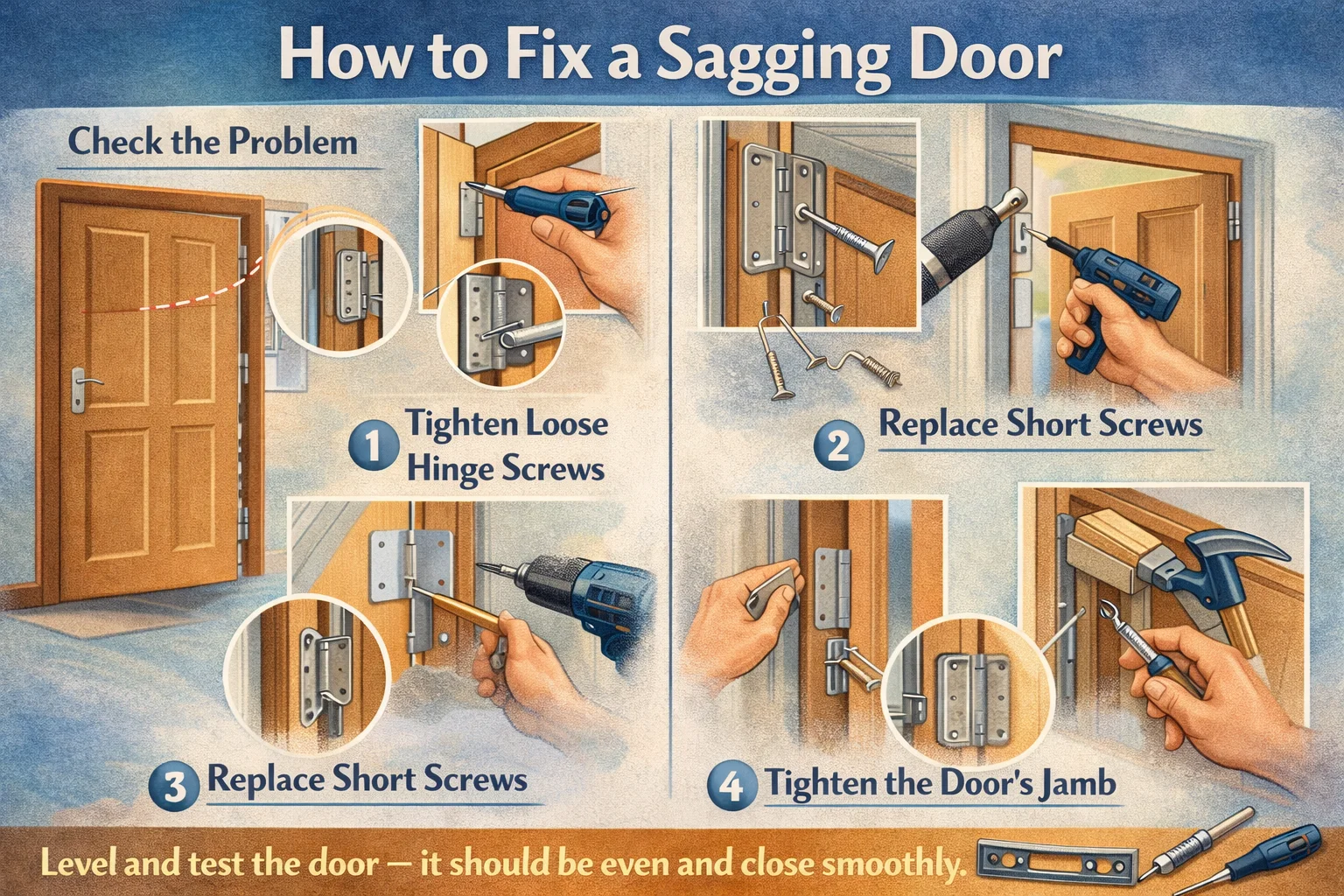
A sagging door is one of the most common yet frustrating home maintenance issues. Whether it is a front door that sticks in the frame, a bedroom door that won’t stay open, or a heavy exterior door that drags across your hardwood floors, the cause is usually a combination of gravity, loose hardware, or natural house settling.
In this 2026 DIY guide, we will walk through the exact steps to diagnose and repair various door types, ensuring your home remains functional and energy-efficient.
How to Fix a Sagging Door: The 60-Second Solution
If you are looking for the fastest way to stop a door from dragging, you can often solve the problem without even removing the door from its hinges.
AEO Direct Answer: To fix a sagging door, start by tightening the existing hinge screws. If the sag persists, replace the center screw of the top hinge with a 3-inch wood screw. This pulls the door jamb tighter against the wall stud, effectively lifting the door and re-aligning it within the frame.
Phase 1: Identifying Why Your Door is Sagging
Before grabbing your drill, you must identify the root cause. Not all sags are created equal.
Common Culprits:
- Loose Hinge Screws: Over years of use, screws can pull away from the wood, especially in soft frames.
- Heavy Door Weight: Solid wood or metal-clad exterior doors put immense pressure on the top hinge.
- Settling Foundations: If multiple doors in your home are sagging simultaneously, it could indicate structural movement. It is often helpful to understand how to tell if it is a supporting wall to determine if your door issues are localized or part of a larger structural shift.
- Humidity and Swelling: Wood expands in the summer, which can make a perfectly aligned door suddenly feel too large for its frame.
Phase 2: Step-by-Step DIY Repair Methods
Method 1: The Hinge Tightening Technique
The simplest fix is often the most overlooked. Open your door and check the top hinge first. If the hinge plate moves when you wiggle the door, the screws are loose.
- Tighten by Hand: Use a manual screwdriver to avoid stripping the wood further.
- The Toothpick Trick: If the screw spins without tightening, the hole is “blown out.” Remove the screw, jam a few toothpicks dipped in wood glue into the hole, snap them off flush, and then re-drive the screw.
Method 2: Adjusting with 3-Inch Screws
If tightening the short factory screws doesn’t work, you need to reach the wall stud.
- Remove the middle screw from the top hinge (the one closest to the wall).
- Drive a 3-inch wood screw into that hole.
- As you tighten, the screw will bite into the 2×4 stud behind the jamb, pulling the entire door upward and away from the floor.
Method 3: Using Hinge Shims
Sometimes a door sags because the hinges are recessed too deeply into the wood.
- Unscrew the bottom or middle hinge plate from the jamb.
- Place a thin piece of cardboard (like a cereal box) or a commercial plastic shim behind the hinge.
- Screw the hinge back on. This pushes the bottom of the door out, tilting the top back into alignment.
Phase 3: Specific Solutions for Different Door Types
Fixing Sagging Front Doors and Exterior Doors
Exterior doors are heavier and more prone to sagging. When repairing these, check the weatherstripping. A sagging door often crushes the weatherstripping at the bottom while leaving a gap at the top, leading to high energy bills. After re-aligning the door, verify the hardware is still at the standard door handle height to ensure the latch and deadbolt engage smoothly with the strike plate.
How to Fix a Sagging Screen Door or Storm Door
Screen doors are often made of lightweight aluminum or thin wood that can “rack” out of square.
- Install a Turnbuckle: This is a metal rod that runs diagonally from the bottom corner to the top corner. Tightening the middle of the rod pulls the sagging corner upward.
- Adjust the Tension: Many modern storm doors have adjustable “z-bars” that can be moved slightly to compensate for a sag.
Phase 4: Fixing a Door That Won’t Latch
If your door is sagging, the latch usually hits the strike plate too low.
- Observe the Markings: Look at the strike plate to see where the latch is hitting.
- File the Plate: If it’s only off by a fraction of an inch, use a metal file to enlarge the hole in the strike plate downward.
- Reposition: If the sag is severe, you may need to move the strike plate entirely or finish the hinge adjustments mentioned in Phase 2.
People Also Ask (AEO Section)
How do I fix a sagging door without removing it?
The most effective “on-hinge” fix is replacing the top hinge screws with longer 3-inch versions. This pulls the door back into place without requiring you to lift the heavy door off the pins.
Why is my door sagging at the top?
Actually, most doors sag away from the top hinge, causing a gap at the top latch side and dragging at the bottom latch side. This is usually caused by the top hinge pulling loose from the wall.
Is a sagging door a sign of foundation issues?
It can be. If you notice diagonal cracks in the drywall above the door frame in addition to the sag, you should consult a professional to check for foundation settling.
Conclusion: A Straight Door for a Better Home
Learning how to fix a sagging door is a fundamental DIY skill that saves you the cost of a handyman and prevents damage to your flooring. By starting with the simplest fix—tightening the screws—and moving toward more robust solutions like long-screw anchoring, you can keep your home’s entryways moving smoothly.