







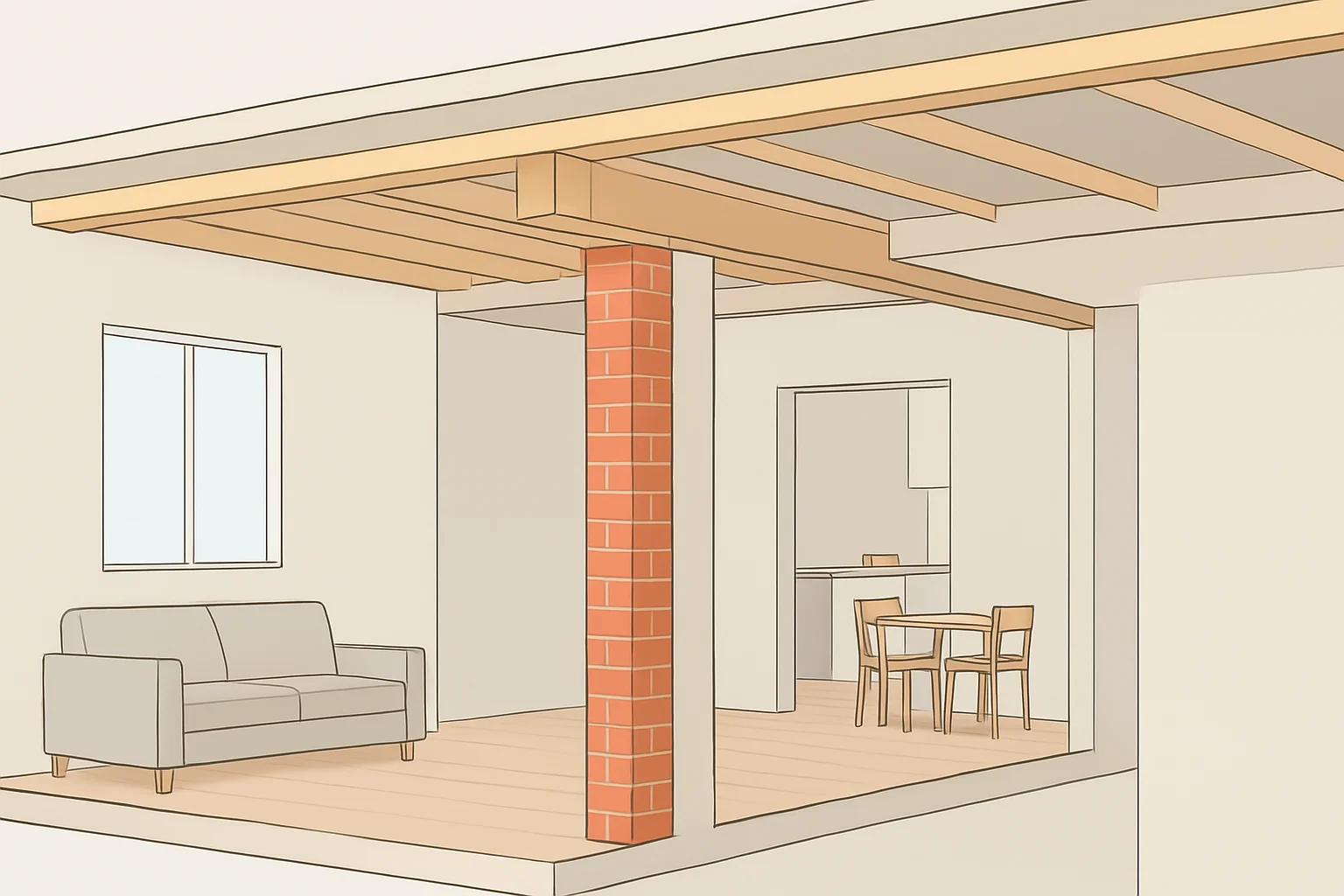
If you’re planning a home renovation, knocking down a wall might seem like a simple way to open up space—but it could be a structural disaster in the making. Before you swing a sledgehammer, the crucial question is: how do you know if it is a supporting wall? Understanding the difference between a supporting (load-bearing) wall and a simple partition wall can save you thousands in repairs and keep your home safe.
In this guide, we’ll break down the signs of a supporting wall, how to determine if a wall is load bearing, tools and techniques for inspection, and safety tips for renovations.
Understanding Load-Bearing vs. Non-Load-Bearing Walls
A bearing wall, also called a load-bearing wall, is a structural element that supports weight from the roof, floor above, or other parts of the building. Unlike partition walls, which merely divide rooms, supporting walls carry the load of the structure.
Knowing how to tell if a wall is load bearing is essential before any demolition:
- Load-bearing walls: These walls support the weight of your home. Removing them without reinforcement can cause sagging ceilings, cracks, or even collapse.
- Non-load-bearing walls: These walls serve only as room dividers and can usually be removed without major structural concerns.
Signs a Wall Might Be Supporting
Several visual clues can indicate a wall is likely a supporting wall:
- Orientation relative to floor joists: Supporting walls often run perpendicular to the floor joists above.
- Alignment with beams or walls on lower floors: A wall stacked above another wall or beam is often load-bearing.
- Wall thickness: Load-bearing walls tend to be thicker than non-supporting walls.
- Door and window placement: Walls with large openings may include reinforcements that indicate a bearing role.
By observing these signs, you can start to answer the question: how can you tell a supporting wall in your home.
How to Tell If a Wall Is Load-Bearing
While visual inspection gives clues, combining it with practical checks is best:
- Check building blueprints: The plans usually indicate which walls are load-bearing.
- Examine ceiling joists and roof structures: Joists that end at a wall or are supported by a wall often indicate a bearing wall.
- Look for beams or columns directly above or below: A wall aligned with structural beams is almost certainly load-bearing.
For homeowners asking how can you tell if a wall is load bearing, using both visual observation and structural knowledge is key.
Tools & Techniques for Determining a Supporting Wall
Several tools and methods can help:
- Stud finders and inspection cameras: These allow you to see what’s inside the wall.
- Consulting a structural engineer: Professionals can provide definitive answers, particularly in complex homes or older buildings.
- DIY vs professional inspection: Simple checks like measuring wall thickness are useful, but a professional can assess hidden reinforcements and roof load.
Internal Link: For structural considerations during home projects, see our guide on How to Install Kitchen Cabinets.
Safety Precautions
Removing a supporting wall without proper planning can be catastrophic. Here’s what to consider:
- Use temporary supports: Beams, posts, or braces can support weight while you work.
- Follow local building codes: Permits and inspections ensure safety and compliance.
- Professional help: A licensed contractor or structural engineer can guide reinforcement installation.
Remember, even small mistakes can lead to sagging ceilings, cracks, or structural collapse.
FAQs About Supporting Walls
How do you know if it is a supporting wall?
Look for walls that carry weight from the roof, ceiling, or floor above, or walls aligned with structural beams.
How can you tell if a wall is load bearing?
Check joist direction, wall alignment, thickness, and consult blueprints or a professional.
What is a bearing wall?
A wall that supports structural weight above it, crucial for home stability.
How to determine if load bearing wall?
Visual clues, structural inspection, and professional evaluation are the best methods.
Can I remove a supporting wall myself?
Only with proper temporary supports and often with professional guidance—never attempt without knowledge or reinforcement.
Final Thoughts
Knowing how do you know if it is a supporting wall is critical before any home renovation. Supporting walls are the backbone of your house, and removing one without proper assessment can be dangerous and costly. Combine visual observation, blueprint checks, and professional advice to stay safe.
Whether you’re updating your kitchen or creating an open-concept living space, identifying load-bearing walls first ensures a smooth, safe, and stress-free renovation.