





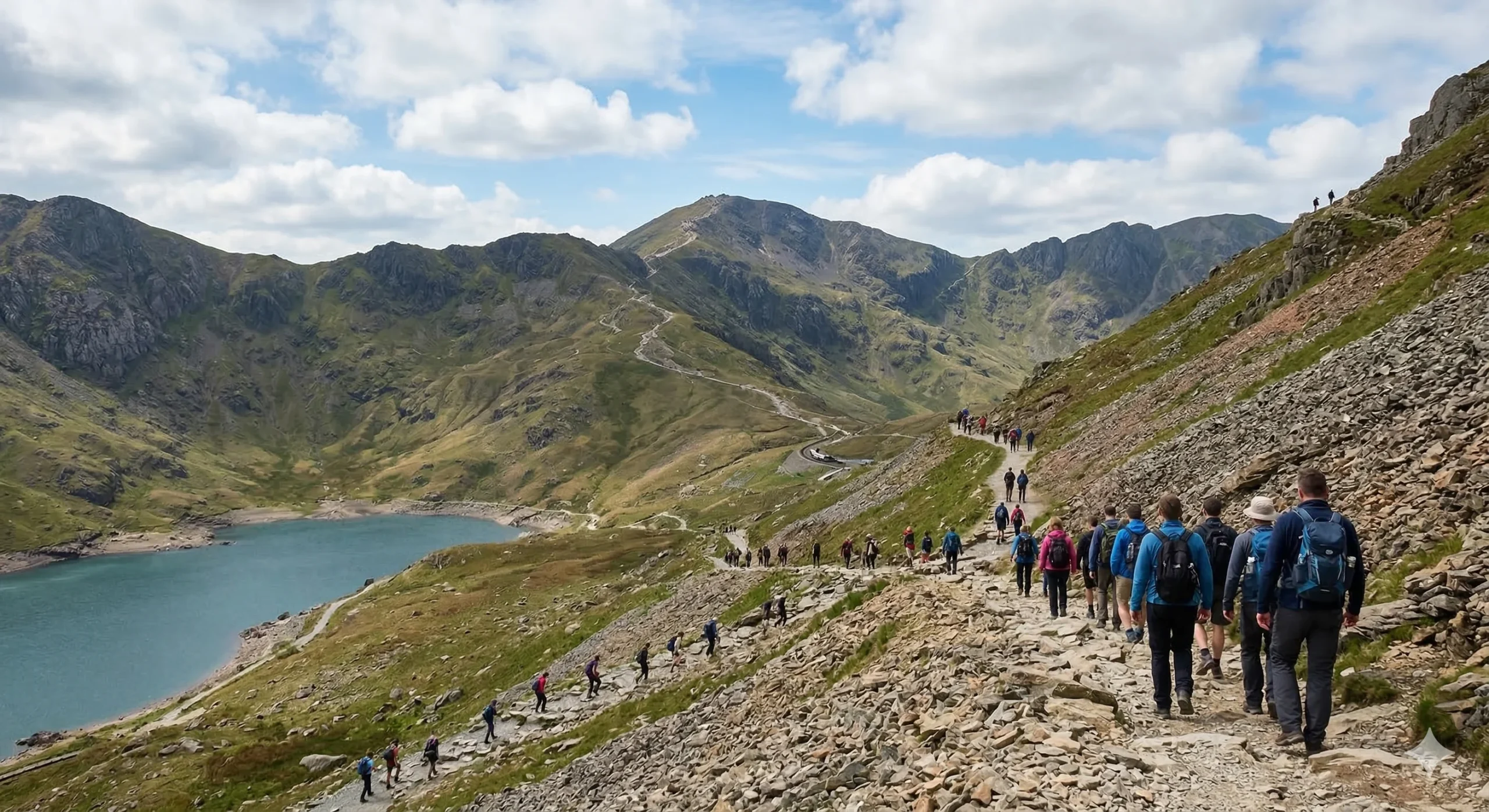

We have all been there. You arrive at the beach, excited for a relaxing stroll by the ocean. You step off the boardwalk onto the dry, powdery dunes, and suddenly, your legs feel like lead. A simple 10-minute walk feels like a marathon. You find yourself out of breath, asking, “Why is it difficult to walk on sand?”.
Is it just that you are out of shape? Probably not. The struggle is a matter of physics and biomechanics. The ground beneath you is quite literally stealing your energy.
In this deep dive, we will explore the physics of why it is difficult to walk on sand, why wet sand is easier to traverse, and how you can turn this difficulty into a powerful fitness advantage.
1. The Physics: Energy Absorption vs. Energy Return
To understand the difficulty, we have to look at Newton’s Third Law of Motion: “For every action, there is an equal and opposite reaction.”
Walking on Concrete (Elastic Collision)
When you walk on a hard surface like a sidewalk, you push your foot down. The concrete does not move. Instead, it pushes back with nearly equal force, propelling you forward. This is efficient energy return.
Walking on Sand (Inelastic Collision)
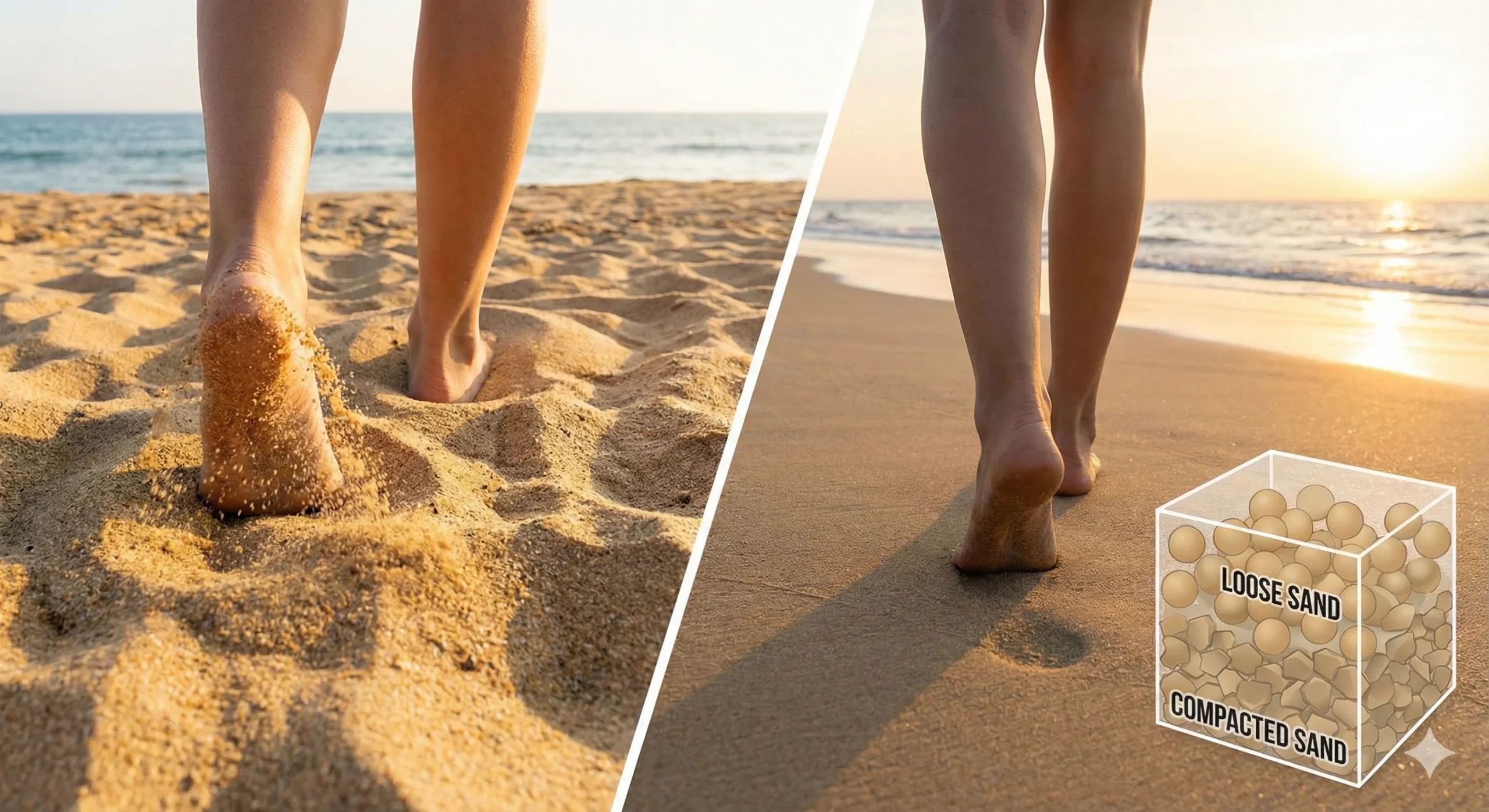
When you ask why is it difficult to walk on a sand surface, the answer lies in “displacement”. Sand is a “granular material”—it acts like a solid and a fluid. When your foot strikes the sand:
- Displacement: The grains slide against each other and move away from your foot.
- Sinking: Your foot sinks into the hole created by this movement.
- Energy Loss: The mechanical energy you generated to push off is “spent” on moving the sand grains rather than moving your body.
Essentially, the sand absorbs your energy. You aren’t just propelling yourself forward; you are constantly digging yourself out of a small hole.
2. The “Sinking” Effect & Biomechanics
The difficulty isn’t just about energy loss; it’s about how your body has to mechanically compensate for the unstable terrain.
Extreme Range of Motion
On a flat floor, your foot remains level. On sand, your heel usually sinks deeper than your toes. This forces your calf muscles to stretch further and work through a larger “range of motion” to push off. This is why your calves often scream in protest after a beach walk.
Stabilization Overdrive
Your body relies on “proprioception”—knowing where your limbs are in space. Because sand is uneven and constantly shifting, your brain has to send rapid-fire signals to the stabilizer muscles in your ankles, knees, and hips to keep you upright. This mental and physical demand significantly increases fatigue.
Note on Joint Health: While the lack of impact is generally good for joints, the uneven surface can be risky for stability. If you are currently learning how to start working out again after a knee injury, be cautious. The unpredictable shifting of sand can put unexpected torque on healing ligaments.
3. Wet Sand vs. Dry Sand: Why Is One Easier?
You have likely noticed that walking near the water’s edge is much easier than tramping through the dunes. Why is it easier to walk on wet sand?
The secret is Surface Tension.
When you mix the right amount of water with sand, the water coats the grains and forms tiny “capillary bridges” between them. This creates a suction force (surface tension) that binds the grains together.
- Dry Sand: Grains roll over each other like marbles (Low friction, high sinking).
- Wet Sand: Grains stick together like a solid (High friction, low sinking).
This “capillary cohesion” turns the wet sand into a surface almost as hard as concrete, allowing for efficient energy return and easier walking.
4. The Fitness Factor: Calorie Burn & Muscle Building
The very reasons that make walking on sand difficult also make it an incredible workout.
The 2.7x Rule
Studies in the Journal of Experimental Biology have shown that walking on sand requires 2.1 to 2.7 times more energy than walking on a hard surface at the same speed. Your heart rate rises faster, and your muscles recruit more fibers to handle the resistance.
The “Pizza” Perspective
Because of this massive increase in energy expenditure, a beach walk is highly efficient for weight loss. A 30-minute walk on the dunes might burn as many calories as a 90-minute walk on the road. If you are trying to burn off a cheat meal and wondering how many kcal in a slice of pizza, a vigorous session of sand walking is one of the fastest ways to offset those calories.
5. Tips for Making Walking on Sand Easier
If you want to enjoy the beach without the exhaustion, here are a few physics-based tips to make the journey easier:
- Stick to the Intertidal Zone: Walk on the dark, wet sand where the tide has just receded. The water has compacted the sand for you.
- Follow Footprints: If you must walk in soft sand, step into the footprints of someone who walked before you. They have already done the work of compressing the sand, giving you a firmer base.
- Choose Footwear Wisely:
- Barefoot: Best for strengthening feet, but requires more energy for balance.
- Wide-Soled Shoes: Sneakers with a wide surface area act like “snowshoes,” distributing your weight so you don’t sink as deep.
Conclusion: Embrace the Burn
So, explain why it is difficult to walk on sand?. It is a battle against physics. You are fighting a surface that absorbs your energy (Newton’s Third Law), forces your muscles into overdrive, and demands constant stabilization.
While it is frustrating when you are trying to carry a cooler to your picnic spot, it is a blessing for your fitness. Embrace the resistance. That sinking feeling is just your body getting stronger with every step.
Frequently Asked Questions (FAQ)
1. Why is it easier to walk on wet sand than dry sand? It is easier to walk on wet sand because the water acts as a glue between the sand grains. This phenomenon, known as capillary action, binds the grains together to create a firm, solid surface that supports your weight without sinking.
2. Does walking on sand burn more calories? Yes, significantly more. Walking on loose sand burns between 2.1 and 2.7 times more calories than walking on a paved surface because your body uses extra energy to lift your feet out of the sand and stabilize your joints.
3. Which muscles does walking on sand work? Walking on sand serves as a high-intensity lower-body workout. It heavily targets the calves (gastrocnemius and soleus), the glutes, and the small stabilizer muscles in your feet and ankles that are rarely used on flat ground.