







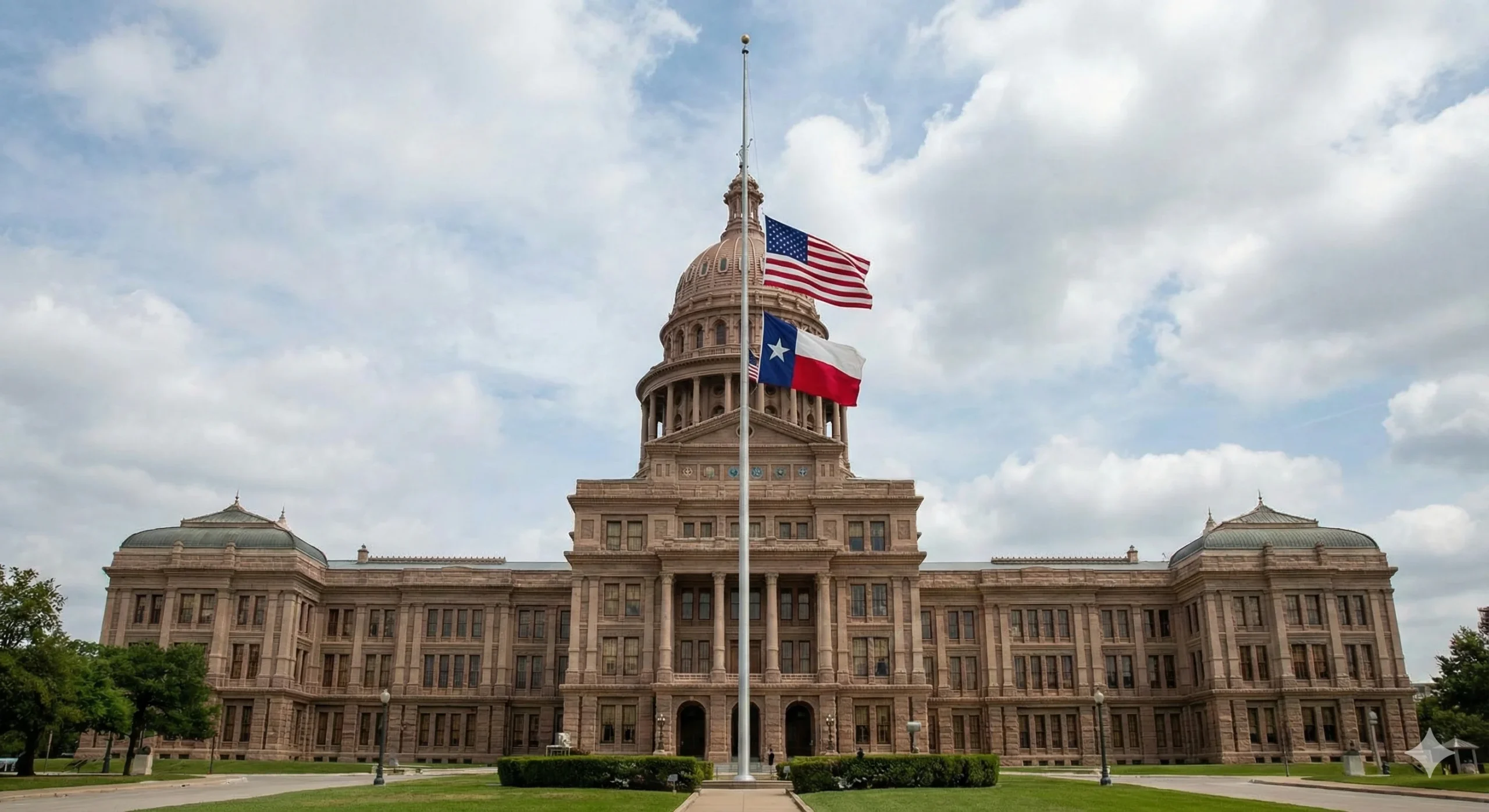
Driving past a government building, a school, or a car dealership in the Lone Star State, you might notice the flags flying lower than usual. It creates a moment of pause and curiosity. You immediately wonder: “Why are Texas flags half staff today?”
Is it a national tragedy? Has a local hero passed away? Or is it a scheduled day of remembrance?
The rules for lowering the flag are strict and governed by both federal law and the Texas Government Code. It is not a decision made lightly; it is a visual executive order. In this guide, we will explain the specific reasons why are flags flying at half staff today in Texas, how to verify the official status, and the proper etiquette for displaying the Lone Star flag.
Quick Answer:
How to check why the Texas flag is at half-staff:
- Check Federal Orders: The U.S. President may have ordered all flags lowered for a national tragedy or the death of a high-ranking official.
- Check State Orders: The Governor of Texas issues orders for the death of state officials or local peace officers.
- Check the Calendar: Flags are mandatory half-staff on Peace Officers Memorial Day (May 15), Patriot Day (Sept 11), and Pearl Harbor Day (Dec 7).
1. Is It a Scheduled Holiday? (Mandatory Dates)
Before searching for news of a tragedy, check the calendar. There are specific dates every year when federal law requires all flags—US and State—to be flown at half-staff. If today falls on one of these dates, the reason is statutory.
- May 15 (Peace Officers Memorial Day): Flags fly at half-staff from sunrise to sunset to honor fallen law enforcement officers.
- Last Monday in May (Memorial Day): This is unique. Flags are flown at half-staff only until noon, then raised to full-staff for the rest of the day.
- September 11 (Patriot Day): In memory of the lives lost in the 2001 terrorist attacks.
- December 7 (Pearl Harbor Remembrance Day): To honor those who died in the 1941 attack.
If you are asking “why are the flags at half staff in texas today” and it is one of these dates, no special order from the Governor is needed—it is automatic.
2. Recent Executive Orders (State vs. Federal)
If it is not a holiday, the lowering of the flag is likely due to a specific Executive Order. These orders function like government decrees—similar to how laws determine trade bans or why are Cuban cigars illegal in the US—and they must be followed by all state agencies.
Federal Orders (The President)
The President of the United States can order the US flag to be lowered for:
- The death of a principal figure (President, VP, Chief Justice, Speaker of the House).
- The death of a foreign dignitary.
- A tragic event with mass casualties (e.g., a mass shooting or natural disaster).
- Rule: When the US flag is lowered, the Texas flag must also be lowered.
State Orders (The Governor)
Governor Greg Abbott (or the current Governor) has the authority to lower flags specifically for Texas tragedies. This often happens for:
- Line of Duty Deaths (LODD): When a Texas police officer, firefighter, or first responder dies in the line of duty.
- Fallen Soldiers: When a soldier from Texas is killed in action.
- State Officials: The death of a current or former Texas legislator or judge.
3. Proper Etiquette: How to Lower the Flag
There is a respectful “physics” to handling the flag. You cannot simply raise it halfway and tie it off.
The Correct Procedure:
- Hoist Briskly: Raise the flag all the way to the peak (top) of the pole first.
- Lower Slowly: Immediately lower it slowly to the half-staff position.
- End of Day: Before taking the flag down at sunset, raise it to the peak again, then lower it completely.
This protocol is part of a code of conduct similar to the what is the outdoor code used by scouts and conservationists. Just as we follow codes to respect nature, we follow the Flag Code to show respect for the symbol and those it honors.
Note: The Texas flag should never be flown on top of or above the US flag if they are on the same pole. If they are on separate poles, the US flag is always the highest or on the viewer’s left.
4. Common Misconceptions: Half-Staff vs. Half-Mast
You will often hear people ask, “why are flags at half mast today?”. While the sentiment is correct, the terminology is technically wrong for land use.
- Half-Mast: Technically refers only to flags flown on a ship or at a naval base.
- Half-Staff: Refers to flags flown on a pole (staff) anchored to the ground or a building.
However, in common conversation, the terms are used interchangeably, and the respect intended remains the same.
Conclusion: Respecting the Symbol
The Texas flag is known for its bold single star and massive fields of color. When it is lowered, it is a striking visual signal that demands attention. Whether it is for a national day of mourning or the loss of a local hero, the half-staff position is a unifying gesture of respect.
If you are ever unsure, you can check the official “Texas Flag Status” page on the Governor’s website for real-time updates on why are Texas flags half staff today.
Frequently Asked Questions (FAQ)
1. Who can order the Texas flag to be lowered? The Texas flag can be ordered to half-staff by the President of the United States (affecting all flags) or specifically by the Governor of Texas to honor state officials, fallen soldiers, or first responders.
2. What is the difference between half-staff and half-mast? “Half-mast” is traditionally used for flags on ships or naval stations. “Half-staff” is the correct term for flags flown on poles on land (buildings, schools, yards).+1
3. How long does the flag stay at half-staff? It depends on the order. For the death of a President, it is 30 days. For a Vice President, 10 days. For Memorial Day, it is only until noon. For local Texas heroes, it is usually from the day of death until the day of interment (burial).