



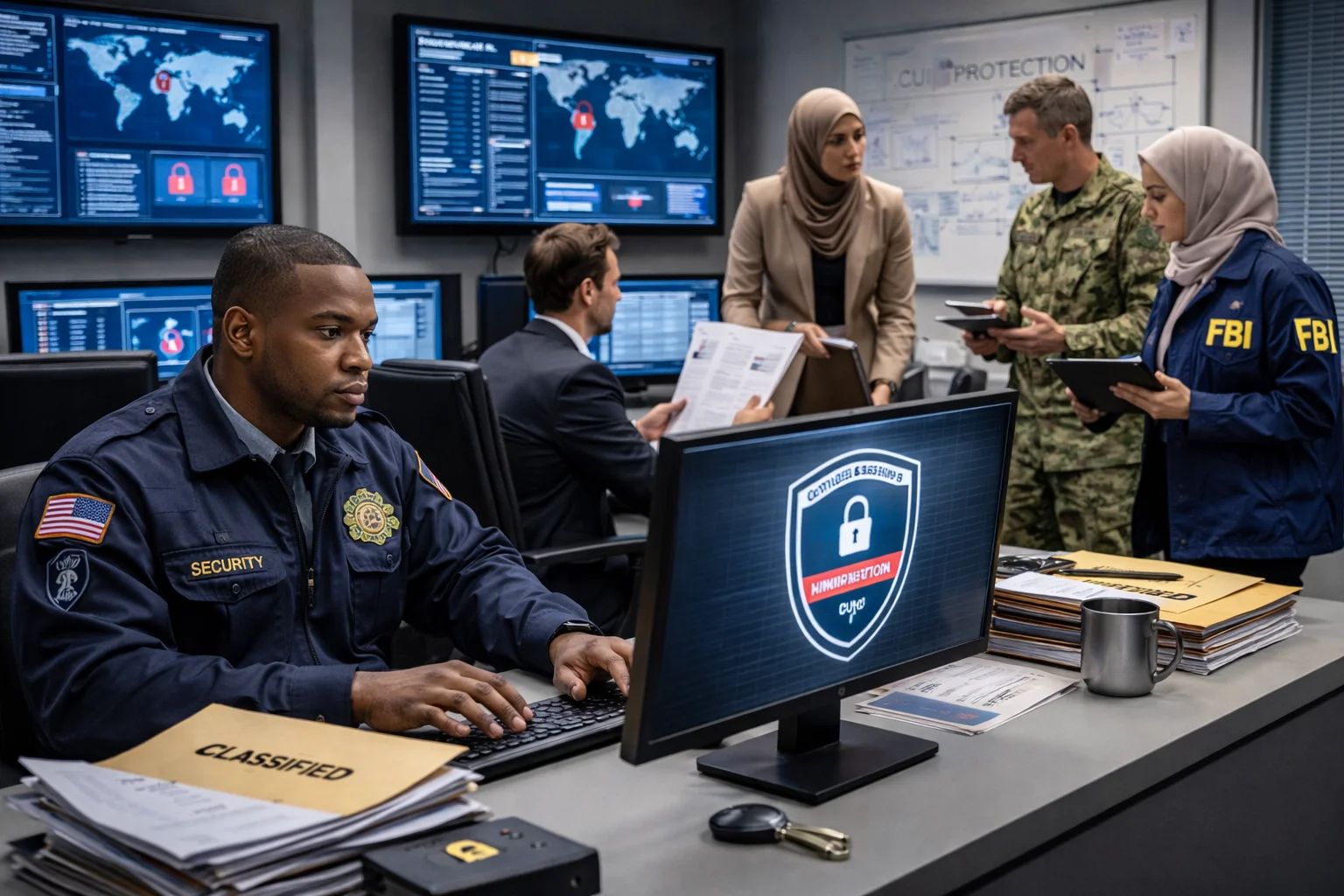



Controlled Unclassified Information (CUI) refers to sensitive government-related information that is not classified but still requires protection. Many people working with federal agencies or government contractors often ask who is responsible for protecting CUI and what rules must be followed to ensure it remains secure.
Understanding responsibility for protecting CUI is essential for maintaining national security, preventing data breaches, and complying with federal regulations. This guide explains what CUI is, who must protect it, and the key practices organizations follow to keep it secure.
What Is Controlled Unclassified Information (CUI)?
Controlled Unclassified Information (CUI) is information that the U.S. government requires to be protected or controlled under laws, regulations, or government-wide policies, but it does not meet the criteria for classified information.
CUI can exist in both physical and digital formats and is often shared between government agencies and private organizations working on federal contracts.
Examples of CUI include:
- Government contract documents
- Technical drawings or engineering data
- Export-controlled information
- Sensitive financial data
- Infrastructure information
- Legal or regulatory documentation
Although it is not classified like top-secret information, improper handling of CUI can still lead to serious security risks.
Who Is Responsible for Protecting CUI?
Short Answer:
Everyone who handles Controlled Unclassified Information is responsible for protecting it.
This responsibility applies to:
- Federal government employees
- Contractors working with government agencies
- Subcontractors handling federal data
- Organizations that store or process government information
Anyone who creates, accesses, stores, or transmits CUI must follow the required security policies designed to protect the information from unauthorized access.
Government Employees and CUI Protection
Government employees who work with sensitive information must ensure that CUI is properly labeled, stored, and shared only with authorized individuals.
Their responsibilities typically include:
- Proper classification and labeling of CUI documents
- Following federal security policies
- Using secure government systems for communication
- Preventing unauthorized disclosure
Employees must also receive training on handling sensitive information to ensure compliance with federal security standards.
Contractors and Subcontractors
Many federal agencies rely on private companies to perform services or develop technology. When these organizations receive government data, they are also responsible for protecting CUI.
Contractors must implement security controls that prevent unauthorized access or leaks.
These responsibilities often include:
- Protecting stored digital data
- Restricting access to authorized employees
- Monitoring network activity
- Training staff on data security policies
Organizations handling federal information often implement cybersecurity systems and monitoring frameworks similar to those used in network control systems to ensure sensitive information remains protected.
Why Protecting CUI Is Important
Protecting CUI is critical because sensitive government information can cause harm if it is exposed or accessed by unauthorized individuals.
Some major reasons for protecting CUI include:
National Security
Some CUI contains sensitive operational details that could compromise government activities.
Privacy Protection
Certain documents may contain personal information that must be protected.
Regulatory Compliance
Organizations must follow federal regulations to maintain government contracts.
Preventing Cybersecurity Threats
Sensitive data is often targeted by cybercriminals or foreign intelligence operations.
Failure to protect CUI can result in legal consequences, contract termination, or financial penalties.
Regulations and Standards for Protecting CUI
The U.S. government established several frameworks that define how organizations must protect Controlled Unclassified Information.
NIST SP 800-171
One of the most important standards is NIST Special Publication 800-171, which outlines security requirements for protecting CUI in non-federal systems.
These requirements cover areas such as:
- Access control
- Incident response
- system monitoring
- authentication protocols
- encryption
Department of Defense (DoD) Requirements
Companies working with the Department of Defense must comply with additional security requirements to ensure federal data remains protected.
Organizations may also implement secure infrastructure environments similar to state wide area network systems that allow controlled and monitored data sharing between secure networks.
How Organizations Protect CUI
To meet compliance standards, organizations handling Controlled Unclassified Information typically implement multiple layers of security.
Access Control
Only authorized personnel should have access to sensitive data. Access permissions are carefully managed and monitored.
Encryption
Data is encrypted both while stored and during transmission to prevent unauthorized interception.
Network Monitoring
Security systems continuously monitor networks to detect suspicious activity.
Employee Security Training
Employees receive training on how to recognize security risks and properly handle sensitive information.
Data Classification
Documents are labeled clearly to indicate that they contain CUI and must be handled according to security guidelines.
Examples of Controlled Unclassified Information
Controlled Unclassified Information can appear in many industries and government operations.
Common examples include:
- Military technical drawings
- Aerospace engineering designs
- Critical infrastructure details
- Government procurement documents
- Sensitive research data
- Financial reports related to federal projects
Although these documents are not classified, they still require strict protection.
What Happens If CUI Is Not Protected?
Failure to properly protect CUI can lead to serious consequences.
Organizations or individuals responsible for mishandling CUI may face:
- Loss of government contracts
- Financial penalties
- Legal investigations
- Damage to organizational reputation
- National security risks
For this reason, strict policies and compliance requirements are enforced for anyone handling sensitive government information.
Frequently Asked Questions
Who is responsible for protecting CUI?
Anyone who handles, processes, stores, or transmits Controlled Unclassified Information is responsible for protecting it. This includes government employees, contractors, subcontractors, and organizations working with federal agencies.
What does CUI stand for?
CUI stands for Controlled Unclassified Information. It refers to sensitive government information that requires safeguarding but does not meet the criteria for classified information.
What are examples of CUI?
Examples include engineering designs, government contracts, sensitive research data, export-controlled information, and infrastructure documentation.
Who must follow CUI protection rules?
All individuals and organizations that access federal information systems or work with government data must follow CUI protection requirements.
What regulation protects CUI?
The main regulation is NIST SP 800-171, which provides security standards for protecting Controlled Unclassified Information in non-federal systems.
Final Thoughts
Understanding who is responsible for protecting CUI is essential for anyone working with federal agencies or handling government data. The responsibility extends beyond government employees and includes contractors, subcontractors, and organizations that store or process sensitive information.
By following established security frameworks, implementing proper cybersecurity practices, and ensuring employees are trained in data protection procedures, organizations can effectively safeguard Controlled Unclassified Information and maintain compliance with federal regulations.