






When planning or upgrading your home’s exterior, the typical driveway width plays a bigger role than most people realize. A well-sized driveway makes parking smoother, improves curb appeal, and ensures there’s enough room for vehicles and pedestrians to move comfortably. But how wide should your driveway really be? Let’s break down the standard driveway dimensions for single-car and two-car homes — and what factors can influence them.
🚗 Why Driveway Width Matters
Your driveway is more than just a parking spot; it’s the entryway to your home. A narrow driveway can make maneuvering difficult, while one that’s too wide might eat into your landscaping space. Choosing the right driveway width depends on your vehicle size, number of cars, and available land. It’s also about long-term practicality — from guest parking to resale appeal.
📏 What Is the Typical Driveway Width?
The typical driveway width varies slightly based on location, vehicle type, and design preferences. However, for most homes:
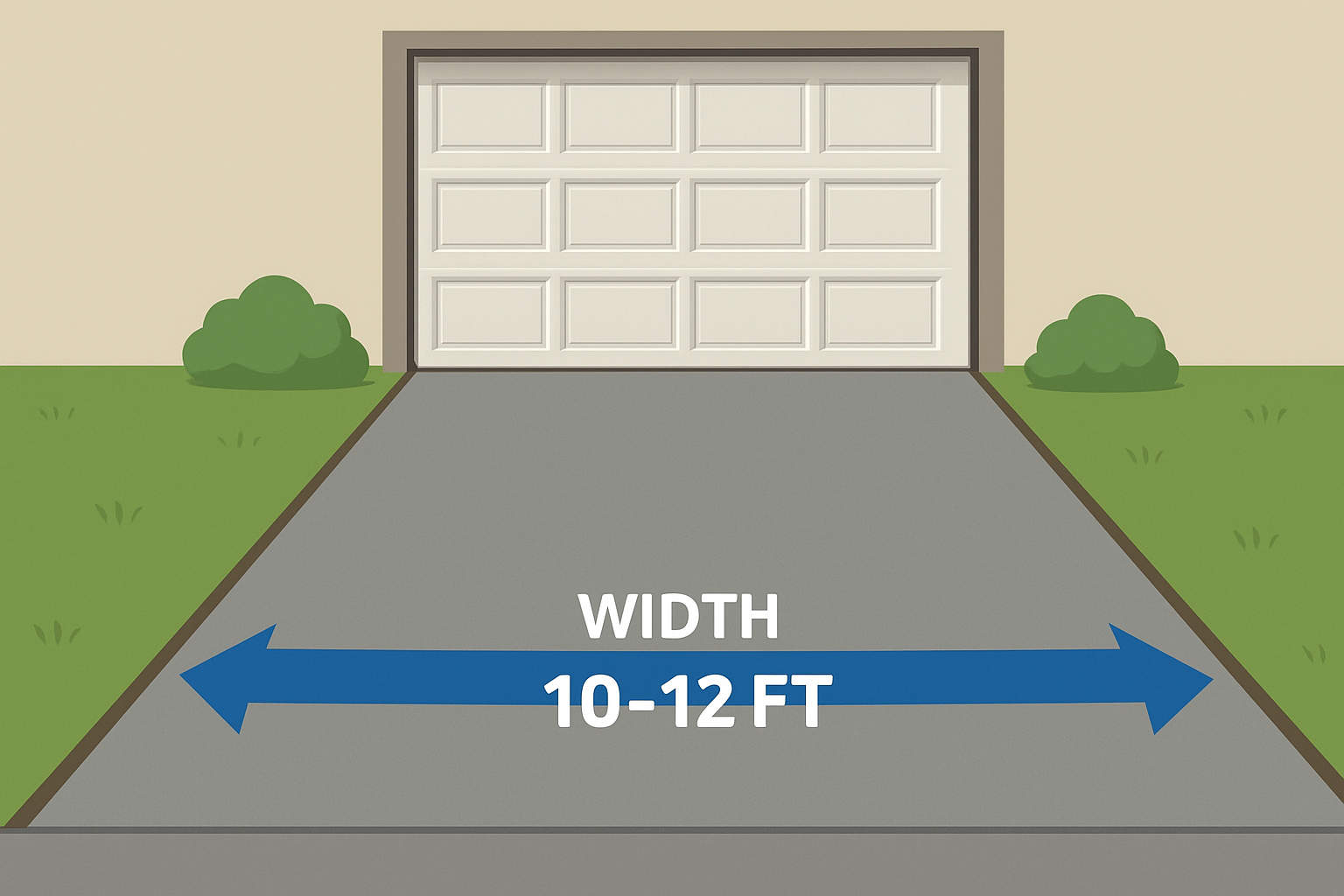
- Single-car driveways are usually 8 to 10 feet wide.
- Two-car driveways typically range from 16 to 20 feet wide.
These measurements are what builders refer to as standard driveway dimensions — wide enough for comfort but compact enough to maintain symmetry with your property. In urban settings where space is tight, an 8-foot-wide drive might be sufficient for compact cars. In suburban or rural areas, homeowners often prefer up to 12 feet per vehicle for added clearance.
If you’re wondering what counts as a normal driveway width, anything within this 8–20-foot range will generally meet both aesthetic and functional needs.
🚙 Standard Driveway Dimensions by Type
1. Single-Car Driveway Width:
- Average: 8 to 10 feet
This size comfortably fits one vehicle with just enough room to open doors and step out safely. If you own a larger SUV or truck, consider widening the space to 12 feet for easier access.
2. Two-Car Driveway Width:
- Average: 16 to 20 feet
This is where spacing matters most. The width of a driveway for 2 cars should allow both vehicles to park side-by-side without door interference. A width closer to 20 feet ensures ample clearance for SUVs and family vans.
3. Circular or Side-Entry Driveways:
When driveways loop or curve, the width should increase slightly at turns to accommodate steering angles. These designs often extend beyond 20 feet to maintain smooth vehicle flow.
🧱 2 Car Driveway Width — Finding the Right Balance
A 2 car driveway width of around 18–20 feet is ideal for most households. It offers enough space to park comfortably, open doors fully, and even leave a small pathway along the edge.
For properties with limited front yard space, you can still maintain functionality by choosing materials like gravel or pavers that allow flexible edging. For design inspiration, explore gravel driveways with edging — a great way to combine practicality and visual appeal.
⚙️ Factors That Affect Driveway Width
When determining your driveway width, keep these factors in mind:
- Vehicle Size — Compact cars need less room than full-size SUVs or trucks.
- Turning Radius — If your driveway leads into a garage at an angle, add 2–3 extra feet for maneuvering.
- Local Zoning Codes — Some cities have minimum width requirements or setback rules.
- Landscaping or Edging — Using decorative gravel path edging or bricks may slightly reduce usable width.
- Number of Drivers — Families with multiple cars benefit from wider or double-lane driveways.
🧩 Design Tips for Planning a Driveway
- Match to Garage Door Width: If you have a double garage door (around 16 feet), make the driveway at least that wide.
- Add Walkways: Leave 2–3 feet of space along one side for foot traffic.
- Consider Surface Material: Concrete, asphalt, and gravel each have different spreading needs — gravel often requires edging to prevent displacement.
- Mind Drainage: A slightly sloped surface (1–2%) helps avoid pooling water.
For more driveway planning insights, you can also check How Long Does an Alignment Take? — a useful read for car owners who frequently use their driveway for maintenance and parking.
🚫 Common Mistakes to Avoid
- Going Too Narrow: Squeezing a driveway under 8 feet can make parking stressful and risky.
- Ignoring Future Needs: Always plan for potential additional cars or larger vehicles.
- Skipping Edging: Without proper edging or borders, gravel and soil can spill onto your lawn or walkway.
- Overlooking Regulations: Confirm local codes for setbacks and drainage before pouring or paving.
🏁 Conclusion — Choose the Driveway Width That Fits Your Lifestyle
The typical driveway width may seem like a small detail, but it directly affects everyday convenience and the overall flow of your property. Whether you’re working with a single-lane entry or a double-wide design, balance functionality with aesthetics.
For most homeowners, sticking to standard driveway dimensions — around 10 feet for one car or 18–20 feet for two — ensures enough room to park, move, and maintain a clean, well-proportioned look. With careful planning and the right materials, your driveway can blend seamlessly into your home’s layout while staying practical for years to come.