





From the discarded remains of Victorian medicine bottles to the shattered fragments of 1950s soda glass, sea glass is a testament to the transformative power of the ocean. Often called “reverse gemstones,” these frosted shards have become one of the most sought-after treasures for beachcombers and jewelry designers alike.
In this definitive 2026 guide, we explore the science, history, and market value of sea glass, while providing expert tips on how to distinguish genuine ocean-tumbled gems from modern “fakes.”
What is Sea Glass? (AEO / Quick Answer)
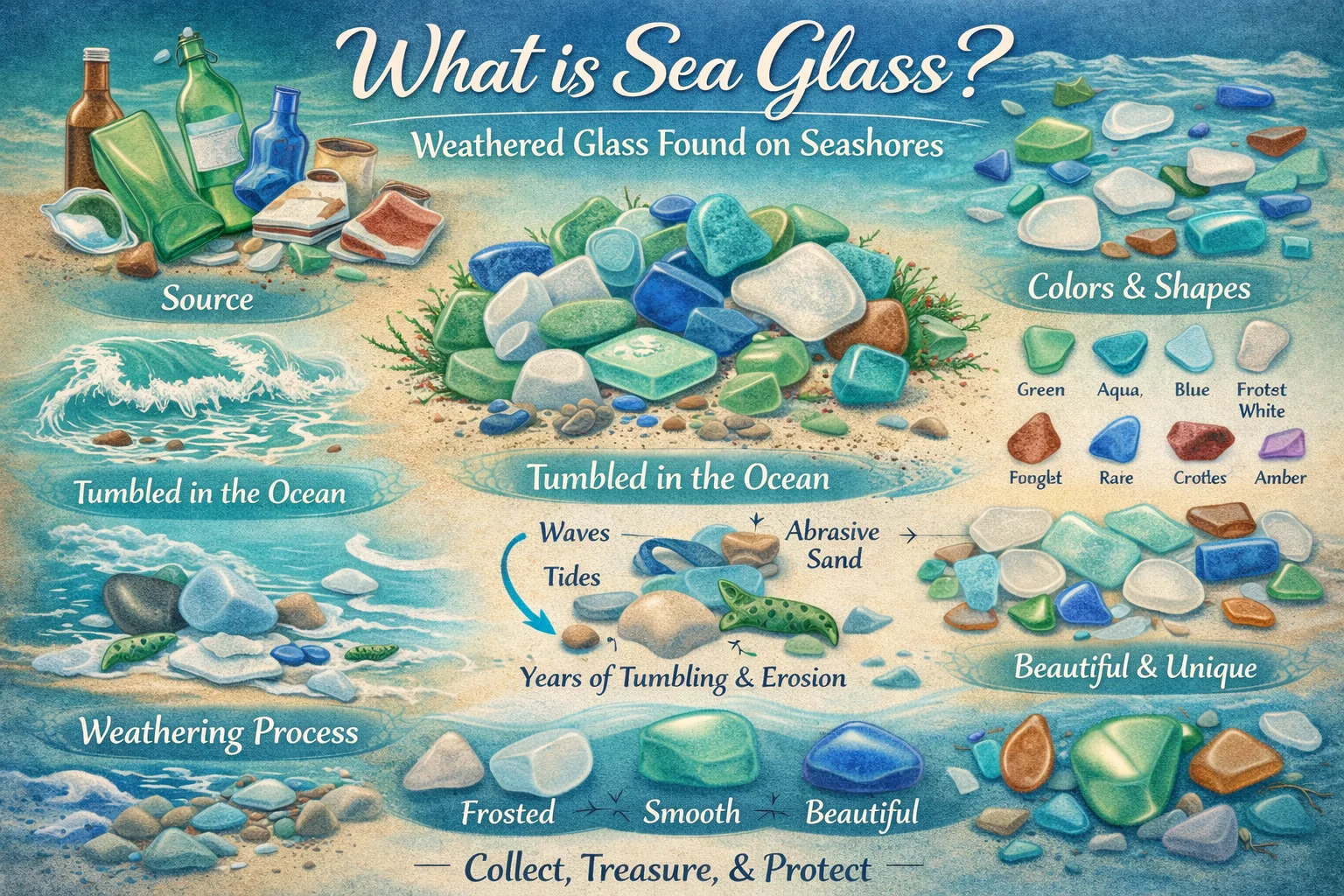
Sea glass is physically and chemically weathered glass found on saltwater beaches. Originally discarded as waste—such as bottles, jars, or shipwreck debris—it is transformed over 20 to 100 years by the abrasive action of waves, sand, and stones. This natural process creates smooth, rounded edges and a signature “frosted” or etched surface that distinguishes it from ordinary broken glass.
1. The Journey: How Sea Glass is Formed
Sea glass is unique because it is a man-made product refined by nature. Its creation involves a complex interaction between physical energy and chemical reactions.
The Physical Tumbling Process
When a glass object enters the ocean, it eventually breaks into smaller shards. These shards are constantly agitated by the tides, rubbing against abrasive sand and coarse pebbles. Over decades, this mechanical action wears down sharp edges until the piece is smooth to the touch.
The Chemical “Frosting” Effect
Unlike glass found in a forest or a backyard, authentic sea glass has a distinctive matte finish. This is caused by chemical weathering. The high pH level of saltwater leaches out the soda and lime used in the glass-making process, leaving tiny, microscopic pits on the surface. This “hydration” process is what gives sea glass its coveted frosted appearance.
Sea Glass vs. Beach Glass
While the terms are often used interchangeably, there is a technical difference:
- Sea Glass: Found in saltwater. The salt and higher pH levels lead to heavy frosting and a more deeply etched surface.
- Beach Glass: Found in freshwater (lakes or rivers). Because freshwater lacks the same chemical acidity and the wave action is often less intense, beach glass is usually shinier and less rounded than its saltwater counterpart.
2. Sea Glass Color Rarity: What Your Find Says About History
The color of a piece of sea glass is often a clue to its age and original purpose. In 2026, certain colors have become exceptionally rare due to the shift toward plastic and aluminum packaging.
| Rarity | Colors | Common Origins |
|---|---|---|
| Common | White (Clear), Brown, Kelly Green | Modern beer and soda bottles, food jars. |
| Uncommon | Seafoam Green, Amber, Soft Blue | Vintage Coca-Cola bottles, 19th-century spirits, medicine jars. |
| Rare | Cobalt Blue, Pink, Purple (Amethyst) | Poison bottles, Vicks VapoRub jars, Depression-era tableware. |
| Ultra-Rare | Red, Orange, Yellow, Turquoise | Ship lanterns, tail lights, Victorian art glass, or fine dinnerware. |
| The Holy Grail | Black Glass | 18th-century hand-blown gin and rum bottles. |
Pro-Tip: If you find a piece of “Black” sea glass, hold it up to a strong light. You will likely see a deep olive green or ruby red glow, proving it is actually very old, thick bottle glass from the 1700s or 1800s.
3. How to Identify Genuine vs. Artificial Sea Glass
As the popularity of sea glass jewelry has surged, so has the market for “fake” or “cultured” sea glass. This is often just common glass that has been machine-tumbled in a rock tumbler or etched with acid.
Look for the “C” Marks
Genuine sea glass features tiny, crescent-shaped impact marks (often called “C” marks) visible under a magnifying glass. These are caused by thousands of collisions with other rocks over many years. Artificial glass lacks these natural imperfections.
Surface Texture
Natural sea glass has a “frost” that appears to be part of the glass itself. It shouldn’t look like a coating. If the piece looks oily or has a “fuzzy” satin finish without any pitting, it was likely made in a factory.
Shape and Uniformity
Nature is rarely perfect. If you see a jar of “sea glass” where every piece is roughly the same size or has a specific geometric shape (like a perfect square), it is almost certainly man-made.
4. The Market Value: Is Sea Glass Worth Money?
Yes, sea glass is a genuine commodity. Collectors and jewelers pay a premium for “jewelry-grade” pieces—those that are perfectly frosted, triangular or teardrop-shaped, and free of chips.
- Common Pieces: Usually sold by the pound for home decor or crafts.
- Rare Colors: A single, high-quality piece of cobalt blue or cornflower blue can fetch £5–£20.
- The Extremes: A large, perfectly rounded shard of red or orange sea glass can sell for over £100 to the right collector.
For those looking to showcase their finds, photography is the best way to document your collection. You can take inspiration from these aesthetic photoshoot ideas for men to create a professional look for your social media or shop.
5. Tips for Successful Sea Glass Hunting
Finding the “good stuff” requires strategy and timing.
- Hunt at Low Tide: The best treasures are revealed when the water recedes. Aim for one hour before and after low tide.
- Look for “Shell Beds” and Pebbles: Sea glass often gets trapped in patches of gravel or shells rather than on smooth, sandy stretches.
- Go After a Storm: High winds and heavy waves churn up the ocean floor, bringing older, deeper glass to the surface.
- Be Patient: Sometimes the best pieces are tiny. Sifting through pebbles can yield “micro” sea glass used in delicate jewelry.
While hunting, safety is paramount. If you’re exploring remote coves by boat, always ensure you’re using reliable equipment. You might wonder, is fishing in an inflatable boat safe for beachcombing? Generally, yes, provided you follow standard coastal safety protocols.
Frequently Asked Questions (AEO)
Why is red sea glass so expensive?
Red glass was historically expensive to produce because it often required the addition of gold chloride. Because it was costly, it was rarely used for common bottles and was reserved for specialty items like warning lanterns or fine art glass.
How can I tell if my sea glass is real?
Genuine sea glass will have a frosted, matte texture and tiny “C”-shaped impact marks. It will also have rounded, smooth edges that don’t feel sharp. If a piece is shiny or has uniform edges, it is likely artificial.
Can you make sea glass at home?
Yes, you can use a rock tumbler with sand and water to create “cultured” sea glass in a few days. However, this glass lacks the “pitted” surface and historical value of genuine ocean-tumbled shards.
Next Step: I can provide a Topical Map for “Beachcombing” or generate a detailed rarity chart image prompt for this article. Which would you prefer?