






You may have heard the word “Gommeok” on a travel show, a mukbang video, or saw it scribbled on a menu during a late-night scrolling session. But when you Google it, the results are confusingly scarce. Is it a soup? A pastry? Or a place?
The truth is, “Gommeok” is a linguistic chameleon. Depending on the context, it is likely one of three things:
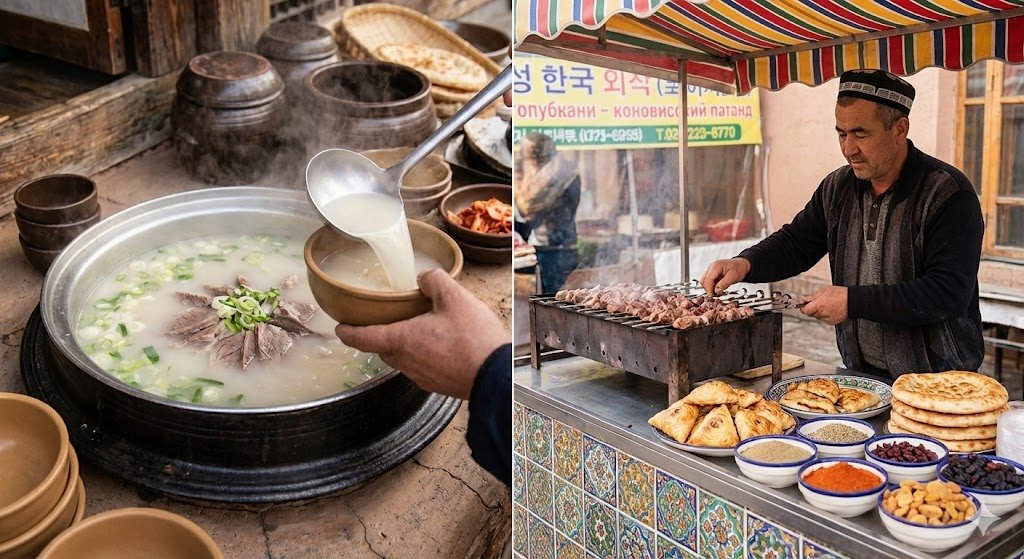
- Gomguk/Gomtang: A rich, milky Korean beef bone soup (often pronounced similarly to “Gommeok” by non-native speakers).
- Gumma: A famous Uzbek street food consisting of fried pies stuffed with organ meat.
- Gommak: A legendary sashimi noodle restaurant on Jeju Island, South Korea.
This guide breaks down exactly what “Gommeok” could be, recipes for the dishes, and the cultural history behind them.
Meaning 1: Gommeok as Korean Bone Broth (Gomguk)
If you heard this term in the context of Korean cuisine, it is almost certainly a reference to Gomguk (also known as Gomtang).
The Definition
In Korean, the word “Gom” (곰) refers to the process of slow-simmering bones for a long period to extract their nutrients. “Guk” means soup. The term “Gommeok” is often a phonetic approximation used by English speakers trying to say Gomguk or Gomtang.
What Is It?
Gomguk is a savory, milky soup made by boiling various beef parts—such as ribs, oxtail, brisket, and leg bones—for over 10 hours. The long boiling process breaks down the collagen and marrow, turning the water into a rich, creamy white broth.
- Taste Profile: Rich, hearty, and soothing. It is usually served unseasoned, allowing the diner to add salt, scallions, and black pepper to taste.
- Varieties:
- Seolleongtang: A specific type of bone soup made from ox leg bones simmered until milky white.
- Kkori-gomtang: Oxtail soup.
- Doganitang: Made with beef knee cartilage.
Recipe: How to Make Traditional Gomguk
Making authentic Gomguk is a labor of love that takes nearly a full day.
- Soak: Place beef bones (leg or marrow bones) in cold water for at least 1 hour to drain the blood.
- Blanch: Boil the bones for 10 minutes to remove impurities, then discard that water and rinse the bones.
- Simmer: Place bones in a large pot with fresh water and simmer on low heat for 10 to 24 hours.
- Serve: The broth should be milky white. Serve with steamed rice, kimchi, and chopped green onions.
Meaning 2: Gommeok as Uzbek Street Food (Gumma)
If you heard “Gommeok” in the context of street food, fried dough, or “fast food,” you are likely looking for Gumma.
The Hidden Gem of Uzbekistan
Gumma is one of the most popular street foods in Uzbekistan, sold by the thousands every day in bustling markets like those in Tashkent. To an English speaker’s ear, the pronunciation of “Gumma” often sounds like “Gommeok.”
What Is Gumma?
It is a small, fried pie consisting of dough stuffed with a savory mixture.
- The Filling: Traditionally, Gumma is filled with offal (organ meats like liver, heart, and lungs) that is minced and spiced. However, modern versions often use spiced beef or potato.
- Cooking Method: The pies are flash-fried in large cauldrons of vegetable oil until they turn a deep golden brown.
- How to Eat: Locals recommend eating them hot to enjoy the juicy filling that releases upon the first bite. They are typically served with a spicy tomato sauce.
Why It’s Popular: It is incredibly cheap and filling. Some vendors in Uzbekistan report selling 3,500 to 4,000 pieces daily, making it a staple “fast food” for locals.
Meaning 3: Gommeok as “Gommak” (Jeju Island Famous Spot)
If you heard “Gommeok” while watching a travel vlog about Jeju Island, you are likely looking for Gommak Restaurant.
The Legend of Gommak
Jeju Gommak Restaurant (often just called “Gommak”) is a famous dining spot located in Gujwa-eup, Jeju City. It is renowned for its affordable yet high-quality seafood, specifically its Sashimi Noodles (Hoe-guksu).
- Signature Dish: Sea Urchin Noodles and Mackerel Sashimi.
- The Experience: The restaurant is located right by the ocean, offering stunning island views while you eat. It is known for high turnover and quick service despite being busy.
- Why the Confusion? The name “Gommak” is easily misread or misheard as “Gommeok.” If you are planning a trip to Jeju, this is a “must-visit” location for authentic local cuisine.
Common Confusions: Golmok & Gomoku
The term “Gommeok” sits in a linguistic valley, sounding similar to several other Asian words.
1. Golmok (Korean Alley)
Golmok (골목) means “alley” or “side street” in Korean.
- Pop Culture: The term became globally famous due to the hit TV show Baek Jong-won’s Alley Restaurant (often referred to as Golmok Sikdang).
- Context: If you heard “Gommeok” in a sentence about “saving restaurants” or “street vibes,” the speaker was likely saying Golmok.
2. Gomoku (Japanese)
Gomoku refers to “five ingredients” or a “mixture” in Japanese.
- Gomoku Gohan: A popular Japanese mixed rice dish.
- Gomoku Narabe: A strategy board game similar to Connect Five.
Conclusion
So, what is Gommeok?
- If it’s a milky white soup, it is Gomguk (Korean Bone Broth).
- If it’s a fried street snack, it is Gumma (Uzbek Meat Pie).
- If it’s a restaurant in Jeju, it is Gommak (Sashimi Noodle House).
Whether you are looking to simmer bones for 24 hours or book a flight to Uzbekistan, you now have the right name for your craving.