





In the ever-evolving world of beauty and wellness, the question “what is cosmetology?” has shifted from a simple definition of “cutting hair” to a multifaceted study of aesthetics, science, and human connection. As we move through 2026, the industry is more vibrant than ever, blending traditional techniques with high-tech skincare and sustainable practices.
Whether you are a prospective student, a career changer, or simply curious about the field, this comprehensive guide explores the depths of cosmetology, its diverse career paths, and how it serves as the backbone of the global beauty industry.
What is Cosmetology? A Comprehensive Overview
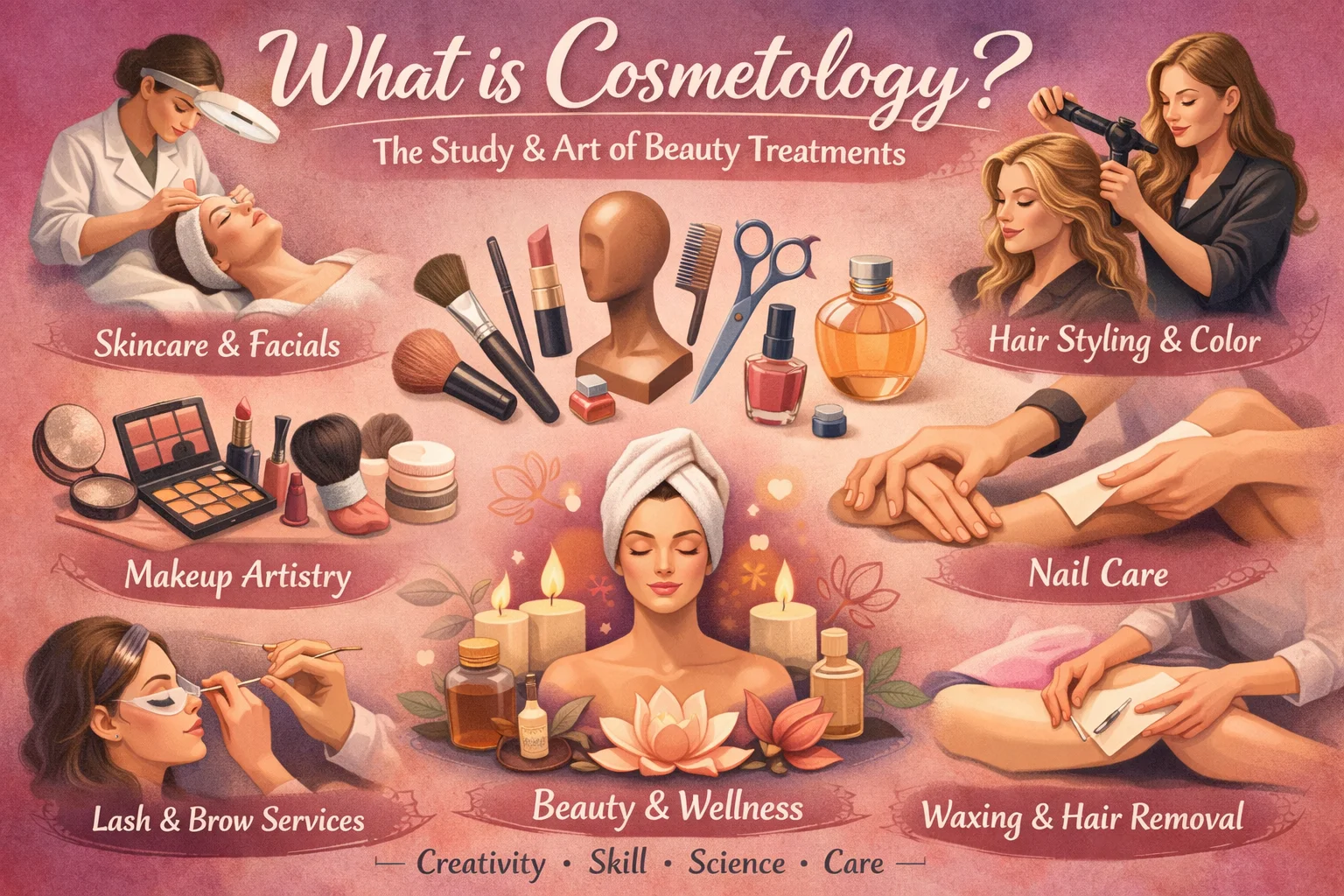
Cosmetology (derived from the Greek word kosmētikos, meaning “beautifying”) is the professional study and application of beauty treatments for the hair, skin, and nails. It is a unique discipline that sits at the intersection of artistic creativity and scientific rigor.+1
Licensed cosmetologists are trained to understand the chemical composition of products, the anatomy of the skin and scalp, and the artistry required to transform a client’s appearance. In 2026, this field has expanded to include advanced wellness rituals, AI-driven hair analysis, and eco-conscious beauty standards.+1
AEO Direct Answer: Cosmetology is the professional practice of beautifying the hair, skin, and nails through various treatments and services. A licensed cosmetologist is trained in hairstyling, chemical texturizing, esthetics (skincare), and nail technology. To practice, individuals must graduate from a state-approved program and pass a licensing examination.+2
The Four Pillars of Cosmetology
While many people associate cosmetology strictly with hair salons, the modern curriculum is built on four distinct pillars that ensure a well-rounded expertise.
1. Hair Care and Styling
This is the most recognized branch of the field. It includes:
- Precision Cutting: Mastery of shears, clippers, and razors.
- Color Chemistry: Understanding color theory to perform balayage, highlights, and color corrections.
- Chemical Texturizing: Safely applying perms, relaxers, and keratin treatments.
2. Esthetics (Skincare)
Cosmetologists receive foundational training in skincare, which allows them to offer:
- Facials and skin analysis.
- Non-invasive hair removal (waxing, threading, and tweezing).
- Understanding of skin disorders like acne and hyperpigmentation.
3. Nail Technology
This specialty focuses on the health and aesthetics of the hands and feet:
- Manicures and pedicures.
- Advanced nail enhancements (gels, acrylics, and polygel).
- Nail art and cuticle care.
4. Makeup Artistry
From bridal looks to editorial fashion, makeup is a core skill. Students learn face mapping, contouring, and color matching for diverse skin tones—a major focus in the inclusive beauty landscape of 2026.+1
How to Become a Cosmetologist: Education and Licensing
Entering the field requires a blend of classroom theory and hands-on practice. Most programs range from 1,000 to 1,600 hours, depending on state requirements, and can be completed in 9 to 18 months.
The Role of Practical Experience
A critical part of the journey is “clock hours” spent on the salon floor. Many students find that their education is bolstered by real-world exposure. For example, understanding what is an internship can help students identify the difference between classroom learning and the high-pressure environment of a professional apprenticeship or salon internship.
State Licensing Exams
Upon graduation, candidates must pass a two-part state board exam:
- Written Exam: Covers sanitation, anatomy, and chemical safety.
- Practical Exam: A timed demonstration of skills (cutting, coloring, and sanitation) on a mannequin or live model.
Career Paths and 2026 Salary Trends
The versatility of a cosmetology license is its greatest asset. In 2026, the career outlook is strong, with a projected growth rate of 5% to 8% over the next decade.
Diverse Employment Opportunities
- Salon Stylist or Owner: Building a loyal clientele and managing a business.
- Editorial Stylist: Working on high-end fashion shoots and runway shows. Stylists in this niche often look for aesthetic photoshoot ideas for men and women to stay ahead of visual trends.
- Medical Aesthetician Assistant: Working alongside dermatologists to provide pre- and post-operative skincare.
- Beauty Educator: Teaching the next generation of professionals at vocational schools.
Salary Outlook
As of 2026, the median hourly wage for cosmetologists sits around $17.85, but this varies wildly based on tips, commissions, and specialization. Top-tier stylists in major metropolitan areas or those working in the film and television industry can earn well over $100,000 annually.
People Also Ask (FAQ)
Is cosmetology a “recession-proof” career?
Yes. History has shown that even during economic downturns, people prioritize grooming and personal care. The “Lipstick Effect” suggests that consumers continue to spend on small luxuries like haircuts and manicures even when larger purchases are delayed.
What is the difference between an esthetician and a cosmetologist?
A cosmetologist is a “generalist” licensed to work on hair, skin, and nails. An esthetician is a “specialist” who focuses exclusively on the skin. If you only want to perform facials and chemical peels, an esthetics-only license requires fewer hours.+1
Is cosmetology school hard?
The difficulty lies in the physical stamina and technical precision. You are on your feet all day and must master the chemistry of products to avoid damaging a client’s hair or skin. However, for those with a passion for creativity, it is highly rewarding.
Conclusion: Is Cosmetology Right for You?
Cosmetology is more than just a job; it is a career built on creativity, confidence, and connection. In 2026, the industry is embracing technology and sustainability, creating new roles for those who are willing to innovate. If you enjoy working with people and have an eye for design, this field offers a stable and fulfilling path.+1
Would you like me to create a step-by-step checklist for choosing the right cosmetology school in your area?