






It is the part of your house you stand under when you forget your keys in a rainstorm, but it does much more than just keep you dry. A roof overhang is one of the most critical components of your home’s exterior defense system.
While often viewed as an aesthetic feature—giving a house its “character”—the primary job of an overhang is to act as an umbrella. It pushes rainwater away from the foundation, shades windows to reduce cooling costs, and prevents water from running down the siding. Without proper overhangs, your home is significantly more vulnerable to rot, mold, and basement flooding.
This guide breaks down the anatomy of an overhang, the standard dimensions for different materials, and the critical differences between shingle and metal roof setups.
What is the Overhang of a Roof Called? (The Anatomy)
If you ask a builder to fix the “edge of the roof,” they might need you to be more specific. The overhang is actually a system made up of several distinct parts.
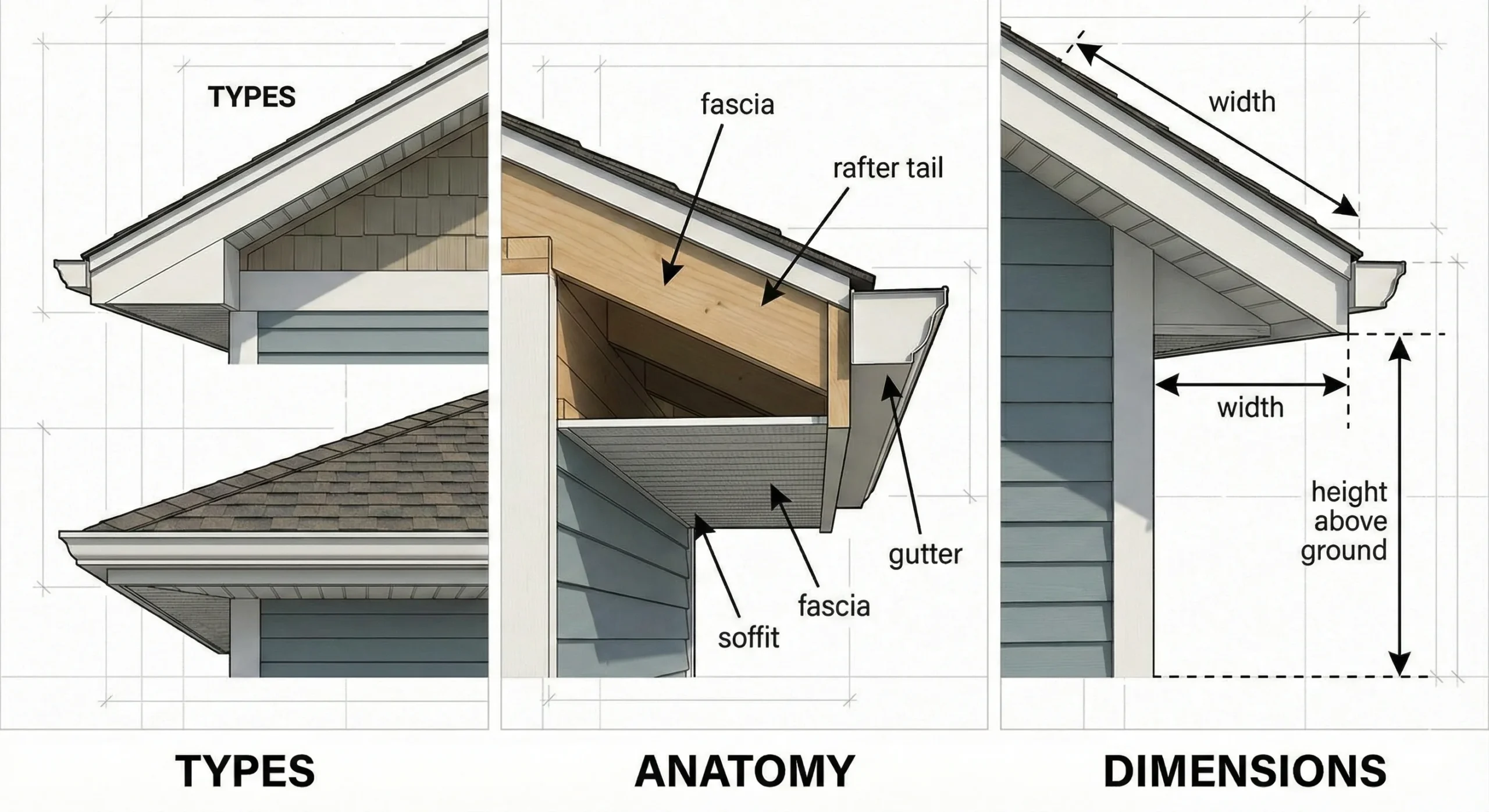
1. The Eave When people ask, “What is the overhang of a roof called?”, the most common technical answer is the eave. This is the lower edge of the roof that projects beyond the exterior wall.
2. The Soffit If you look straight up while standing under the eave, you are looking at the soffit.
- Query: “What is the underside of a roof overhang called?”
- Answer: It is called the soffit. In modern homes, this is usually “boxed in” with vinyl, aluminum, or wood to hide the structural rafters. Soffits often contain vents that allow fresh air to flow into your attic, preventing moisture buildup.
3. The Fascia The fascia is the horizontal board that faces outward at the end of the overhang. It caps the ends of the rafters and creates a smooth surface for mounting gutters.
4. The Frieze Board At the point where the soffit meets the wall, there is often a trim piece to cover the gap. Understanding what is a frieze board is important because, while decorative, this board serves a vital role in sealing the transition between the siding and the overhang, preventing insects and wind-driven rain from entering the wall cavity.
Standard Roof Overhang Dimensions
How far should a roof extend? The roof overhang dimensions depend on your home’s architectural style and, more importantly, your climate.
The Standards:
- Typical Residential: The standard roof overhang for most homes is between 12 and 24 inches.
- Minimalist/Modern: Some styles feature “clipless” or very short overhangs (less than 6 inches), though this requires high-quality waterproofing on the walls.
- Rainy/Snowy Climates: In regions like the Pacific Northwest, overhangs may extend 24 to 36 inches. Deep overhangs keep water far away from the foundation and protect entryways from snowdrifts.
Why Length Matters: If an overhang is too short, rainwater will constantly wash over your siding and windows. Over time, this leads to paint failure, window seal rot, and foundation erosion. Neglecting this structural shield is a common reason homeowners eventually face a massive bill; checking the roof replacement cost now might motivate you to ensure your eaves are doing their job effectively to prolong your roof’s lifespan.
How Much Overhang on Metal Roof?
If you are installing a metal roof, the rules change. Metal panels are rigid and thin, unlike thick asphalt shingles.
The Rule: When asking “How much overhang on metal roof?”, the industry standard is 1 to 1.5 inches beyond the drip edge or fascia.
Why distinct from shingles?
- Wind Uplift: If metal panels hang over too far (e.g., 3 inches), strong winds can catch the edge and bend the metal upward.
- Capillary Action: If the overhang is too short, water surface tension can cause droplets to curl back underneath the metal and rot the wood decking. A 1-inch overhang allows water to break cleanly off the edge and fall into the gutter.
Types of Overhangs
- Open Eaves: Common in Craftsman and bungalow-style homes, these leave the structural rafters exposed underneath. They offer a rustic look but can be attractive nesting spots for birds and bees.
- Closed (Boxed) Eaves: These have a soffit board nailed to the rafter ends, creating an enclosed triangular box. This is the most common type in modern construction as it protects the rafters from weather and pests.
Conclusion
A roof overhang is your home’s first line of defense against the elements. Whether you have the deep, exposed rafters of a Craftsman bungalow or the tight, efficient eaves of a modern metal roof, the goal is the same: move water away from the walls.
Next time you clean your gutters, take a moment to inspect the soffit (the underside) for peeling paint or blocked vents. Keeping this area healthy ensures your attic breathes properly and your walls stay dry.