







You are scrolling through real estate listings and find a property that checks every box: great neighborhood, right price, perfect size. But then you spot the phrase in the description: “Garden Level Bedroom.”
Is that just a fancy marketing term for a dark basement? Or is it a hidden gem?
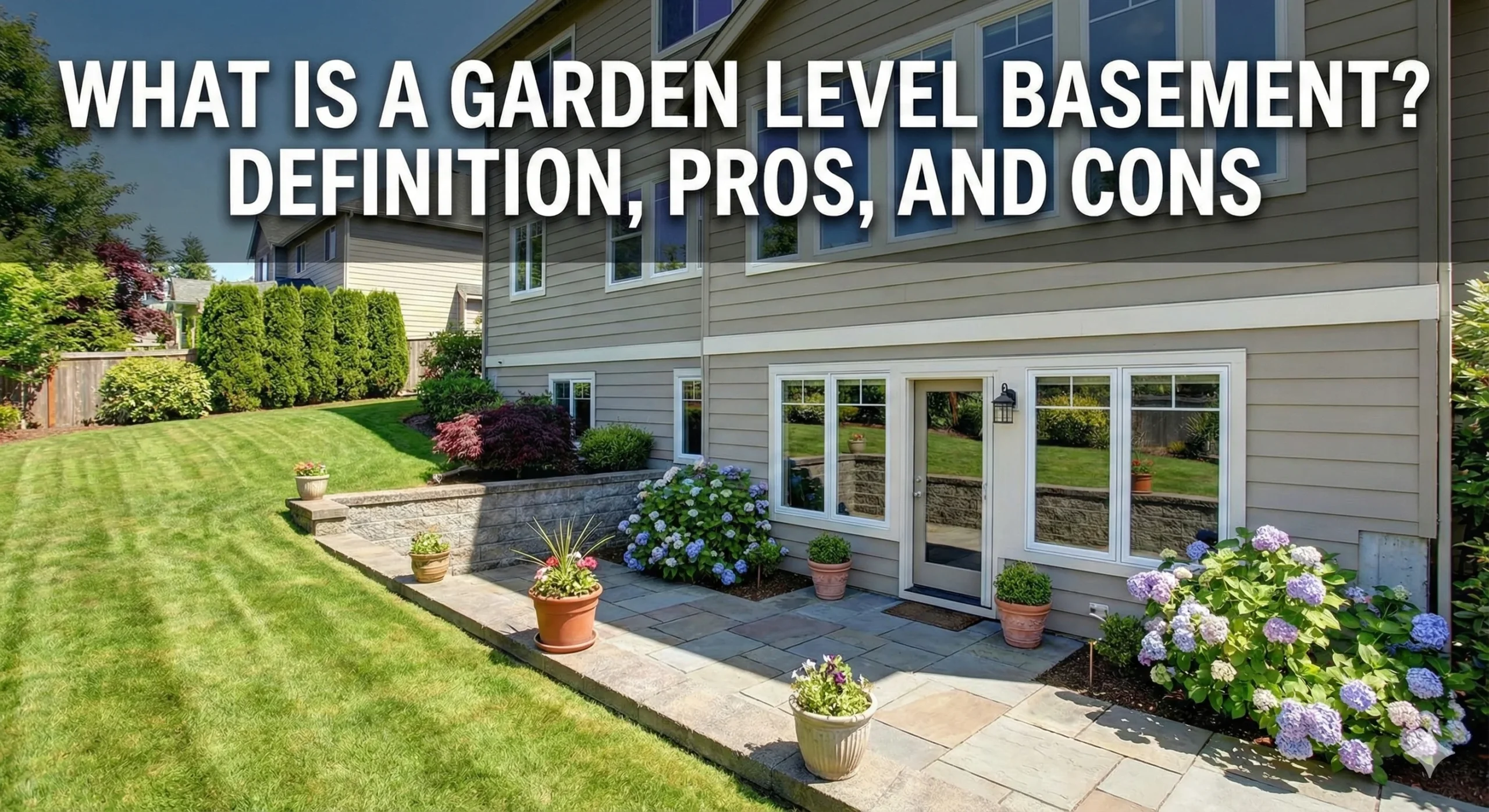
A garden level basement (or garden level apartment) is a unit situated halfway between the basement and the first floor. It is not fully underground like a cellar, but it is not fully above ground either. Typically, the floor is located about three to four feet below the street level, meaning when you stand inside, your head is roughly even with the sidewalk or the garden soil outside.
This architectural style is common in historic brownstones (like in New York or Boston) and split-level suburban homes. While it offers unique advantages—specifically price and accessibility—it comes with trade-offs regarding light and privacy.
Garden Level vs. Walkout vs. English Basement
Real estate agents often use these terms interchangeably, but there are distinct structural differences.
1. Garden Level
- Position: Partially below grade (usually 50% above ground, 50% below).
- Windows: Windows are typically full-size or slightly smaller, located at the top of the wall. They look out directly onto the grass or sidewalk.
- Access: You usually walk down a short flight of stairs (3-5 steps) to reach the front door.
2. Walkout Basement
- Position: Requires a sloped lot. The front of the house may be underground, but the back is fully above ground.
- Access: You can walk directly out a sliding glass door to the backyard without climbing stairs.
- Light: Often bright on one side, dark on the other.
3. English Basement
- Position: Common in city rowhouses. It is the lowest floor of the building, often with a separate entrance under the main “stoop.”
- Vibe: Historically, these were service quarters. Today, they are popular separate rental units.
The Pros of Garden Level Living
Why would someone choose to live partially underground?
- Temperature Control: Because the unit is partially insulated by the earth, it stays naturally cooler in the summer and holds heat better in the winter.
- Accessibility: For those with mobility issues, a garden level unit is often easier to access than a second-floor walk-up. You avoid the long climb, dealing only with a few steps that often adhere to standard stair riser height regulations.
- Price: These units typically rent or sell for 15-20% less than the “Parlor Level” (the floor immediately above) due to the perceived lack of views.
- Outdoor Connection: True to the name, many of these units have direct access to a patio or garden, making them ideal for pet owners.
The Cons (The “Catch”)
- Natural Light: While not a dungeon, the light is directional. If you are renovating, you may need to get creative with media wall ideas that use integrated lighting to brighten the darker corners of the room.
- Privacy: If your windows face the street, pedestrians can see into your apartment. You will likely need “bottom-up” blinds that let light in from the top while blocking the view from the sidewalk.
- Moisture and Pests: Being closer to the soil means a higher risk of bugs and humidity. It is vital to ensure the building has proper drainage and sturdy foundation piers to prevent water from seeping into the lower walls during heavy rain.
Does a Garden Level Basement Count as Square Footage?
This is the most common point of confusion for home buyers.
The Appraisal Rule: According to ANSI (American National Standards Institute) and Fannie Mae guidelines, gross living area (GLA) generally includes only space that is entirely above grade. If even one wall of the “garden level” bedroom is below the dirt line, an appraiser might categorize it as “Basement Square Footage” rather than “Above Grade Square Footage.”
Why It Matters:
- Tax Assessments: You might pay lower taxes because the space is technically a “basement.”
- Resale Value: While it adds immense value, it might not list as “2,000 sq ft” on official documents—it might show as “1,000 sq ft + 1,000 sq ft finished basement.”
Renovation Tip: If you plan to knock down walls to open up a garden level unit, always verify the structure first. Learn how do you know if it is a supporting wall before grabbing a sledgehammer, as lower-level walls often carry the weight of the entire house.
Conclusion
A garden level basement is not a scary place—it is often a cozy, affordable entry point into a great neighborhood. It offers the space of a standard apartment with the added benefit of energy efficiency and easy access.
However, before signing a lease or mortgage, visit the property at noon to check the light levels and sniff for dampness. If the foundation is dry and the price is right, “living down under” can be a smart move.
For more details on how square footage is legally calculated in these split-level scenarios, you can reference the Fannie Mae Selling Guide on GLA.