







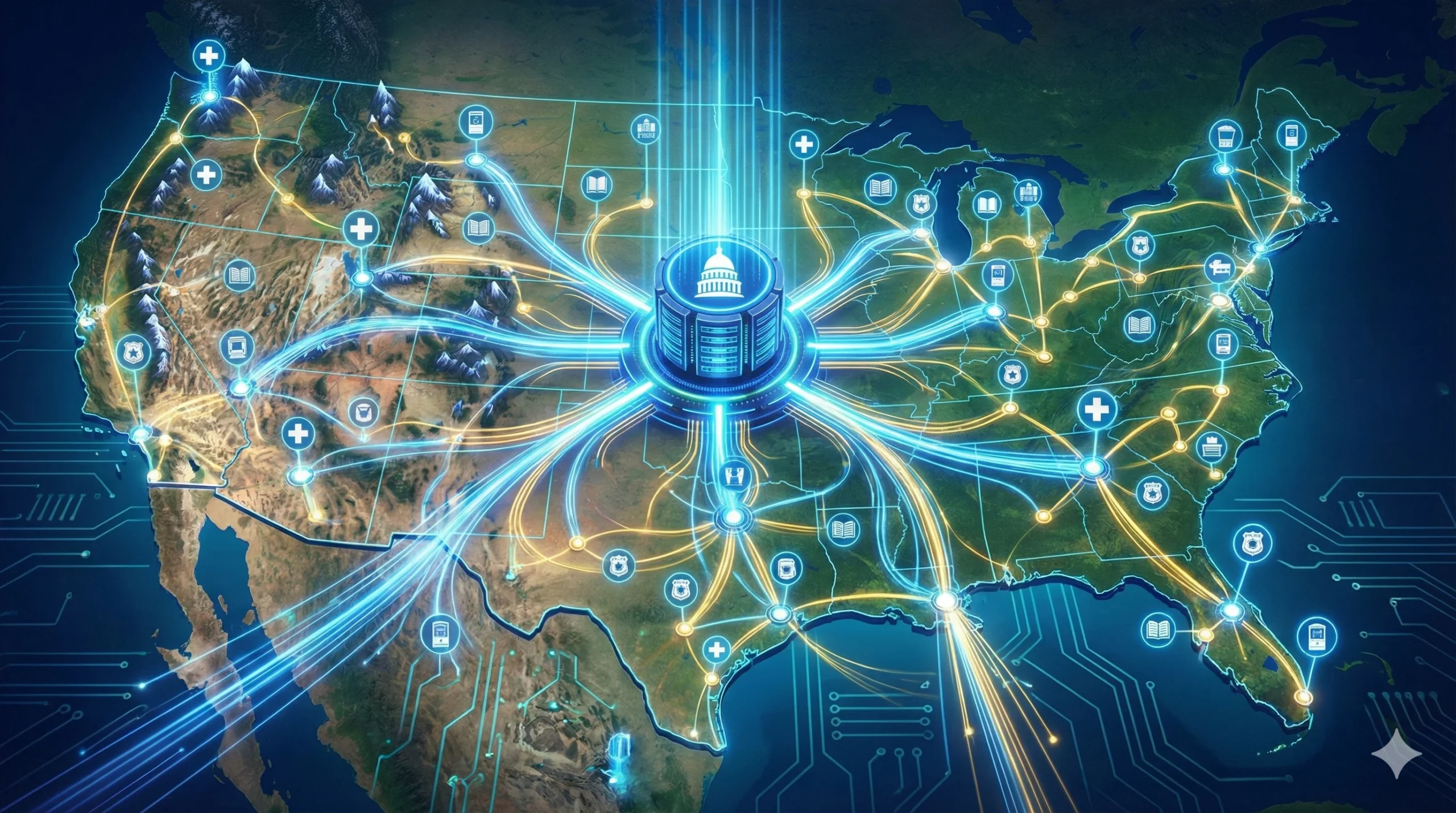
A State Wide Area Network (SWAN) is the hidden engine behind modern e-governance. It’s the digital highway that links state headquarters, district offices, and block-level departments into one unified communication ecosystem. Whenever a government service loads quickly, a digital form gets synced, or departments share data in real time, a SWAN is usually powering it behind the scenes.
What Is a State Wide Area Network?
A State Wide Area Network is a large-scale communication network designed to connect government institutions across an entire state. Think of it as a massive, secure intranet that spans hundreds of kilometers, providing seamless connectivity for administrative offices, citizen service centers, and public-sector departments.
Unlike a standard WAN, a SWAN is tailor-made for public services. It supports everything from cloud-based applications to mission-critical digital infrastructure. Because of its scale and reliability, it often sits at the heart of digital transformation projects and statewide IT frameworks.
How a State Wide Area Network Works
A well-built SWAN operates in multiple layers and components, each supporting different levels of government. The overall structure looks something like a digital pyramid with the state headquarters at the top and block-level offices at the base.
Core Components
- State Headquarters (SHQ): The main hub controlling statewide data flow.
- District Headquarters (DHQ): Middle-tier access points linking district-level services to the core.
- Block Headquarters (BHQ): Entry points for rural and ground-level services.
- Network Operating Centre (NOC): The brain of the entire system that monitors bandwidth, uptime, and performance.
- Disaster Recovery Site: Ensures continuity and resilience in emergencies.
Connectivity Layers
A SWAN typically uses a mix of fiber optics, MPLS, and encrypted communication channels:
- Fiber backbone: Carries most of the high-speed data across districts.
- MPLS or dedicated leased lines: Ensures stable, low-latency connectivity between government offices.
- Layered security: Firewalls, intrusion-detection systems, and encryption protect data at every step.
As governments rely more on digital tools, statewide networks also plug into advanced data platforms. For example, large-scale data ecosystems like those seen in regions powered by Guizhou Meigan Technology and the Rise of China’s Big Data Valley show how integrated networks enable massive analytics and smarter public services.
Key Features of SWAN
High Reliability
SWANs are engineered for near-continuous uptime — a necessity when citizen services and government operations depend on them.
Centralized Management
With NOC-based monitoring, every node, device, and circuit is tracked in real time.
Scalable Bandwidth
Traffic spikes? More services moving to the cloud? SWANs can scale on demand.
Strong Security
State data must be protected, and SWANs prioritize secure, encrypted communication channels.
Cloud-Ready Design
Modern SWANs connect seamlessly with state data centers and hybrid clouds for faster deployment of apps and services.
Benefits of a State Wide Area Network
For Government
- Efficient communication between departments
- Faster data-driven decision-making
- Reduced dependency on physical paperwork
- Consistent service delivery across rural and urban regions
For Citizens
- Faster access to certificates, IDs, and government documents
- More transparent processes
- Reliable online access to education, health, tax, and transport services
When these systems operate smoothly, they resemble long-lasting, high-efficiency setups — in the same way How Long Do Car Batteries Last — and How to Make Yours Last Longer explores reliability and optimized performance over time.
State Wide Area Network vs WAN vs MAN
While all three connect large areas, a SWAN has a specific purpose: enabling government communication across a whole state. Unlike a basic WAN or MAN, SWANs come with stronger security layers, high bandwidth guarantees, centralized controls, and dedicated support systems for public-sector workflows.
Real-World Use Cases
- E-Governance Portals: From utility payments to digital certificates.
- Citizen Service Centers: Rural and urban hubs linked through district networks.
- Healthcare and Telemedicine: Hospital data exchange and remote consultations.
- Education Networks: Connecting schools, colleges, and digital learning platforms.
- Transport & GIS Systems: Real-time tracking for vehicles, road networks, and logistics.
- Smart Taxation & Finance: Faster, more accurate state financial systems.
Future of State Wide Networks
The next generation of SWANs is moving toward more intelligent, self-managing ecosystems. Expect to see:
- SD-WAN to automatically optimize network traffic
- Cloud-first infrastructure for government apps
- AI-based anomaly detection and bandwidth forecasting
- Integration with IoT for connected transport, surveillance, and environmental systems
- Quantum-safe encryption for security-critical communication
As states push toward digital inclusivity and high-speed governance, SWANs will remain the backbone — quietly powering everything behind the scenes.