






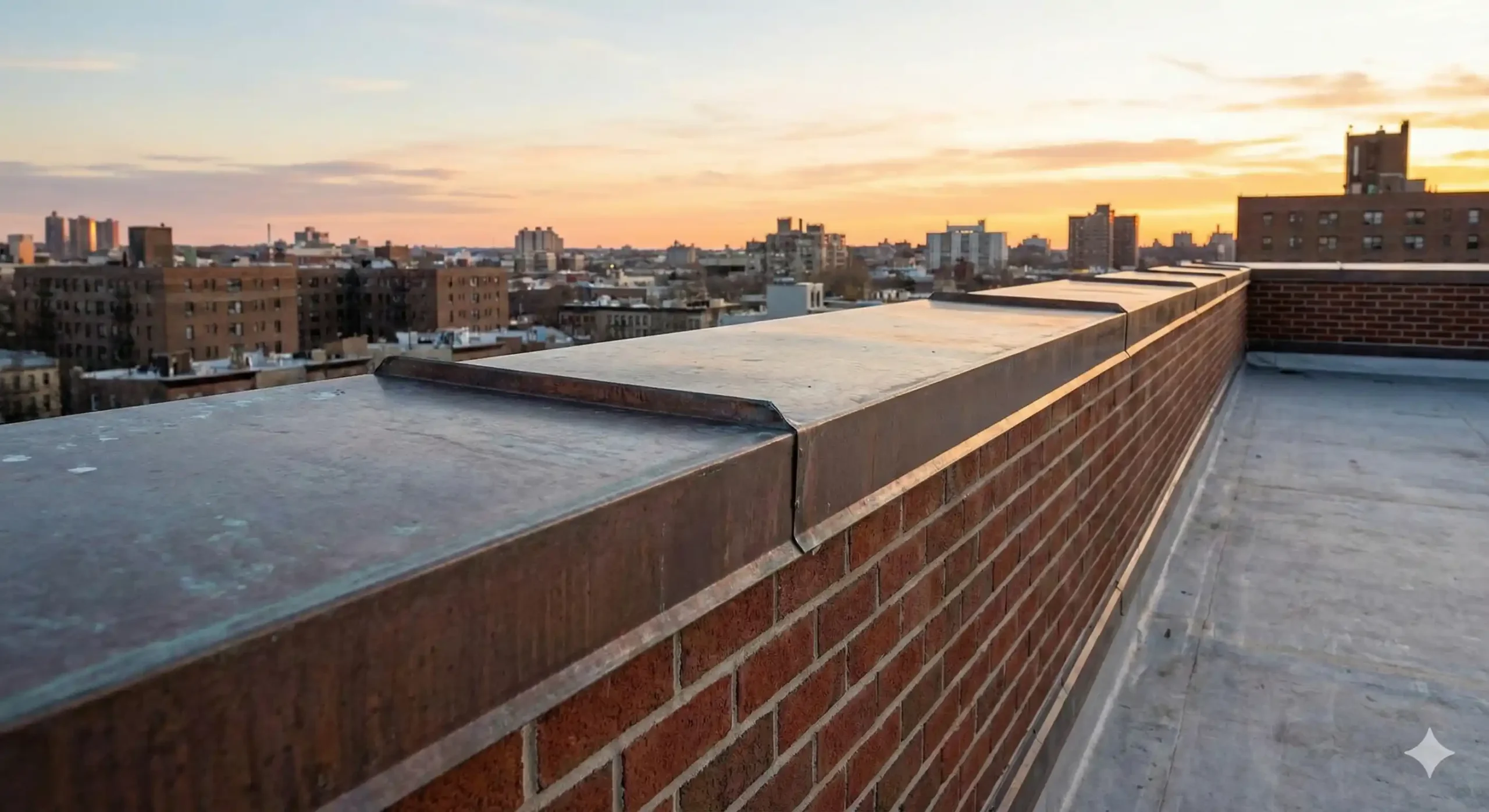
If you have a flat roof with a low wall extending around the perimeter, that wall is called a parapet. And just like the roof itself, the top of that wall needs protection from rain, snow, and wind. That protection is called roof coping.
Often referred to simply as “coping” or “wall capping,” this architectural feature acts as the “lid” for your building’s walls. Without it, water would seep directly into the masonry or wood framing, causing severe structural damage.
This guide explains what roof coping is, the best materials to use, and the critical design details—like drip edges and slopes—that keep your building dry.
What Is Roof Coping?
Roof coping is the protective cap installed on the top edge of a parapet wall. It serves two primary functions:
- Waterproofing: It seals the top of the wall to prevent water ingress. Without coping, moisture can enter the wall cavity, leading to mold, rot, or efflorescence (white salt stains on brickwork).
- Wind Resistance: In commercial roofing, the coping acts as a clamp. It holds down the edge of the roof’s waterproofing membrane (like TPO or EPDM) to prevent high winds from peeling the roof off.
Internal Link: Coping is the final step in a wall’s defense system. On residential homes, similar principles apply to trim; for example, understanding what is a frieze board helps explain how upper wall components protect the siding below them from water runoff.
Types of Roof Coping Materials
The material you choose depends on your building’s aesthetic and budget.
1. Metal Coping (The Standard)
Metal is the most common choice for modern commercial and residential buildings because it is lightweight, durable, and rust-resistant.
- Aluminum: Popular because it does not rust and is available in many colors.
- Steel (Galvanized or Stainless): Stronger than aluminum but requires a protective coating to prevent rust.
- Copper: The premium option. It offers a lifespan of 70–100 years and develops a classic green patina, but it is significantly more expensive.
2. Stone & Concrete Coping
These are often found on historic buildings or high-end masonry structures.
- Pros: They provide a solid, heavy aesthetic and are extremely durable against wind.
- Cons: Stone and concrete are porous. Water can soak through them over time. Therefore, stone coping must have a waterproof thru-wall flashing membrane installed underneath it. If this hidden membrane fails, the stone cap alone will not stop leaks.
Internal Link: Upgrading to premium materials like copper or stone will significantly increase the project price. Always factor this into your total roof replacement cost before committing to a material.
Critical Design Features: Slope & Drip Edge
You cannot just slap a flat piece of metal on a wall and call it coping. Effective roof coping must have specific geometric features to work correctly.
1. The Slope (Fall)
Coping should never be perfectly flat. It must slope to direct water where you want it to go.
- Inward Slope: Ideally, coping should slope inward toward the roof deck. This directs rainwater into the roof’s drainage system rather than letting it wash down the building’s façade, which causes staining.
- The Rule: A slope of at least 10 degrees is recommended to prevent standing water.
2. The Drip Edge
If you look closely at the bottom edge of metal coping, you will see the metal kicks outward slightly. This is called a drip edge.
- Purpose: It uses gravity to force water to drip clear of the wall. Without a drip edge, surface tension would allow water to curl back underneath the cap and run down the wall, eventually rotting the siding or mortar.
Installation: Cleats and Seams
Proper installation is what separates a watertight roof from a leaky one.
- Continuous Cleats: Professional metal coping is rarely nailed directly through the top exposed face. Instead, a “continuous cleat” (a metal hook strip) is nailed to the wall first. The coping cap then snaps onto this cleat. This allows the metal to expand and contract with temperature changes without buckling or loosening the nails.
- Expansion Joints: Metal expands in the heat. Installers must leave a small gap (typically 1/4 inch) between sections and cover the joint with a splice plate to keep it waterproof while allowing movement.
Conclusion
Roof coping is the unsung hero of your building’s envelope. Whether you choose the sleek look of aluminum or the weight of cast stone, ensuring your coping has the correct inward slope and drip edges is non-negotiable. If you see water stains running down your parapet walls, it is time to call a pro to check your caps.