




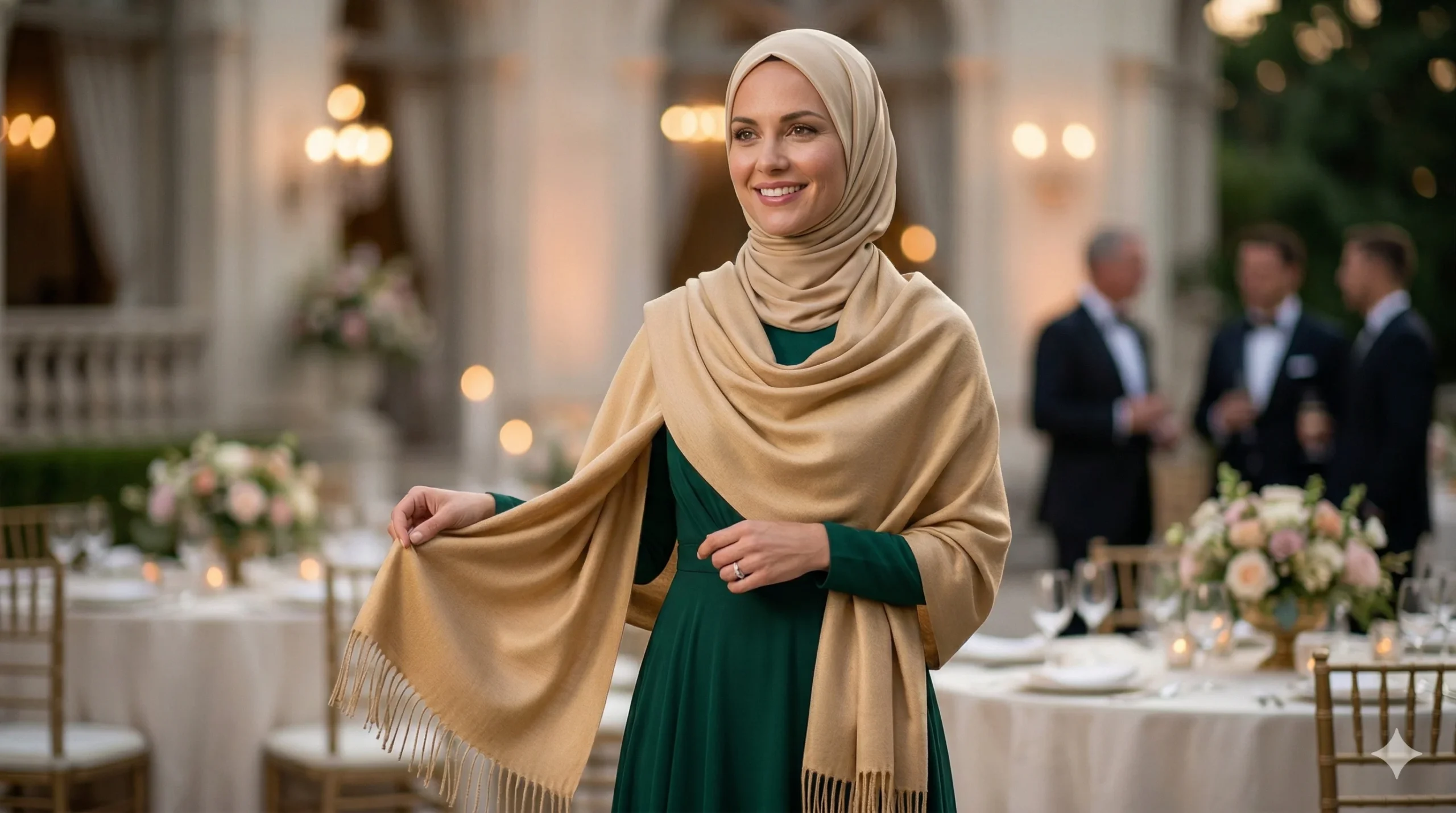
Attending a wedding often means navigating unpredictable temperatures, from highly air-conditioned reception halls to chilly evening garden parties. A pashmina is the ultimate architectural accessory for a formal event. It solves the practical problem of staying warm while instantly elevating the elegance of your outfit, provided you know exactly how to secure it.
Simply throwing a wrap over your shoulders often results in spending the entire evening pulling it back up as it slips down your arms. To maintain a polished look, you need to treat the pashmina as an intentional structural component of your outfit. Here is a definitive, practical guide to draping, tying, and securing a pashmina for a flawless wedding guest look.
Choosing the Right Pashmina (Colour and Contrast)
The most common mistake when selecting a wedding accessory is trying to find a fabric that perfectly matches the exact shade of your dress. Unless you are buying the wrap from the exact same designer cut from the exact same dye lot, a “near match” will usually clash and make the outfit look flat.
The rule for formal events is to complement, not match.
- Metallics: Champagne, brushed silver, and rose gold wraps add immediate texture and formal elegance to solid-coloured dresses.
- Neutrals: Soft blush, dove grey, or navy provide a sophisticated contrast without overpowering the primary silhouette of your gown.
5 Elegant Ways to Style a Pashmina at a Wedding
The way you fold and anchor the fabric completely changes its function. Here are five structural methods to wear a pashmina so it stays exactly where you put it.
1. The Shrug (The Neat Bolero Effect)
If you want to keep your hands completely free for holding a clutch or a drink without the fabric slipping, you need to construct a bolero.
- The Execution: Unfold the pashmina completely and drape it evenly around your shoulders, ensuring the front of your dress remains visible. Pull the two dangling ends firmly behind your back. Gather the fabric tightly at the center of your back and secure the two ends together using a small, clear hair elastic.
- The Result: The fabric is pulled taut, creating a tailored, cropped jacket effect that will not move, regardless of how much you dance.
2. The Brooch Drape (Secure and Classic)
For formal events where you want to maintain elegant, modest coverage across the chest and shoulders throughout the ceremony, mechanical anchoring is required.
- The Execution: Drape the fabric evenly over both shoulders. Bring the two front edges together across your chest, or slightly offset them toward one collarbone. Pin them securely through the dress fabric using a heavy, decorative wedding brooch.
- The Result: The weight of the brooch acts as a physical anchor, preventing the silk or cashmere blend from sliding backward off your shoulders.
3. The Side Tie (Asymmetric Elegance)
If your dress has a simple, straight neckline, adding an asymmetric drape breaks up the visual lines and draws the eye dynamically across the outfit.
- The Execution: Fold the rectangular pashmina diagonally to create a large triangle. Drape the folded edge over your shoulders so the point hangs down your back. Take the two front ends and tie them in a loose, single knot resting elegantly over one collarbone.
4. The Body Wrap (Modern and Fashion-Forward)
This method transforms the pashmina from a simple cover-up into a sweeping, dramatic sash that integrates directly into the architecture of the dress.
- The Execution: Drape the fabric diagonally across the front of your body, resting it on your right shoulder and pulling it down toward your left hip. Gather the ends at the hip and secure them firmly to the dress seam with a strong, hidden safety pin or a decorative brooch.
- The Result: This leaves your arms completely free and creates a highly structured, modern silhouette.
5. The Classic Scarf (Versatile and Graceful)
Sometimes, the simplest mechanical fold is the most effective, particularly if you are pairing the wrap with a high neckline or specific headwear.
- The Execution: Scrunch the width of the wrap into a thick, narrow band. Loop it loosely once around the front of your neck, letting both ends drape gracefully and evenly down your back or over the front of your shoulders.
- The Result: This specific style frames the face beautifully. For those seeking a modest, fully covered silhouette, this drape sits perfectly over a hijab, ensuring the neckline is fully protected while integrating the pashmina seamlessly into the overall look.
How to Stop Your Pashmina from Slipping
If you choose a drape that does not utilize a knot or a brooch, you must use friction or adhesives to keep the fabric in place. Cashmere and silk blends are notoriously slippery against satin or chiffon dresses.
The most reliable builder’s trick for fashion is double-sided fashion tape (often called tit-tape). Cut two small strips of tape and press them firmly onto the very top of your dress’s shoulder seams. Press the pashmina directly onto the tape. Just as you would use heavy-duty structural tape when figuring out how to hem trousers without sewing, fashion tape is the mechanical secret to keeping a drape perfectly locked in place during a busy wedding reception.
FAQs on Wedding Pashminas
Is a pashmina too casual for a black-tie wedding? No, absolutely not. A high-quality silk or cashmere-blend pashmina is a traditional and highly respected accessory for black-tie and highly formal events. The key is in the execution: it must be draped intentionally (using a brooch or a bolero tie) rather than just thrown casually over the shoulders like a living room blanket.
Can I wear a white pashmina as a wedding guest? As a general rule of structural etiquette, it is always safer to avoid pure white or ivory accessories as a guest to respect traditional bridal colors. If you need a light neutral to contrast a dark dress, opt for champagne, silver, or a very pale blush instead.
Wearing a pashmina successfully is about treating it as an intentional part of your outfit’s architecture. By utilizing knots, brooches, or hidden fashion tape, you can secure the fabric properly, ensuring you look elegant and stay comfortable from the wedding ceremony straight through to the final reception dance.