




Spilling paint on your favorite shirt or heavy-duty work trousers is a frustrating reality of any DIY project or craft session. To successfully save the garment, you must first understand the harsh chemical reality of what you are dealing with. Unlike traditional watercolors, acrylic paint is essentially liquid plastic. It consists of pigment suspended in an acrylic polymer emulsion.
When it is wet, it is water-soluble. However, the moment it dries, the water evaporates, and the plastic polymers fuse together, physically binding to the fibers of your clothing to form a solid, flexible crust. Because of this chemical shift, the removal method you choose depends entirely on whether the paint is still wet or fully cured.
Here is your definitive, scientific guide to breaking down the polymers and safely extracting acrylic paint from your clothing.
The Golden Rule: Never Use the Dryer
Before discussing solvents or scrubbing techniques, you must understand the single most destructive mistake you can make with a paint-stained garment: applying heat.
If you attempt to wash a paint-stained shirt in the washing machine and then throw it directly into the tumble dryer before confirming the stain is 100% gone, you will ruin the garment. The extreme heat of a tumble dryer will instantly melt and bake the plastic acrylic polymers permanently into the textile fibers. Once a plastic stain is heat-set, no amount of chemical solvent will ever remove it. Always air-dry the garment until you are absolutely certain the stain has been eradicated.
How to Remove Wet Acrylic Paint (Act Fast)
If the paint is still wet, you have a massive advantage. The polymers have not yet locked together, and the paint is still highly water-soluble. This is a simple mechanical flush, but you must act immediately.
1. Flush from Behind
Do not run the painted side of the shirt directly under the tap. If you do this, the water pressure will simply drive the liquid pigment deeper into the woven fibers of the fabric. Instead, take the garment off, turn it inside out, and hold the clean back of the stained fabric directly under a warm running tap. By flushing the fabric from behind, the water pressure forces the paint back out the exact same way it came in.
2. The Dish Soap Sponge
Once the bulk of the wet paint has been flushed away, you need a mild surfactant to lift the remaining pigment.
- Mix standard liquid dish soap with warm water in a small bowl.
- Take a clean sponge or a soft cloth, dip it in the soapy water, and gently dab the stained area.
- Warning: Do not aggressively scrub the fabric. Scrubbing wet paint will simply spread the stain over a wider surface area.
- Continue alternating between sponging the stain and flushing it from behind under the tap until the water runs completely clear. Wash the garment immediately in a standard cold water cycle.
How to Remove Dried Acrylic Paint (Breaking the Chemical Bond)
Once acrylic paint has dried, water and dish soap are completely useless against it. You are now dealing with hardened plastic. You must use an alcohol-based solvent to chemically break down the polymer bonds.
1. Scrape the Excess
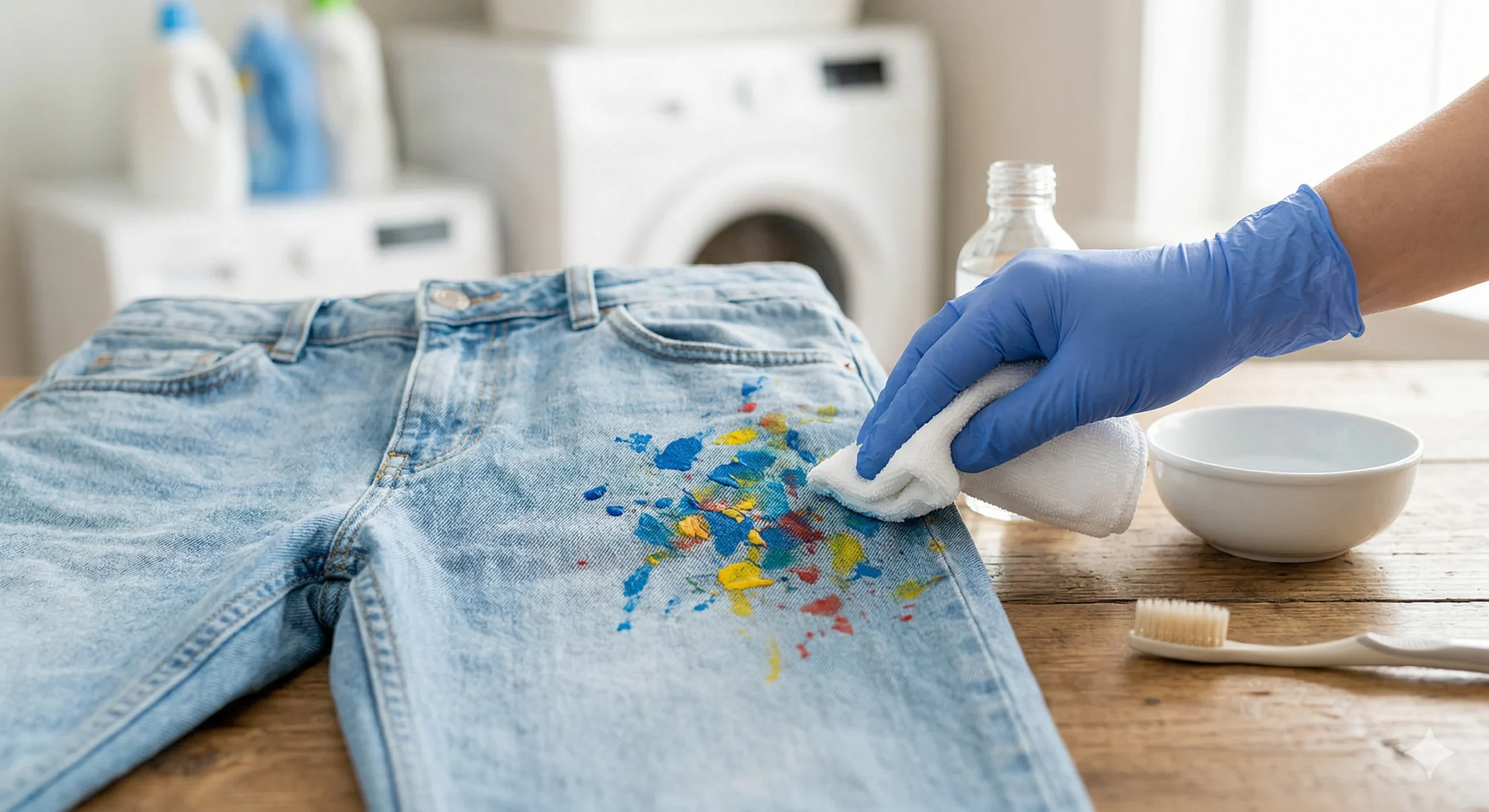
Dried acrylic paint usually forms a thick, raised, 3D crust on top of the fabric. Before applying any liquids, use a blunt butter knife, a spoon, or an old credit card to physically chip and scrape away as much of the solid paint as possible. Be firm, but careful not to snag or tear the underlying textile threads.
2. Apply the Solvent (Isopropyl Alcohol)
To dissolve the remaining plastic embedded in the fibers, you need a strong solvent. Rubbing alcohol (isopropyl alcohol) is the safest and most effective choice. Acetone (standard nail polish remover) also works exceptionally well but is much harsher.
- The Safety Test: You must test your chosen solvent on a hidden inside seam of the garment first. Acetone, in particular, is strong enough to instantly melt certain synthetic fabrics (like acetate) and can strip the chemical dyes right out of colored clothing.
3. Blot, Do Not Rub
Once you have confirmed the solvent is safe for the fabric, lay the garment flat on top of an old towel.
- Pour a generous amount of the rubbing alcohol directly onto the dried paint stain. Allow it to sit for one to two minutes to begin eating through the plastic.
- Take a clean, dry white cloth and press down firmly to blot the stain.
- The Mechanics: If you rub the stain with the cloth, you will smear the newly dissolved, sticky liquid plastic across a wider area of the shirt. Blotting forces the dissolved paint to transfer upward from the shirt and onto your cleaning cloth.
- Keep applying fresh alcohol and blotting with a clean section of your cloth until the paint is entirely gone.
Once the solvent has completely dissolved the heavy paint, you can run the garment through a standard wash cycle. However, if you frequently wash heavily soiled DIY workwear, you should know how to clean a washing machine to stop paint flakes and construction grit from ruining the internal drum and blocking the filter.
When to Stop: Dealing with Delicate Fabrics
Strong solvents and aggressive scraping are strictly reserved for sturdy, durable fabrics like heavy cottons, denim jeans, and robust synthetics.
If you spill acrylic paint on delicate fabrics like pure silk, wool, cashmere, or velvet, you must stop immediately. Do not attempt to scrape the crust, and absolutely do not apply acetone or rubbing alcohol. The harsh chemicals and abrasive friction will destroy the delicate threads of the garment much faster than the paint will. For these luxury fabrics, take the item directly to a professional dry cleaner, point out the stain, and explicitly tell them it is an acrylic polymer.
FAQs on Acrylic Paint Stains
Does hand sanitizer remove acrylic paint? Yes, it works exceptionally well in a pinch. Hand sanitizer has a very high alcohol content, which gives it the chemical power to dissolve the plastic polymers. Furthermore, because it is a thick gel rather than a liquid, it sits heavily on top of the stain without evaporating too quickly, giving it more time to break down the dried paint crust.
Can vinegar remove dried acrylic paint? No. White vinegar is a fantastic household cleaner and a mild acid, but it is not a solvent. It simply is not chemically strong enough to break down cured plastic polymers. You must use an alcohol-based product to dissolve dried acrylic.
Removing acrylic paint from clothing is not about brute force; it is about understanding the chemistry of the stain. Act immediately with warm water while the paint is wet, rely strictly on blotting with alcohol solvents once it dries, and keep your clothes far away from the tumble dryer until the fabric is completely clear.