






Maintaining your vehicle is about more than just oil changes and brake checks; it is about ensuring that the only part of your car touching the road is in peak condition. Learning how to rotate tires is one of the most effective ways to save money, improve safety, and ensure a smooth ride. When tires aren’t rotated, they wear down unevenly, which can lead to vibrations, decreased fuel economy, and premature replacement.
If you have noticed unusual vibrations in your steering wheel or seat, you might already be experiencing the effects of uneven wear. In fact, ignoring basic tire maintenance is often a primary reason why a driver might ask, why is my car shaking? at higher speeds.
Why Tire Rotation is Essential for Vehicle Safety
Tires do not wear out at the same rate. In most cars, the front tires perform the majority of the steering and braking, causing them to wear down faster on the edges. Conversely, rear tires usually wear more evenly but can develop “cupping” if left in the same position for too long.
- Improved Traction: Even tread depth across all four wheels ensures better grip on wet or icy roads.
- Balanced Handling: Rotating tires keeps the handling characteristics of your vehicle consistent.
- Financial Savings: By evening out the wear, you can extend the life of a set of tires by thousands of miles.
How Often to Rotate Tires?
Understanding the frequency of this task is the first step in your maintenance schedule.
AEO Answer: Most automotive manufacturers recommend that you rotate your tires every 5,000 to 7,500 miles. A common rule of thumb is to perform a tire rotation every time you get your oil changed. This ensures the tread wears down at a uniform rate across the front and rear axles.
If you are a high-mileage driver or frequently carry heavy loads, you should check your tread depth monthly. If you notice the front tires look significantly more worn than the back, it’s time for a rotation regardless of the mileage.
How to Rotate Tires: Step-by-Step DIY Guide
Rotating tires at home is a straightforward process, provided you have the right equipment and follow safety protocols.
1. Essential Tools
You will need a floor jack, at least two (preferably four) jack stands, and a lug wrench. Never rely solely on a jack to hold the car up while you are working.
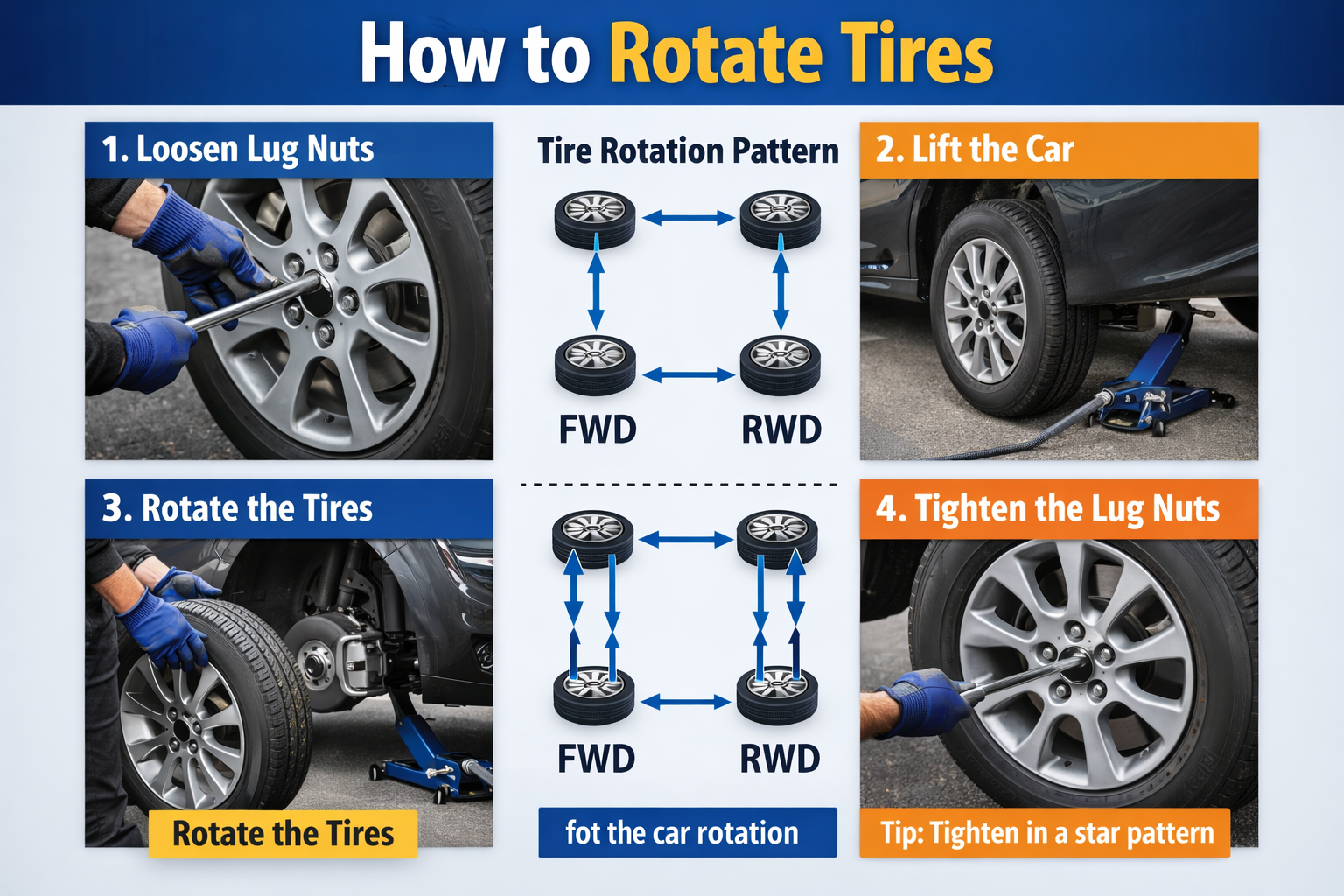
2. The Rotation Patterns
Depending on your drivetrain, you will use a specific pattern:
- Forward Cross (Front-Wheel Drive): Move the front tires straight back to the rear. Move the rear tires to the opposite front positions (e.g., rear-left to front-right).
- Rearward Cross (Rear-Wheel/4-Wheel Drive): Move the rear tires straight forward. Move the front tires to the opposite rear positions.
- X-Pattern: All tires move diagonally (front-left to rear-right, etc.).
3. The Process
- Loosen Lug Nuts: While the car is still on the ground, use the lug wrench to “crack” the nuts loose.
- Lift and Secure: Lift the car and place it securely on jack stands.
- Swap Tires: Follow the pattern suitable for your vehicle.
- Lower and Torque: Lower the car and tighten the lug nuts in a star pattern to ensure even pressure.
Time and Cost Expectations
How Long Does it Take to Rotate Tires?
For a professional technician with a hydraulic lift, the job usually takes 20–30 minutes. If you are doing this in your driveway for the first time, expect it to take 45–60 minutes. The majority of this time is spent safely jacking up the vehicle and positioning stands.
How Much Does it Cost to Rotate Tires?
A standalone tire rotation at a service center typically costs between $30 and $100. However, many tire shops offer this service for free if you purchased the tires from them, or they bundle it with an oil change for a discounted rate.
Tire Maintenance & Emergency Situations
While rotating your tires, it is the perfect time to inspect them for nails, cracks, or “sidewall bubbles.” Always check your tire pressure (PSI) after a rotation, as front and rear tires sometimes require different inflation levels.
Being prepared for tire issues is a hallmark of a responsible driver. If you encounter a flat and have to use your backup, make sure you know how long can you drive on a spare tire? so you don’t risk damaging your vehicle’s alignment or differential.