






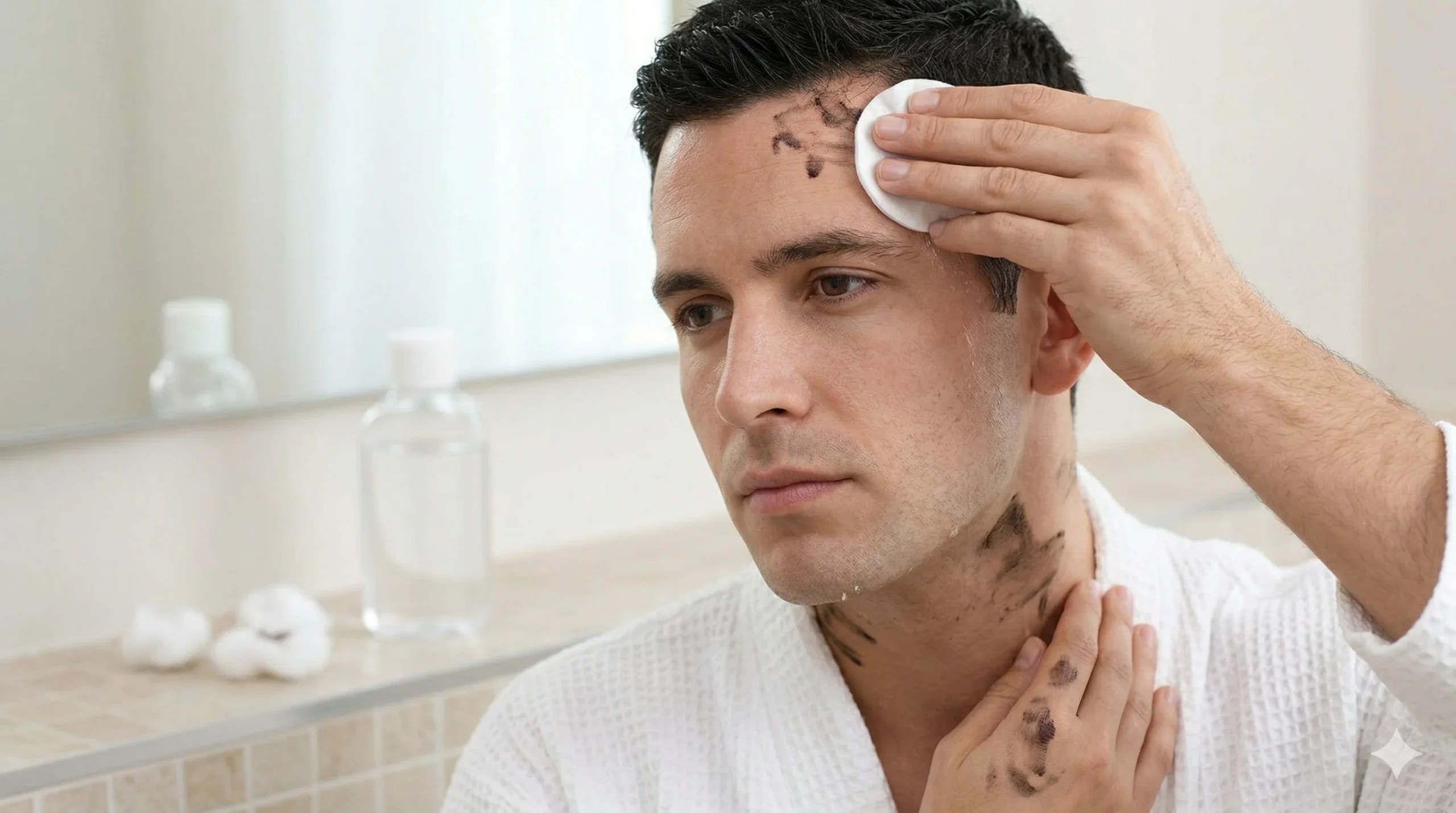
Successfully completing a DIY hair dye job at home is highly satisfying, right until you look in the mirror and notice a dark, tell-tale ring of pigment permanently stamped across your forehead, ears, and neck.
Hair dye is specifically formulated to penetrate and bind permanently to keratin. The problem is that keratin is the exact same structural protein that makes up both your hair strands and the outermost layer of your human skin. When dye hits your skin, it immediately begins the same chemical bonding process it uses on your hair.
However, you do not need to scrub your face raw or wait weeks for the stains to disappear. By understanding the basic chemistry of household ingredients, you can safely lift the pigment and restore your skin. Here is your definitive, practical guide to removing hair dye stains quickly and effectively.
The Golden Rule: Prevention is Better Than the Cure
The absolute most effective way to deal with hair dye stains on your skin is to stop the chemical from making contact with your epidermis in the first place. You must create a physical barrier.
Before you even open the developer bottle or mix your color, take a heavy, oil-based product—petroleum jelly (Vaseline) is the undisputed industry standard, but a thick, heavy-duty body butter will also work. Apply a thick, unbroken layer directly along your entire hairline, over the tops and backs of your ears, and straight across the nape of your neck.
This creates an impermeable lipid barrier. The dye molecules physically cannot penetrate the thick layer of petroleum jelly to reach the keratin in your skin. When you are finished dyeing your hair, you simply wipe the jelly away with a damp towel, taking the stray dye with it.
Immediate Action: Soap and Warm Water
Hair dye does not instantly stain the moment it touches you; it requires time to oxidize and bind. If a drop of dye splatters onto your cheek or forehead while you are applying it with the brush, your timeline is your best weapon.
Do not wait until you are washing the dye out of your hair 45 minutes later to address the spill. Keep a damp washcloth and a mild bar of soap right next to your sink. If you wipe the spill immediately with warm, soapy water, the dye will wash away completely before the chemical reaction has a chance to anchor the pigment to your skin cells.
4 Household Items to Remove Stubborn Dye Stains
If the dye has been sitting on your skin for an hour and has fully oxidized into a stubborn, dark stain, standard soap will no longer work. You need to use mild abrasives or chemical solvents to break the bond. Here are four highly effective methods using items already in your bathroom or kitchen pantry.
1. The Toothpaste Method (Mild Abrasive)
Standard, opaque white toothpaste (do not use clear gels) is essentially a highly refined polishing compound. It contains baking soda and mild silica abrasives designed to scrub plaque off your tooth enamel without scratching it.
- The Process: Squeeze a small dab of white toothpaste directly onto the stained skin. Using your finger or a soft washcloth, rub it gently in circular motions over the stain. The mild abrasives will physically buff away the microscopically thin top layer of dyed, dead skin cells. Wash it away with warm water and repeat if necessary.
2. Oils and Petroleum Jelly (Dissolving the Dye)
In chemistry, the rule is “like dissolves like.” Many hair dyes contain oil-based compounds, which means applying heavier oils can help break down their structure gently. This is the absolute best method if you have highly sensitive facial skin that cannot handle scrubbing.
- The Process: Apply a generous coating of olive oil, coconut oil, baby oil, or petroleum jelly directly over the dried stain. Rub it in gently, and then leave it to sit completely undisturbed for 15 to 20 minutes. The oil will slowly soften and dissolve the hardened pigment. Wipe it away firmly with a warm, damp cloth or a makeup remover pad.
3. Baking Soda and Dish Soap (The Paste Scrub)
If the stain is particularly dark or set into your hands, you need to combine a physical abrasive with a heavy-duty degreaser.
- The Process: Mix equal parts baking soda and liquid dish soap in a small bowl until it forms a thick, gritty paste. Scoop the paste onto the stain and scrub it gently. The baking soda physically sands the dye away, while the surfactants in the dish soap lift the chemical residue out of your pores.
- Safety Warning: Dish soap is formulated to strip heavy grease from frying pans. It will severely dry out your skin. Wash the paste off quickly and apply a heavy moisturizer to the area immediately afterward.
4. White Vinegar (Acidic Breakdown)
White vinegar contains acetic acid, which acts as a mild chemical exfoliant. The slight acidity helps loosen the bonds between dead skin cells and actively breaks down the dye molecules. The process of using white vinegar’s natural acidity to cut through stubborn chemical stains is the exact same principle we rely on when explaining how to clean stainless steel appliances without leaving streaks or damaging the finish.
- The Process: Soak a cotton pad or a cotton ball in pure white vinegar. Gently swipe it repeatedly over the stained area until the pigment begins to transfer onto the cotton. Rinse the skin thoroughly with water afterward to neutralize the acid.
Heavy-Duty Solutions for the Darkest Stains
If you dyed your hair jet black or a highly vibrant fashion color (like bright red or blue) without wearing gloves, your hands might look permanently stained. When gentle methods fail, you can step up to heavy-duty solutions, provided you respect their chemical strength.
- Nail Polish Remover (Acetone): Acetone is an incredibly aggressive, highly effective solvent. It will instantly strip hair dye from your skin. Crucial Safety Warning: Acetone is highly abrasive and gives off strong fumes. You must never use acetone near your eyes, on your face, or on your neck. Apply it with a cotton swab strictly to stubborn spots on your hands or arms, rub for no more than a few seconds, and wash the area with soap and water immediately to stop it from burning the skin.
- Exfoliating Scrubs and Dandruff Shampoo: Anti-dandruff shampoos contain active ingredients (like selenium sulfide or salicylic acid) that are scientifically designed to accelerate skin cell turnover and lift dead skin from the scalp. Washing your hands repeatedly with dandruff shampoo or a coarse sugar body scrub will rapidly strip the dyed skin cells from your fingers.
The Reality: Do Stains Fade Naturally?
If you have tried a few methods, the stain is lighter but still visible, and your skin is starting to feel raw and irritated—stop scrubbing immediately. Do not damage your skin barrier for the sake of a temporary cosmetic flaw.
Here is the biological reality: the epidermis (the top layer of your skin) is constantly regenerating and shedding. Even if you lock your bathroom door and do absolutely nothing to treat the stain, it is not permanent. As your body naturally sheds millions of microscopic dead skin cells every day, the dark dye stains will naturally fade and disappear entirely on their own within two to three days.
Removing hair dye from your skin is simply a matter of acting quickly, utilizing the right mild abrasives or oils, and knowing when to let your body’s natural shedding process take over.