






Stainless steel is the “crown jewel” of the modern kitchen. When it is clean, it makes the entire room look expensive and professional. But when it is covered in fingerprints, water spots, or scratches, it can make even a pristine kitchen look dirty.
If you are searching for how to polish stainless steel to restore that showroom shine, you don’t need expensive industrial equipment. Whether you are trying to fix a scratched sink or simply want your refrigerator to reflect light like a mirror, the secret lies in technique—specifically, following the grain.
This guide covers everything from natural DIY recipes to heavy-duty scratch removal.
The Golden Rule: Follow the Grain
Before you touch your appliance with a cloth, you must find the “grain.” Just like wood, stainless steel has faint directional lines brushed into the metal surface.
- Look Closely: Stare at your appliance door or sink basin. Do the faint lines run horizontally (left to right) or vertically (up and down)?
- Why It Matters: If you wipe against the grain, you force dirt and residue into the tiny grooves, making the steel look dull and creating more scratches. If you wipe with the grain, you lift the dirt out and align the polish for a deeper shine.
DIY Natural Polish: The Vinegar & Oil Method
You likely have the best polishing ingredients in your pantry right now. If you are looking for a natural stainless steel polish recipe, the “Vinegar and Oil” method is a favorite among professional cleaners.
The Recipe:
- Clean (The Vinegar Step): Spray the surface generously with white vinegar. The acidity cuts through grease and cooking oils that soap leaves behind. Wipe it dry with a microfiber cloth, moving in the direction of the grain.
- Polish (The Oil Step): Dip a dry, clean corner of your cloth into a small amount of olive oil (baby oil or mineral oil also works).
- Buff: Rub the oil into the steel, following the grain. The oil fills in microscopic fissures in the surface, creating that deep, “wet” look and preventing future fingerprints.
Pro Tip: While you are deep cleaning your kitchen surfaces, don’t ignore the woodwork. A shiny fridge looks out of place next to greasy cupboards. Check our guide on how to clean kitchen cabinets to ensure your entire kitchen sparkles.
How to Polish a Stainless Steel Sink
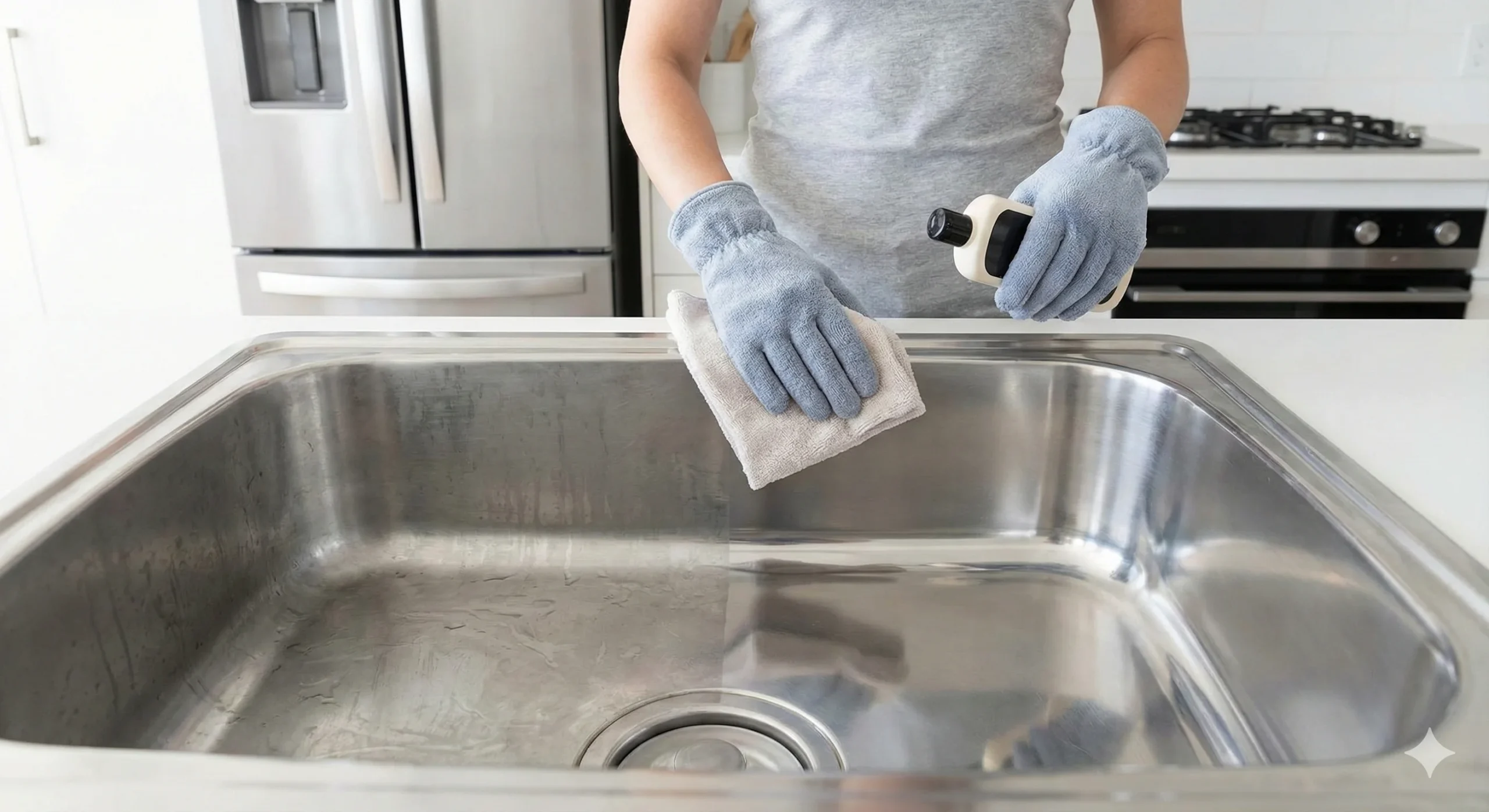
Sinks are the workhorses of the kitchen, meaning they suffer from hard water stains and scratches more than your fridge does. The search for “how to polish stainless steel sink” requires a slightly more abrasive approach than appliances.
The “Flour” Trick: Believe it or not, common baking flour is a micro-abrasive polisher.
- Clean the sink with soapy water and dry it completely.
- Sprinkle a thick layer of flour over the basin.
- Use a soft cloth to buff the flour into the metal (like waxing a car). The flour absorbs oil and gently polishes the metal. Rinse and dry.
For Hard Water Stains: Make a paste of baking soda and water. Apply it to the stains and let it sit for 5 minutes before scrubbing gently with the grain. This neutralizes the mineral deposits without scratching the finish.
Important: A shiny sink is great, but a functional one is better. If you notice water draining slowly while you are polishing, you might need to handle a blockage first. Read how to unclog a kitchen sink to ensure your plumbing is as smooth as your stainless steel.
How to Polish Scratched Stainless Steel
Did a magnet or a scouring pad leave a mark? Learning how to polish scratched stainless steel can save you from replacing expensive panels.
- Minor Scratches: Use a non-gel whitening toothpaste. Apply it to the scratch and rub gently with a microfiber cloth for several minutes. Wipe away with a damp cloth to check your progress.
- Deep Scratches: You may need a Stainless Steel Scratch Removal Kit. These kits usually come with varying grits of sandpaper and a polishing compound.
- Technique: Wet the sandpaper and sand only over the scratch, moving perfectly with the grain. Start with the coarse grit to remove the scratch, then switch to finer grits to blend the area back into the surrounding finish.
Warning: Do not use sandpaper on “fingerprint-resistant” or coated stainless steel. It will strip the clear coat and ruin the finish permanently.
Restoring Other Metals: If you are in a cleaning mood and find rust on your bathroom fixtures, the toothpaste trick won’t be enough. You can learn how to get rust off chrome to handle those tougher bathroom corrosion issues.
Advanced: How to Re-Polish to a Mirror Finish
For those asking how to re polish stainless steel to a literal mirror reflection (common for car parts or vintage restoration), hand polishing isn’t enough. You need mechanical help.
- Sanding: You must sand the metal with progressively finer sandpaper, going up to 2000 or 3000 grit, until the surface is perfectly smooth.
- Buffing: Use a buffing wheel with a polishing compound (like jeweler’s rouge).
- The Process: The friction melts the compound, which cuts the metal at a microscopic level, creating a surface so smooth it reflects light perfectly.
What to Avoid (The “Do Not Use” List)
To keep your stainless steel looking new, never use the following:
- Steel Wool: It leaves behind tiny iron particles that will rust, creating orange spots on your steel.
- Bleach: Chlorides in bleach can pit the metal and destroy the shine.
- Glass Cleaner (Windex): It can leave streaks and strip the oleophobic (oil-repelling) coating on newer appliances.
Maintenance Check: While you are inspecting your fixtures for shine, keep an eye out for leaks. Water pooling around the base of a faucet isn’t just a cleaning issue—it’s a repair issue. See how to fix a leaking bathtub faucet if your bathroom hardware needs more than just a polish.
Conclusion
Polishing stainless steel is less about “cleaning” and more about maintenance. By using a simple oil-based polish once a month and always respecting the grain, your appliances will resist fingerprints and stay brighter for longer. Whether you choose the natural vinegar route or a heavy-duty compound, the result is a kitchen that feels brand new.
For a visual demonstration of the best cleaning and polishing techniques, check out this helpful guide: The Best Way To Clean Stainless Steel Appliances review
This video provides a clear comparison of different cleaning agents and demonstrates the correct motion to avoid streaking your appliances.