

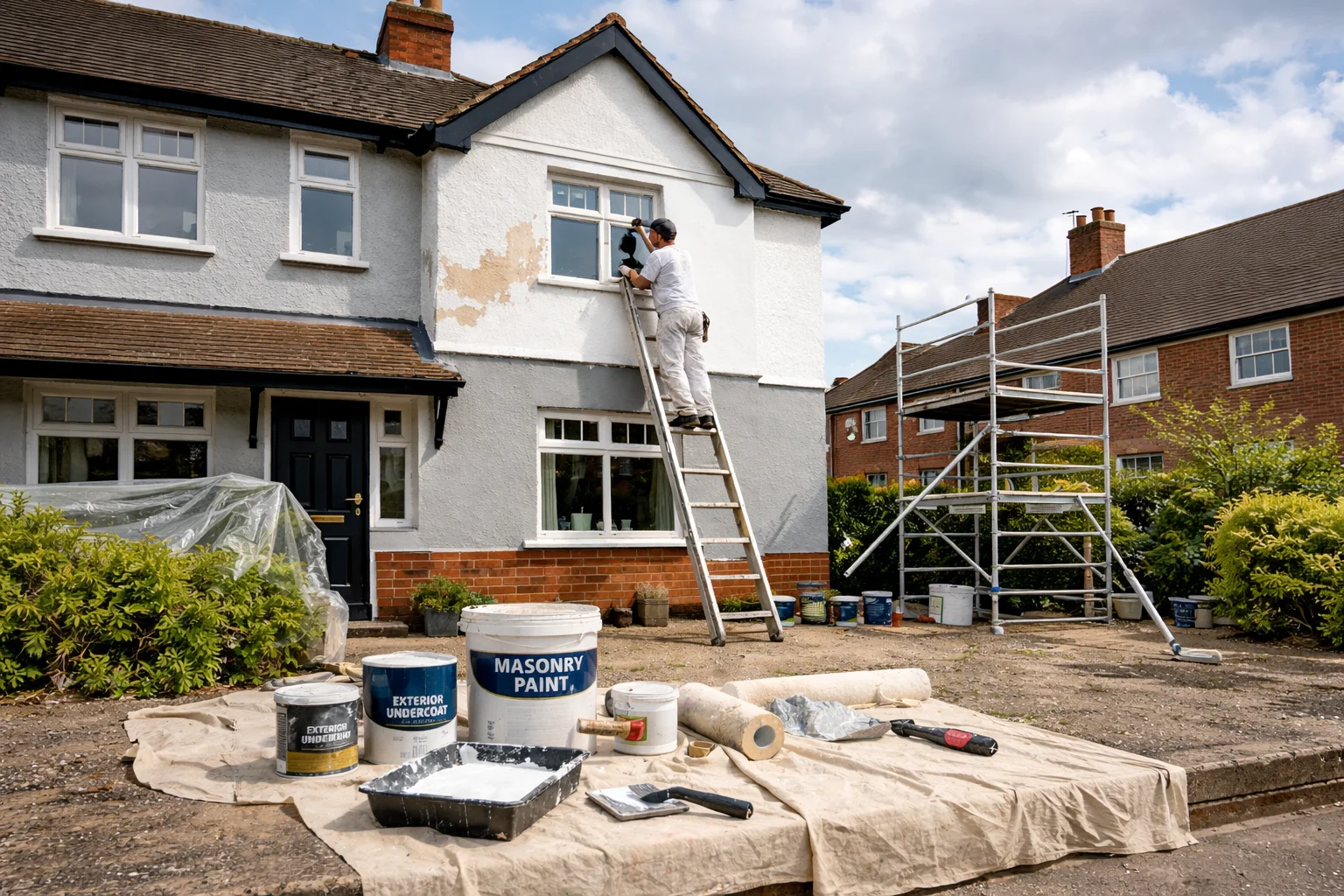



Painting the outside of your house is one of the most effective ways to refresh its appearance, protect it from harsh British weather, and increase property value. Whether you’re tackling it as a DIY project or considering hiring professionals, this complete UK guide walks you through costs, tools, preparation, and expert techniques for a long-lasting finish.
Can You Paint the Outside of Your House Yourself?
Yes — many UK homeowners successfully paint their home exteriors themselves. However, it depends on:
- Property height (bungalow vs two-storey)
- Surface condition (brick, render, wood)
- Weather timing
- Access to ladders or scaffolding
- Your DIY confidence
When DIY Makes Sense
- Single-storey homes
- Surfaces in good condition
- Dry weather forecast for several days
- Basic repair skills
When to Hire Professionals
- Large detached properties
- Cracked render or damaged masonry
- Hard-to-access areas
- Listed or conservation properties
If you’re already planning major exterior upgrades or structural changes, it helps to understand wider renovation budgets — especially when comparing repainting versus larger improvement projects like those discussed in this guide on how much it costs to build a house in the UK.
How Much Does It Cost to Paint the Outside of a House in the UK?
Quick Answer:
In 2026, the average cost to paint the exterior of a house in the UK ranges between £1,000 and £3,500, depending on size, labour, and preparation work.
Average Cost Estimates
| Property Type | Estimated Cost |
|---|---|
| Terraced | £800 – £1,500 |
| Semi-detached | £1,200 – £2,500 |
| Detached | £1,800 – £3,500+ |
What Affects the Price?
- Scaffolding rental (£400–£1,000)
- Surface cleaning and repairs
- Type and brand of paint
- Number of coats required
- Accessibility and height
- Regional labour rates
DIY Cost Estimate
If you’re painting yourself, expect to spend around £250–£600 on:
- Masonry paint
- Primer
- Rollers and brushes
- Masking materials
- Minor repair supplies
What You Need Before Painting
Preparation is the most important part of exterior painting. Skipping this stage often leads to peeling, cracking, or uneven finishes.
Essential Tools & Materials
- Exterior masonry or wood paint
- Weather-resistant primer
- Stiff brushes and rollers
- Pressure washer (or hose and scrub brush)
- Exterior filler
- Sandpaper
- Dust sheets
- Masking tape
- Ladder or scaffolding
- Safety goggles and gloves
Before painting, inspect your gutters and roof edges. Water damage or loose flashing can ruin fresh paint quickly. If you’re unsure about the condition above your walls, it’s helpful to understand how long a roof typically lasts before investing in a full repaint.
Step-by-Step: How to Paint the Outside of a House
Step 1 – Clean the Exterior Walls
Remove dirt, algae, mould, and loose paint.
A pressure washer works best, but allow walls to fully dry (24–48 hours in UK conditions).
Step 2 – Repair Cracks and Damage
Fill cracks in render or masonry with exterior filler.
Sand smooth once dry.
Replace any rotten wood if painting timber.
Step 3 – Protect Windows, Doors & Landscaping
- Use masking tape on window frames.
- Cover plants and patios with dust sheets.
- Remove downpipes if possible.
Step 4 – Apply Primer
Priming improves paint adhesion and durability.
Some modern masonry paints include primer properties, but separate primer is recommended for older surfaces.
Step 5 – Apply the First Coat
Use a roller for large areas and a brush for edges and detail work.
Work from top to bottom.
Allow full drying time (usually 4–6 hours, weather dependent).
Step 6 – Apply the Second Coat
Two coats provide better coverage and longevity.
Ensure consistent thickness to avoid patchiness.
Best Outdoor Paint for Houses (UK Climate Guide)
The UK climate is damp and unpredictable, so choosing the right paint matters.
Recommended Types
Masonry Paint
- Best for brick and render
- Weather-resistant
- Breathable to prevent trapped moisture
Exterior Wood Paint
- Protects timber against rot and moisture
- UV-resistant formulas available
Silicone-Based Paint
- More flexible
- Excellent water resistance
Look for paints labelled:
- “All-weather protection”
- “Breathable”
- “Mould resistant”
What Colour Should You Paint the Outside of Your House?
Choosing the right exterior colour impacts resale value and kerb appeal.
Popular UK Exterior Colours (2026)
- Warm greys
- Off-white / cream
- Sage green
- Soft blue
- Light stone shades
Things to Consider
- Neighbouring houses
- Local planning restrictions
- Roof colour
- Window frame colour
- Sunlight exposure
Lighter shades make homes look larger, while darker tones add modern character.
How Long Does Exterior Paint Last?
In the UK, exterior paint typically lasts:
- 5–7 years on average
- 8–10 years with high-quality paint and proper preparation
Factors that reduce lifespan:
- Poor surface preparation
- Constant rain exposure
- South-facing sun exposure
- Structural movement
Common Mistakes to Avoid
- Painting during damp or rainy weather
- Skipping primer
- Using interior paint outside
- Ignoring small cracks
- Applying paint too thickly
- Not allowing proper drying time
Preparation and patience are what separate a professional-looking finish from a patchy result.
Frequently Asked Questions
How much does it cost to paint the outside of a house UK?
Most UK homeowners spend between £1,000 and £3,500 depending on size, labour, and access requirements. DIY projects cost significantly less.
How long does it take to paint a house exterior?
For an average semi-detached house, expect 3–5 days including preparation and drying time.
Can I paint over old exterior paint?
Yes, but only if the surface is clean, stable, and not flaking. Loose paint must be removed first.
What is the best weather to paint outside?
Dry conditions with temperatures between 10°C and 20°C are ideal. Avoid rain and high humidity.
Do I need permission to change my house’s exterior colour?
In most cases, no. However, listed buildings or conservation areas may require approval.
Final Thoughts
Painting the outside of your house is one of the most rewarding home improvement projects. It protects your property, enhances appearance, and can even increase value.
With proper preparation, the right materials, and attention to UK weather conditions, you can achieve a professional-quality finish that lasts for years.