







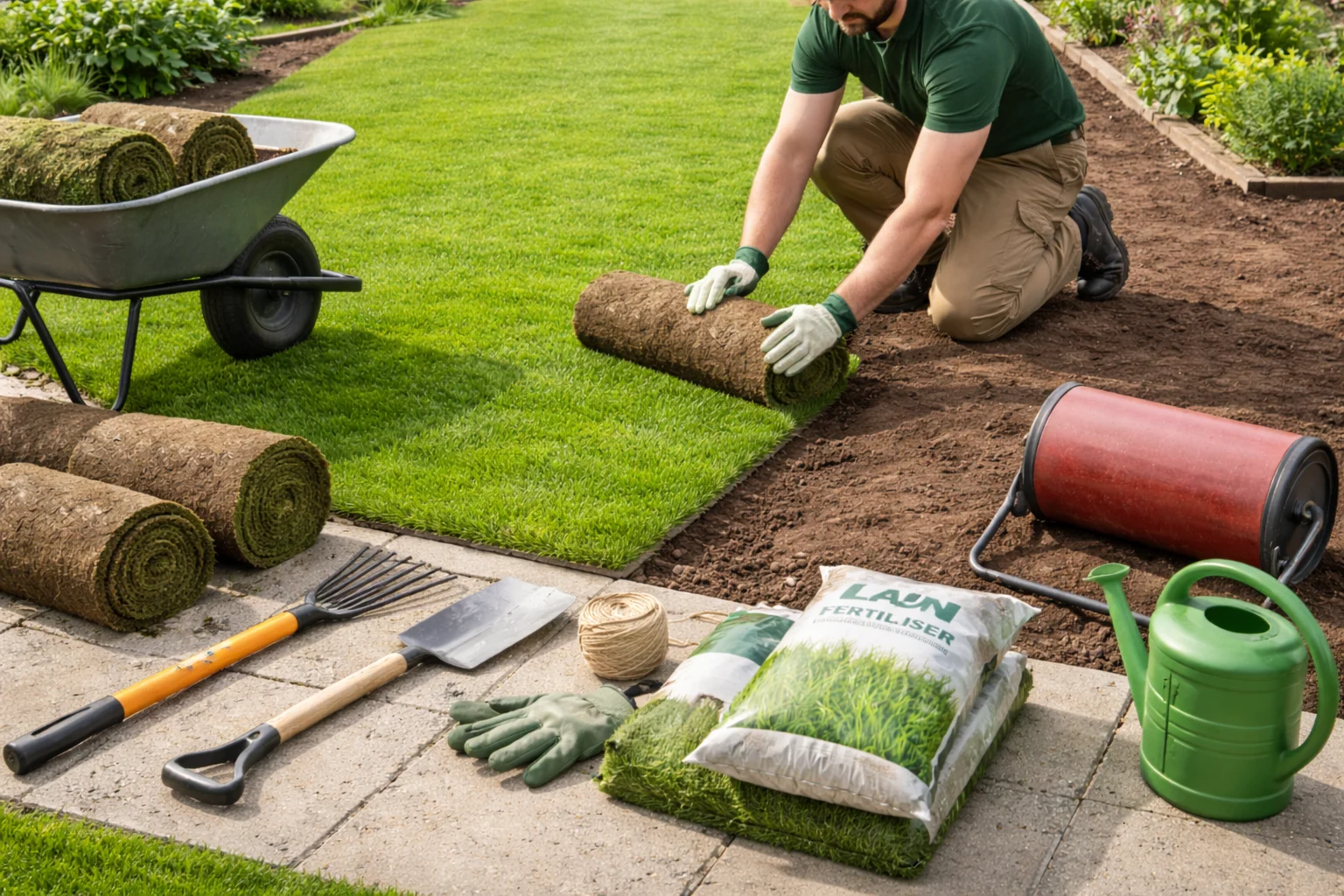
A fresh green lawn can transform the look of your garden, but laying turf correctly is essential if you want it to grow strong and healthy. Many homeowners search how to lay turf because installing a new lawn requires proper preparation, careful placement, and consistent aftercare.
When turf is installed correctly, the grass roots quickly establish in the soil, creating a dense and durable lawn. However, poor preparation or incorrect watering can cause turf to dry out or fail to root.
This guide explains how to lay turf step by step, when to do it, and how to care for your lawn after installation.
Quick Answer
To lay turf properly, prepare the soil by removing weeds and stones and digging to about 20–25 cm deep. Level and firm the surface, then lay turf along a straight edge with staggered joints like brickwork. Press pieces tightly together, water thoroughly, and keep the turf moist for several weeks while roots establish.
Best Time of Year to Lay Turf
Timing plays an important role in successful turf installation.
According to gardening experts such as the Royal Horticultural Society (RHS), the best time to lay turf is:
- Mid-autumn to early spring
During this period, soil is usually moist and temperatures are cooler, allowing grass roots to establish without drying out.
Avoid Laying Turf During
- Hot summer weather
- Dry conditions
- Frozen soil
Extreme temperatures can stress new turf and slow root growth.
Preparing the Ground for Turf
Proper soil preparation is the most important step when laying turf. Poor preparation can lead to uneven lawns and weak root systems.
Remove Weeds and Stones
Start by clearing the area completely.
Remove:
- weeds
- large stones
- debris
- old grass
This ensures the new turf can root properly.
Dig the Soil
Next, dig or rotavate the soil to a depth of 20–25 cm.
Loosening the soil improves drainage and allows grass roots to grow deeper.
Add Organic Matter
Mix organic materials such as compost or well-rotted manure into the soil.
Organic matter improves:
- soil structure
- water retention
- nutrient levels
Healthy soil leads to healthier grass growth.
Leveling and Firming the Soil
After preparing the soil, the surface must be leveled and firmed before laying turf.
Rake the Surface
Use a garden rake to smooth the soil and create an even surface.
This helps prevent bumps or dips in your lawn.
Use the Heel and Toe Method
Gardeners often use the heel and toe method to firm soil.
This involves walking across the soil using short steps to gently compress the surface.
The goal is a firm surface that still allows roots to penetrate.
Apply Pre-Turf Fertiliser
Before laying turf, apply a general pre-turfing fertiliser.
This provides nutrients that help new grass establish quickly.
Proper fertilization is also an important part of lawn care, similar to techniques discussed in guides about when to apply pre emergent for weed prevention.
How to Lay Turf Step by Step
Once the ground is prepared, you can begin laying the turf.
Step 1: Start Along a Straight Edge
Begin laying turf along a straight edge such as:
- a path
- driveway
- garden border
- string line
This ensures your lawn stays aligned and neat.
Step 2: Lay Turf Like Brickwork
Lay each new row so that the joints stagger like brickwork.
This pattern helps strengthen the lawn and prevents visible lines.
Step 3: Press Pieces Tightly Together
Place each turf roll tightly against the previous one.
Avoid leaving gaps, as they may dry out or allow weeds to grow.
Do not stretch the turf while placing it.
Step 4: Work From Boards
When installing turf, stand on wooden boards placed on the newly laid grass.
This prevents footprints and soil compaction.
Step 5: Firm the Turf
After laying each section, press the turf gently into the soil using:
- a lawn roller
- a tamper
- flat boards
Firming ensures good contact between turf and soil.
Watering New Turf Properly
Watering is critical for newly laid turf.
Immediately after installation, water the entire lawn thoroughly.
The water should soak through the turf and into the soil below.
Keep the Turf Moist
For the first 2–3 weeks, keep the turf consistently moist.
During dry weather:
- water daily
- water in the early morning or evening
Proper watering helps the roots grow into the soil.
Aftercare for Newly Laid Turf
Proper care after installation ensures your lawn becomes healthy and durable.
Avoid Walking on the Turf
New turf is delicate and should not be walked on unnecessarily.
Foot traffic can damage young roots before they establish.
Check Root Development
To test whether the turf has rooted properly, gently lift a corner.
If the turf resists lifting, the roots have started growing into the soil.
When to Mow New Turf
Do not mow your lawn immediately after installation.
Wait until the grass has rooted firmly and reached about 5–8 cm in height.
Then perform the first mow using a high blade setting.
Common Mistakes When Laying Turf
Avoiding common mistakes can improve the success of your lawn installation.
Poor Soil Preparation
Failing to prepare the soil properly can cause uneven growth and drainage problems.
Leaving Gaps Between Turf Pieces
Gaps allow edges to dry out and encourage weed growth.
Not Watering Enough
Insufficient watering is one of the most common reasons turf fails to establish.
Mowing Too Early
Cutting grass before the roots develop can damage the turf.
Benefits of a Healthy Lawn
A well-maintained lawn improves the appearance and usability of outdoor spaces.
Healthy lawns provide benefits such as:
- improved garden aesthetics
- cooler outdoor temperatures
- better soil stability
- space for outdoor activities
Maintaining a lawn is also part of creating a vibrant garden environment, similar to the ideas explored in the true value of growing a garden.
Frequently Asked Questions
What is the best month to lay turf?
The best time to lay turf is from mid-autumn to early spring, when soil moisture levels are higher and temperatures are moderate.
How long does turf take to root?
Turf usually begins rooting within 2 to 3 weeks if watered properly and installed on well-prepared soil.
Should you water turf immediately after laying?
Yes. Newly laid turf should be watered immediately and thoroughly so moisture reaches the soil beneath the grass.
Can you walk on newly laid turf?
It is best to avoid walking on new turf for at least two to three weeks while the roots establish.
When should you mow new turf?
The first mow should be done once the turf has rooted firmly and the grass reaches about 5–8 cm in height.
Final Thoughts
Learning how to lay turf properly ensures your new lawn grows strong and healthy. Successful turf installation requires careful soil preparation, correct laying techniques, and consistent watering during the early weeks.
By following professional methods—such as staggering joints, firming the soil, and keeping the turf moist—you can create a beautiful lawn that enhances the look and value of your garden.