






There is nothing quite as sinking as the sound of a “click-click-click” when you turn your ignition key on a cold morning. A dead battery can happen to anyone—often due to a stray dome light, extreme winter temperatures, or simply an aging electrical system. Learning how to jump start a car is a fundamental rite of passage for every driver, but doing it incorrectly can lead to expensive electrical damage or even personal injury.
In this comprehensive 2026 guide, we provide the definitive, safety-first method for jumping a car battery, the exact jumper cable order, and what to do once the engine is finally humming again.
Quick Summary: The Jumper Cable Order
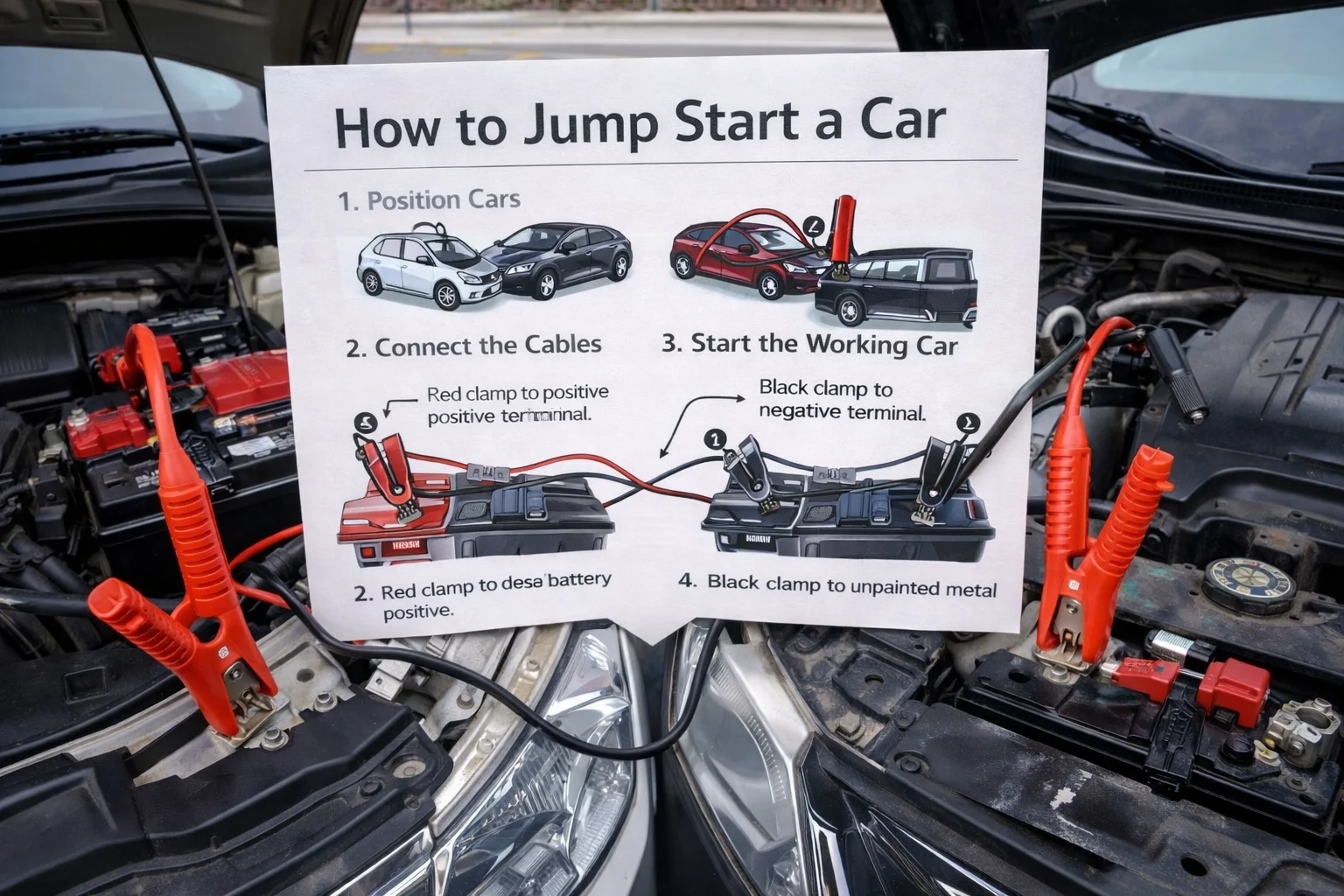
For those currently stranded and looking for a quick reference, follow this specific “Red-to-Dead” sequence to capture the circuit safely:
- Red (Positive) to the Dead battery.
- Red (Positive) to the Good battery.
- Black (Negative) to the Good battery.
- Black (Negative) to Unpainted Metal on the dead car’s engine.
1. Safety Precautions: Read This First
Before you grab the cables, perform a quick inspection. If the dead battery is leaking, cracked, or bulging, do not attempt to jump start it; the battery could explode. Instead, call for a tow or a professional replacement.
Furthermore, ensure that the two vehicles are not touching. If the metal bodies of the cars are in contact, it can create a grounded circuit before you even connect the cables, potentially frying the sensitive onboard computers of modern 2026 vehicles.
2. Step-by-Step: How to Jump Start a Car Safely
Step 1: Position and Power Down
Park the “donor” car (the one with the good battery) so that the engines are facing each other, usually about two feet apart. Turn off the ignition, lights, and all accessories (radio, AC) in both vehicles. Engage the parking brakes on both cars.
Step 2: Connect the Positive (Red) Clamps
Attach one red clamp to the positive (+) terminal of the dead battery. It is usually marked with a “+” sign or a red plastic cover. Attach the other end of the red cable to the positive (+) terminal of the working battery.
Step 3: Connect the Negative (Black) Clamps
Attach one black clamp to the negative (-) terminal of the working battery.
Crucial Safety Note: Do not attach the final black clamp to the negative terminal of the dead battery. This can cause a spark near the battery’s flammable hydrogen gas. Instead, attach the final black clamp to a “grounding point”—a solid, unpainted metal part of the engine block or the car’s chassis away from the battery.
Step 4: The Start-Up Sequence
Start the engine of the donor car and let it idle for 2–5 minutes. This allows the alternator of the good car to pass a “surface charge” into the dead battery. After a few minutes, attempt to start the car with the dead battery.
If the engine turns over and starts, let both cars run connected for another 3 minutes to stabilize the voltage. If you notice the vehicle vibrating or making odd noises during this process, it is worth investigating why is my car shaking to ensure the issue isn’t a mechanical failure disguised as a battery problem.
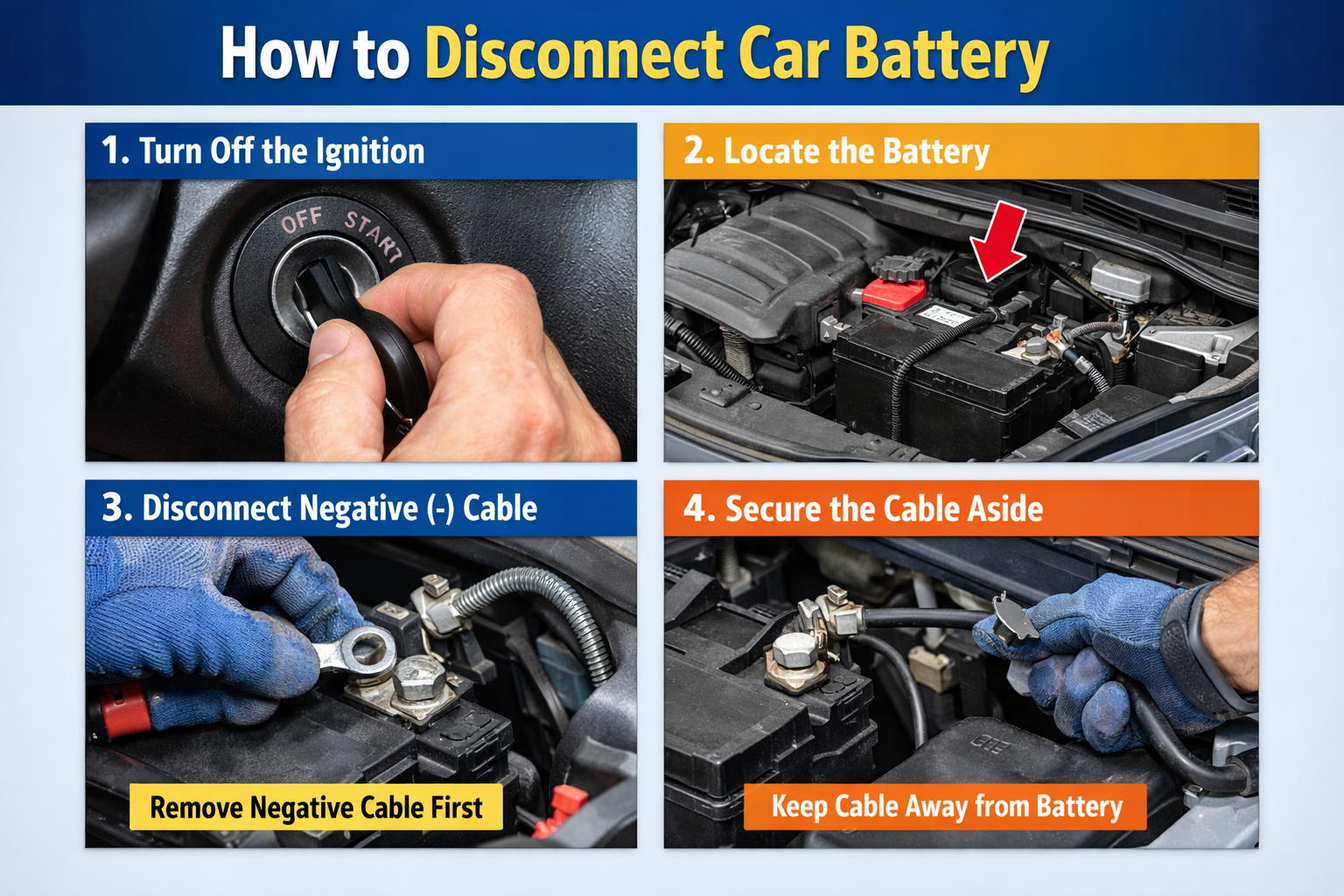
3. The Reverse Order: Removing the Cables
Removing the cables in the wrong order can cause a short circuit. Once the car is running, disconnect them in the exact reverse of how you put them on:
- Remove the Black (Negative) ground from the formerly dead car.
- Remove the Black (Negative) from the donor car.
- Remove the Red (Positive) from the donor car.
- Remove the Red (Positive) from the formerly dead car.
4. Post-Jump Maintenance: What Happens Next?
Do not turn off your engine immediately! Your alternator needs time to recharge the battery. Drive the car for at least 20 to 30 minutes at highway speeds if possible.
If your battery continues to fail or requires a jump start every morning, your battery is likely at the end of its life cycle. If you find yourself needing frequent jumps, it’s important to understand how long do car batteries last to determine if yours is simply past its prime (typically 3–5 years).
5. Common FAQs (AEO Focus)
Can you jump start a car in the rain?
Yes, but take care to keep the cable ends as dry as possible. The 12-volt system of a car is not high enough voltage to cause electrocution through raindrops, but moisture can interfere with a clean connection.
Can a jump start damage the car’s computer?
Yes, if the cables are connected backward (Positive to Negative), it can cause a massive power surge. Always double-check the “+” and “-” symbols on the battery casing.
What if the car still won’t start?
If the lights come on but the engine won’t crank after a jump, you may have a faulty starter motor or a blown main fuse. If there are no lights at all, the battery might be “deep cycled” (too dead to accept a charge).