




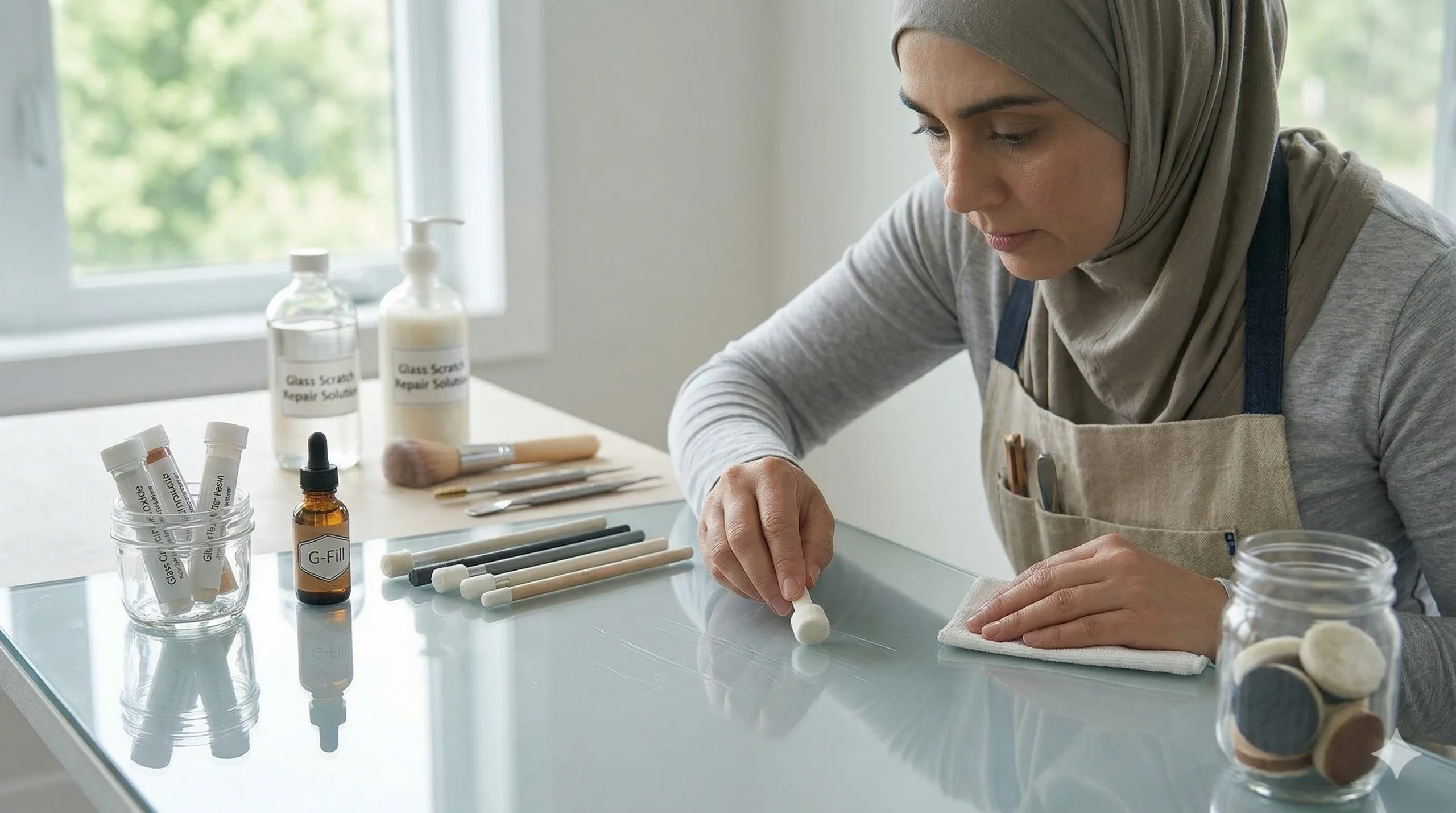
Ghar mein glass surfaces bohat elegant lagti hain, but they are also highly vulnerable. Chahe woh achanak se coffee table par aane wala nishaan ho, ya window pane par ek anjaan scratch, glass damage instantly catches the eye. Glass par scratch aana bht common hai, lekin iska matlab yeh nahi ke aapko poora panel replace karna paray.
In “Build Mode,” we look at materials scientifically. You can’t un-scratch glass, but you can either level the surrounding surface to make the scratch disappear, or fill the gap with an optically clear resin. Before you call a glazier or throw out your favorite mirror, try these DIY methods to restore the smooth, flawless finish of your glass.
Assess the Damage: Surface Scratch vs. Deep Gouge
Pehle yeh check karein ke scratch kitna deep hai. Treating a surface micro-scratch with heavy-duty tools will only warp the glass, while treating a deep gouge with toothpaste is a waste of time. You need to use the classic “Fingernail Test.”
Run your fingernail very lightly across the scratched area at a 90-degree angle.
- The Glide: If your nail glides smoothly over the mark without catching, it is a minor surface scratch. This means the clear coat or the very top microscopic layer of the glass is scuffed. These are very easy to polish out.
- The Catch: If your nail physically catches or drops into the groove, you are dealing with a deep scratch.
Before you attempt any testing or polishing, the glass must be completely free of dirt and grit. Learning how to clean window screens and the surrounding glass thoroughly ensures that you won’t accidentally rub hard dirt particles into the glass and create even more scratches while you work.
2 Easy Home Hacks for Minor Surface Scratches
Agar scratch bilkul minor hai, you don’t need professional compounds. Household items can act as mild abrasives or temporary fillers.
Method 1: The Non-Gel Toothpaste Polish
Standard, non-gel white toothpaste (especially formulas with baking soda) contains microscopic abrasive particles designed to scrub plaque off teeth. These exact same abrasives can gently sand down the microscopic edges of a glass scratch so it catches less light and becomes invisible. This technique is remarkably similar to the mild abrasives used when getting rust off chrome fixtures in your bathroom or garage.
- Wash the glass with standard glass cleaner and dry it with a lint-free microfiber cloth.
- Squeeze a pea-sized drop of white, non-gel toothpaste onto a slightly damp, soft cloth.
- Place the cloth over the scratch and rub it in firm, small circular motions for about 30 to 40 seconds.
- Wipe the area clean with a damp cloth and inspect the glass. Agar scratch abhi bhi thoda visible hai, you can repeat this process two or three more times.
Method 2: The Clear Nail Polish Filler
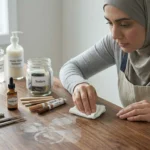
Instead of polishing the glass down to the level of the scratch, this method fills the scratch up to the level of the glass. Clear nail polish acts as an optically clear liquid resin.
- Clean the glass perfectly. Any trapped dirt will be sealed under the polish.
- Use the brush applicator to apply a very thin, precise layer of clear nail polish directly into the scratch.
- Let the nail polish dry completely (usually about 1 hour).
- Once dry, take a clean cloth, apply a few drops of nail polish remover (acetone), and gently wipe across the surface. This removes the excess polish sitting on the flat glass but leaves the polish trapped securely inside the groove of the scratch.
The Pro Approach: Cerium-Oxide Polishing Compound
Agar home hacks kaam na karein, toh yeh professional method try karein. Cerium oxide is a rare-earth metal compound widely used by professional glaziers and jewelers to polish glass. It creates both a mechanical grinding action and a chemical reaction that softens the glass surface microscopically, allowing it to flow and seal scratches.
- Safety First: Wear a dust mask and safety glasses. Cerium oxide powder is incredibly fine and shouldn’t be inhaled.
- Make the Paste: In a small plastic container, mix cerium oxide powder with warm water until it forms a thick, slurry-like paste (the consistency of wet cement).
- Apply and Buff: Apply the paste to a hard rubber or felt polishing pad attached to a variable-speed drill. Keep the drill speed low to medium (around 1500 RPM). Press the pad flat against the glass over the scratch.
- Keep it Wet: This is the most critical step. Polishing creates friction, and friction creates extreme heat. If the glass gets too hot, it will crack. Keep a spray bottle of water nearby and mist the polishing area constantly to keep the paste wet and the glass cool.
- Clean and Inspect: Stop every minute, wipe the paste away, and check the scratch. Stop immediately once the scratch is gone to avoid creating an optical distortion (a wavy look) in the glass.
Crucial Warnings: When to Replace Instead of Repair
As a builder, I always prioritize safety over aesthetics. Not every piece of glass can or should be repaired.
- Toughened (Tempered) Glass: Never use abrasive materials or drill-powered buffing pads on tempered glass (commonly found in shower doors, car side windows, and glass patio tables). Tempered glass is under immense internal tension. Aggressive polishing can disrupt this tension and cause the entire panel to explode into thousands of tiny cubes without warning.
- Double-Glazed Windows: If a scratch is deep enough to compromise the seal of a double-glazed window unit, moisture will enter and cause permanent fogging between the panes. The entire sealed unit must be replaced.
- Deep Cracks: Polishing only hides visual imperfections. If a scratch has developed into a structural crack, no amount of cerium oxide will restore the physical strength of the glass.
Frequently Asked Questions
Can baking soda fix a scratched mirror? Yes, baking soda can be used on mirrors for very light surface scratches. Mix equal parts baking soda and water to form a paste, and gently rub it in a circular motion. Be extremely gentle, as scrubbing too hard on a mirror can damage the reflective silvering on the back if the glass is thin.
Will WD-40 remove glass scratches? No. WD-40 is a water displacement oil, not an abrasive or a curing resin. While wiping WD-40 over a scratch might temporarily make it look invisible by filling the gap with oil, the scratch will immediately reappear as soon as the oil dries up or is washed away.