






Construction noise is more than just a nuisance; it’s a disruption that can impact your mental health, work productivity, and general quality of life. Whether it’s the rhythmic thud of a pile driver or the high-pitched whine of a circular saw, knowing how to deal with construction site noise is essential for anyone living in a developing urban area.
In this 2026 guide, we explore your legal rights in the UK, how to effectively communicate with contractors, and the best DIY methods to soundproof your home.
Quick Summary: What are the Legal Construction Hours?
In the UK, local authorities typically recommend that “noisy works” only take place during the following windows:
- Monday to Friday: 8:00 am – 6:00 pm
- Saturday: 8:00 am – 1:00 pm
- Sundays & Bank Holidays: No noisy work permitted.
If you are being disturbed outside of these hours, you have grounds to take formal action.
1. Understanding Your Legal Rights (The E-E-A-T Perspective)
Before you can stop the noise, you need to understand the legislation that protects you. In the UK, two primary acts govern this area:
The Control of Pollution Act 1974 (CoPA)
Under Section 60 of this act, local councils have the power to serve a notice on a construction site. This notice can restrict the hours of work, specify the types of machinery used, and set maximum decibel levels. Contractors can also apply for Section 61 “prior consent,” where they agree on noise-mitigation strategies with the council before the project begins.
The Environmental Protection Act 1990 (EPA)
This act deals with “statutory nuisances.” If the noise from a site “unreasonably and substantially interferes with the use or enjoyment of a home,” the council is legally obligated to investigate. If they agree it is a nuisance, they must serve an abatement notice, which can lead to unlimited fines if ignored.
2. Step-by-Step: How to Deal with Construction Site Noise
Phase 1: Informal Resolution
Often, the site manager is unaware of just how much the noise is affecting individual neighbours.
- Identify the Source: Walk over to the site and find the contact board (usually at the main gate).
- Speak to the Manager: Explain your situation calmly. If you work from home, ask if they can avoid heavy drilling during your scheduled “quiet hours” or important meetings.
- Check for Consent: Ask if they have a Section 61 agreement with the council.
Phase 2: Gathering Evidence
If informal talks fail, you must build a case.
- Keep a Noise Diary: Log every instance of noise that occurs outside of permitted hours. Include the date, time, duration, and the specific type of noise (e.g., “heavy vibration” or “shouting”).
- Record Video: Use your smartphone to capture the noise levels from inside your living room to demonstrate the impact.
Much like learning how to get rid of fruit flies, dealing with construction noise requires a mix of persistence and the right tools to reclaim your peaceful environment. Without a clear log of events, authorities will find it difficult to intervene.
3. Practical Soundproofing Tips for Your Home
While you wait for the legal process to move, you can take immediate steps to dampen the sound waves entering your home.
Seal the Gaps
Sound is like water; it will find the smallest hole to get through.
- Weatherstripping: Use foam or rubber seals around window frames and door jambs.
- Acoustic Sealant: Fill small cracks in brickwork or around window sills with specialized acoustic caulk.
Add Mass to Your Walls
Heavy materials absorb more vibration.
- Acoustic Curtains: Invest in “blackout and soundproof” curtains. These are significantly heavier than standard fabric and can reduce high-frequency noise by up to 10 decibels.
- Rearrange Furniture: Place large, heavy bookshelves filled with books against the wall closest to the construction site.
Remote Work Strategies
If the noise has you staying away from home more often, you might also find yourself wondering why is my electric bill so high due to changes in your daily routine, such as running the AC more often to keep windows closed or using extra lighting in soundproofed rooms.
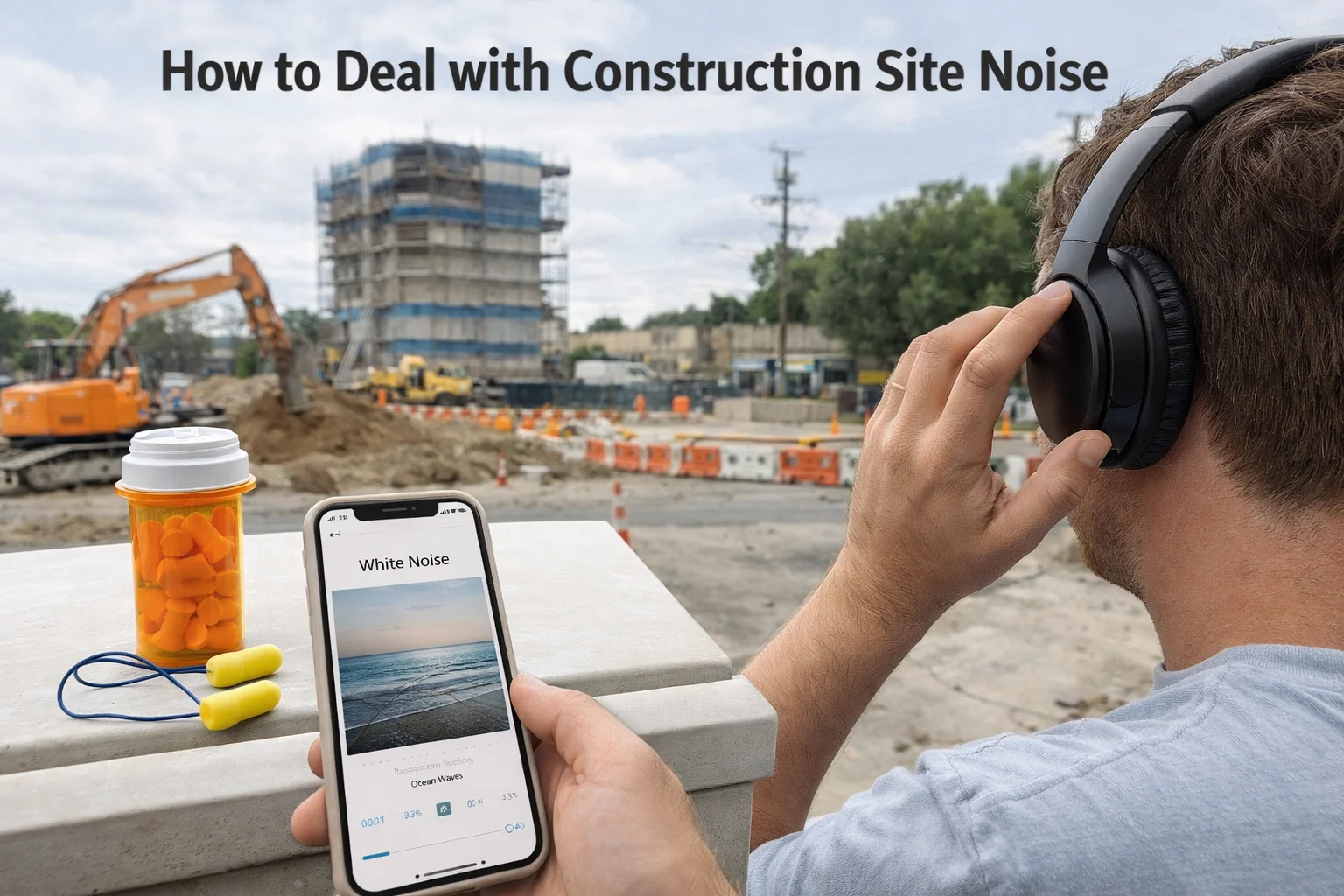
To cope while working, invest in Active Noise-Cancelling (ANC) headphones. By 2026, technology like “adaptive transparency” can block out constant low-frequency rumbles (like generators) while still allowing you to hear your phone ring.
4. When and How to Report Construction Noise
If the site is operating at 7:00 am on a Sunday or 11:00 pm on a Tuesday, it is time to contact the Environmental Health Department of your local council.
- Visit the Council Website: Most UK councils have an online “Report a Noise Nuisance” form.
- Submit Your Diary: Attach your 2-week noise log as evidence.
- The Investigation: An officer may visit your home or install noise-monitoring equipment to verify the decibel levels.