







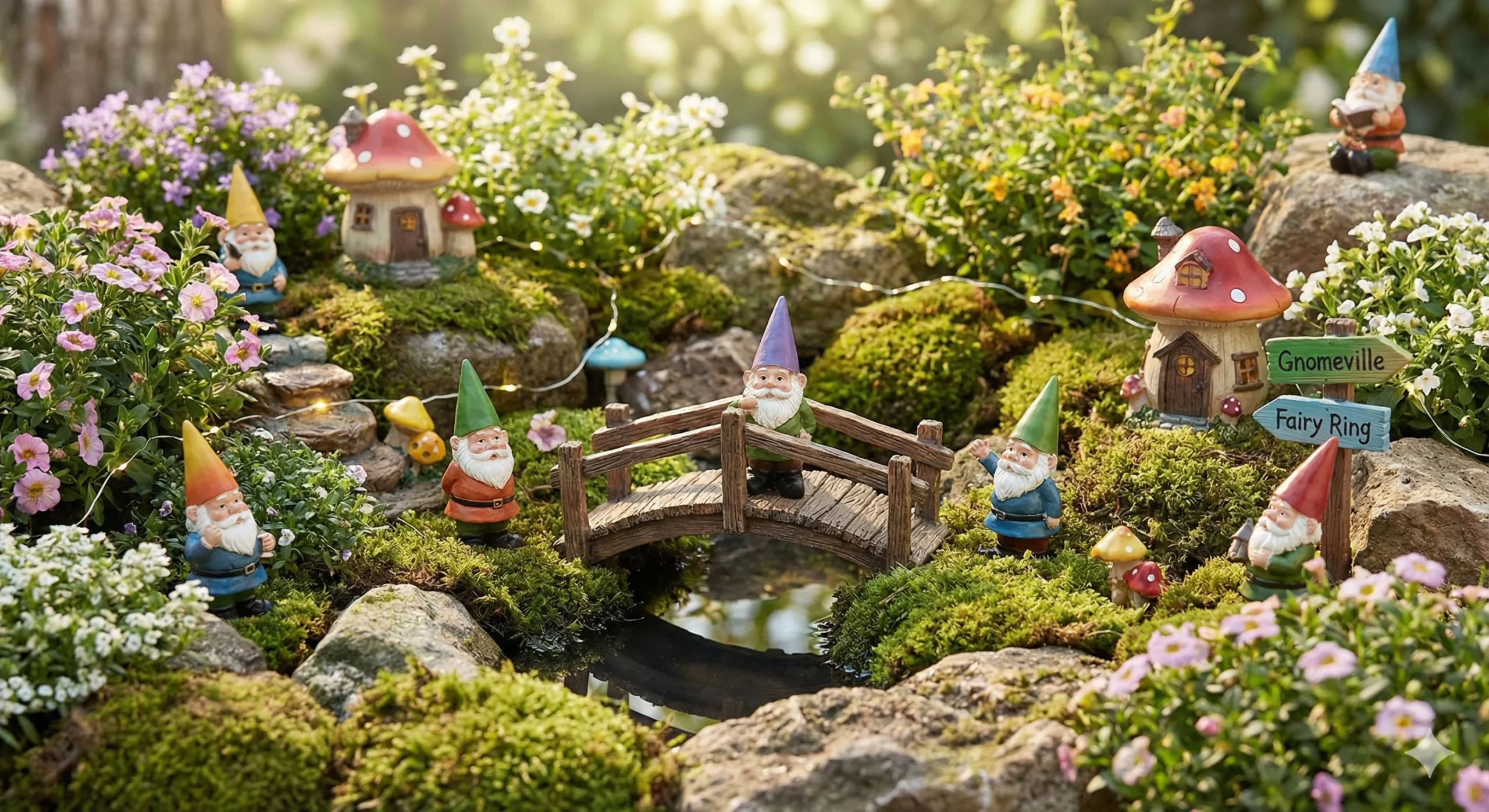
Garden gnomes have been a staple of outdoor decor since the mid-19th century, originally appearing in Germany as Gartenzwerge (garden dwarfs). While they went through a period of being considered “kitsch,” they have recently exploded back into popularity thanks to the “Gnomecore” aesthetic and a collective desire to add a little magic to our backyards.
A well-planned gnome garden is more than just a collection of statues; it is a storytelling device. Whether you want a hidden forest of fairy garden gnomes or a bold statement piece with giant garden gnomes, this guide will help you design a space that is charming, cohesive, and durable.
Choosing Your Style: From Giant Guardians to Tiny Travelers
Before you start buying, it is essential to decide on the “scale” of your gnome village. Mixing too many different sizes can look cluttered, so most designers recommend sticking to one of three categories.
1. Giant Garden Gnomes (The Focal Point)
If you have a large lawn or a long driveway, giant garden gnomes (usually 3 feet or taller) act as fantastic guardians.
- Placement: Place a single giant gnome at the entrance of a vegetable patch or near a gate.
- Style: These are often made of lighter fiberglass or heavy concrete. Because of their size, they work best as solo figures rather than in groups.
2. Large Garden Gnomes (The Standard)
These are the classic 12-to-18-inch figures you see in most hardware stores.
- Usage: These are the perfect gnomes for the yard. They are visible from the street but small enough to tuck under a bush.
- Grouping: They look best in groups of three—perhaps a “working” crew where one holds a shovel, another a lantern, and the third a watering can.
3. Fairy Garden Gnomes (The Miniatures)
For those with limited space or balconies, fairy garden gnomes are the ideal solution. These are typically 2 to 4 inches tall and are designed for container gardening.
- The Setup: You can build an entire house fairy garden inside a planter, complete with tiny furniture, moss “lawns,” and miniature succulents.
- Pro Tip: Use a shallow container to create a “Gnome Village” scene that can be easily moved indoors during winter.
Where to Buy Gnomes (and What to Look For)
When you are ready to buy gnomes, you will encounter a vast range of materials. Your choice should depend on your climate and budget.
Material Guide
- Resin: The most common and affordable material. It allows for intricate detail and bright colors but can fade in direct sun over a few years.
- Concrete: The most durable option for large garden gnomes. Concrete statues can last for decades and develop a beautiful mossy patina, making them true pieces of garden gnome art and sculptures.
- Terracotta: A traditional, rustic choice. These are fragile and should be brought inside during freezing weather to prevent cracking.
Where to Shop
- Local Nurseries: Best for unique, hand-painted concrete statues.
- Online Marketplaces: Best for specific themes, such as “biker gnomes” or “zombie gnomes.”
- Antique Stores: The only place to find vintage German gnomes (Heissner or Griebel), which are highly collectible.
Design Ideas: Staging Your Gnome Village
Don’t just drop your gnomes in the middle of the grass. The secret to a magical gnome garden is “integration”—making it look like the gnomes live there.
The “Hidden Nook” Technique
Gnomes love privacy. Tuck them behind fern fronds, at the base of trees, or peeking out from behind large flower pots (terracotta). The joy for visitors comes from discovering the gnome, rather than seeing it immediately.
Smurf and Gnome Garden Decor
A fun trend is mixing pop culture with traditional folklore. Smurf and Gnome Garden Decor blends the blue-skinned cartoon characters with classic red-hatted gnomes. Since both live in mushroom houses, the aesthetics blend perfectly. You can create a “Blue vs. Red” village using blue flowers (like lobelia) on the Smurf side and red flowers (like geraniums) on the gnome side.
The “Working” Gnome Scene
Arranging gnomes to look like they are helping you garden is a classic trope.
- Place a fishing gnome next to a koi pond or birdbath.
- Position a sleeping gnome under a shady hosta leaf.
- Set a wheelbarrow-pushing gnome on the edge of a gravel path.
Fun & Folklore: Games, Costumes, and Art
A gnome garden is meant to be interactive. Here are three ways to bring life to your display:
1. Garden Gnomes and Gnome Games
If you have children or grandchildren, turn your decor into a game.
- The Traveling Gnome: Every week, move one specific gnome to a new hiding spot. Challenge the kids to find him.
- Gnome Bowling: On a flat patch of grass, use lightweight plastic gnomes as pins and a soft foam ball.
2. Garden Gnome Costumes
Why should humans have all the fun? Many enthusiasts dress their large garden gnomes for the holidays.
- Halloween: Add a tiny felt witch hat or a miniature pumpkin bucket.
- Christmas: Wrap a small tinsel scarf around their necks.
- Note: If you can’t find clothes small enough, look for doll clothes or “preemie” baby accessories.
3. Garden Gnome Images and Clipart
If you are crafty, you can use Garden Gnome Images and Clipart to create custom wooden signs for your garden. A small sign saying “Gnome Sweet Gnome” or “Don’t Trip Over the Residents” adds a layer of humor. You can find royalty-free clipart online, print it, and transfer it onto wood for a rustic garden stake.
Maintenance: Protecting Your Gnome Art
To keep your garden gnome art and sculptures looking vibrant, follow these maintenance tips:
- UV Protection: Before placing a new resin gnome outside, spray it with a clear, UV-resistant acrylic sealer. This prevents the red hats from turning pink in the sun.
- Winter Care: If you live in an area with freeze-thaw cycles, bring ceramic and resin gnomes into the garage or shed. Water can get into hairline cracks, freeze, and shatter the gnome.
- Cleaning: Wash your gnomes once a year with warm, soapy water and a soft brush to remove algae and bird droppings.
Conclusion
Creating a gnome garden is one of the most forgiving and joyful forms of landscaping. Whether you opt for a single, dignified concrete statue or a chaotic village of colorful characters, the goal is to spark a smile.
Start small. Buy gnomes that speak to your personality, place them in a quiet corner near your flower pots, and watch as your garden transforms from a simple plot of land into a storybook world.
For more inspiration on the history and cultural significance of these garden guardians, you can read the Royal Horticultural Society’s feature on garden gnomes.