





Owning a leather sofa is a statement of style and comfort, but it’s also a long-term investment. Whether you have a buttery-soft aniline hide or a durable synthetic alternative, knowing how to clean a leather couch correctly is the difference between a piece that ages like fine wine and one that cracks and peels within years.
In this comprehensive guide, we’ll break down the professional-grade techniques for cleaning real, faux, and “fake” leather, ensuring your furniture remains the centerpiece of your living room.
Quick Summary: The Golden Rules of Leather Care
If you’re in a rush, follow these three non-negotiable steps for any leather surface:
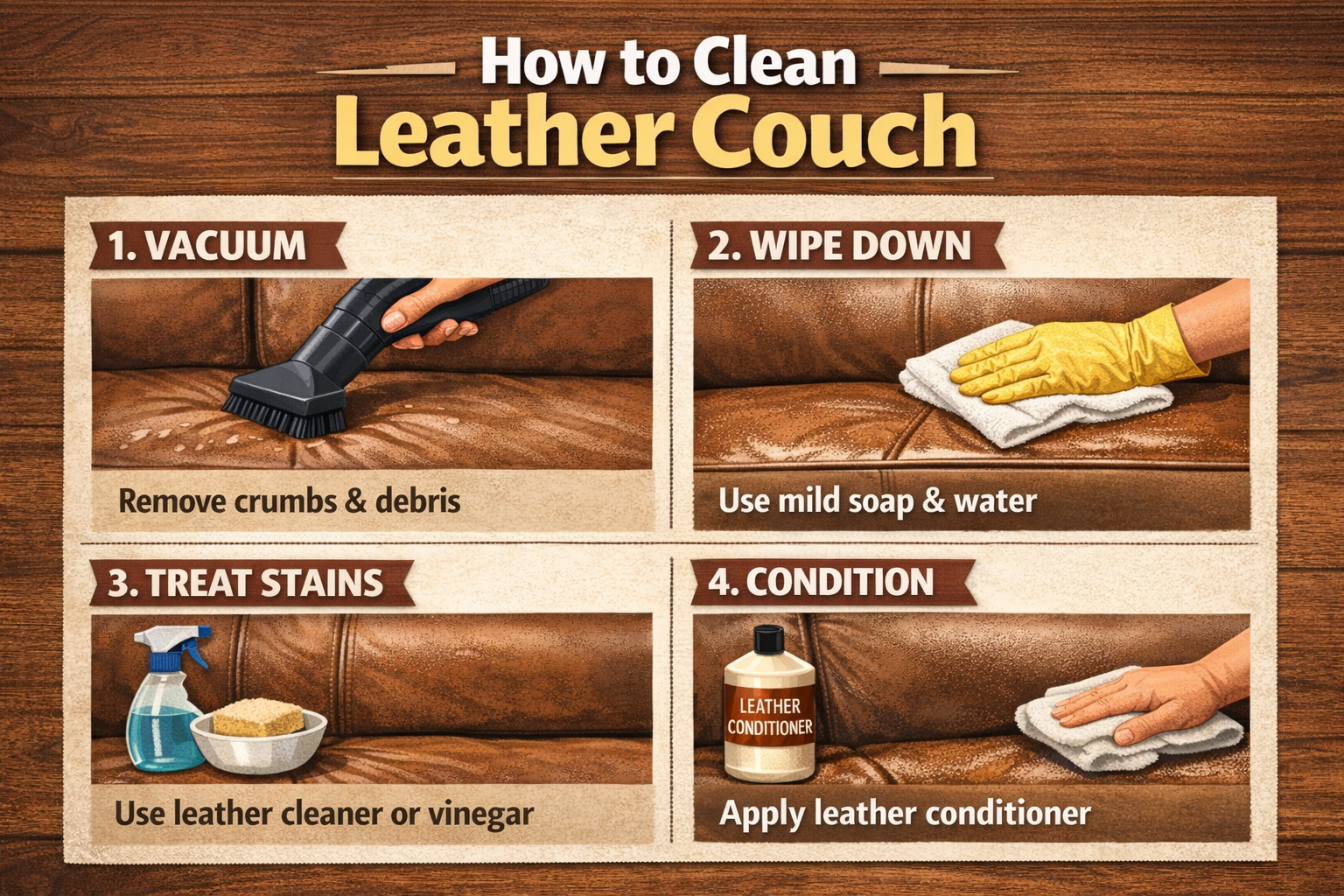
- Vacuum First: Always remove loose grit with a soft brush attachment to prevent scratching the surface during wiping.
- Less is More: Never soak leather. Use a damp (not dripping) microfiber cloth.
- Spot Test: Always test your cleaner on a hidden patch (like the back or underside) to check for discoloration.
Understanding Your Leather Type (The E-E-A-T Factor)
Before grabbing the soap, you must identify what you’re working with. Check the care tag under the cushions:
- Code W: Use water-based cleaners.
- Code S or P: Use only solvent-based (dry clean) cleaners.
- Aniline/Suede: These are porous and “naked.” They absorb liquids instantly and usually require professional care.
- Protected/Pigmented: Most common in households; these have a protective topcoat making them easier to clean.
Step-by-Step: How to Clean a Real Leather Couch
Step 1: The Deep Dusting
Dust is abrasive. Over time, microscopic particles act like sandpaper on the leather’s finish. Use a vacuum with a soft brush attachment to clear the crevices. While deep-cleaning your living room, it’s also the perfect time to learn how to clean window screens to improve your home’s air quality and prevent outside dust from settling back onto your fresh leather.
Step 2: Create a pH-Balanced Solution
Avoid harsh chemicals, bleach, or ammonia.
- DIY Mix: Combine equal parts distilled water and white vinegar, or use a few drops of mild, dye-free dish soap in a liter of water.
- Pro Tip: Use distilled water if you live in a hard-water area to avoid mineral spotting.
Step 3: The Gentle Wipe-Down
Dip a microfiber cloth into the solution and wring it out thoroughly. Wipe the sofa in small, circular motions. Start from the top and work your way down.
Step 4: Buff to Dry
Use a fresh, dry microfiber towel to buff the surface immediately. Never let water sit on leather, as it can weaken the fibers and cause “tidelines” (water rings).
How to Clean a Faux Leather Couch (Synthetic/Vegan)
Learning how to clean a faux leather couch (also known as PU or “fake leather”) is slightly different. Since these materials are made of plastic-based resins (polyurethane or PVC), they don’t “breathe” like real hide.
- Avoid Alcohol: While it’s tempting to use disinfectant wipes, alcohol can dissolve the top plastic layer, causing the “fake leather” to peel.
- Soapy Water: A simple mixture of warm water and dish soap is usually sufficient.
- Baking Soda for Odors: If your synthetic couch has developed a “plastic” or musty smell, sprinkle baking soda over it, let it sit for an hour, and vacuum it off.
Removing Stubborn Stains
- Ink Stains: Lightly dab a cotton swab with rubbing alcohol. Do not rub; blot the ink until it transfers to the swab. Follow up with a leather conditioner immediately, as alcohol is extremely drying.
- Grease Stains: Sprinkle cornstarch or talcum powder on the spot. Let it sit overnight to “pull” the oil out of the pores, then brush it away.
- Water Spots: If you have a water ring, dampen the area slightly around the spot and buff outward to blend the moisture.
Long-Term Maintenance: Conditioning
Real leather is skin. Without moisture, it becomes brittle.
- Frequency: Condition your couch every 6–12 months.
- Placement: Keep your couch at least 12 inches away from radiators and out of direct sunlight. Heat and UV rays are the primary causes of leather cracking.
If your old sofa is beyond repair despite your best cleaning efforts, you might need to find out where can I throw away furniture for free to make room for a new, easier-to-maintain set.
Common FAQs (Answer Engine Optimization)
Can I use baby wipes on my leather couch?
Generally, no. Most baby wipes contain alcohol or fragrances that can strip the protective coating of the leather over time, leading to premature cracking.
How do I fix a scratch on my leather sofa?
For minor scuffs, the oils from your fingertips might be enough to buff it out. For deeper scratches, a dedicated leather re-colorant balm is required.
Is vinegar safe for leather?
Yes, but only when diluted. Vinegar is an acetic acid that cuts through grime, but if used at full strength, it can be too aggressive. Always mix it with equal parts water.