




A toaster is essentially a simple machine: it is a set of exposed electrical heating wires designed to get incredibly hot, very quickly. When you ignore the daily crumb buildup at the bottom of the machine, those dry breadcrumbs eventually turn into pure carbon. This causes burning smells, ruins the taste of your morning breakfast, and creates a highly real fire hazard in your kitchen.
Yeh ek simple 5-minute ka kaam hai (This is a simple 5-minute job). You do not need expensive cleaning chemicals or special tools. Here is your definitive, mechanical guide to cleaning a toaster safely, removing trapped debris, and protecting the fragile heating elements inside.
Step 1: Isolate the Power and Empty the Base
Before you do anything, you must eliminate the electrical risk. Never perform maintenance on an appliance holding a live charge.
- Unplug the Machine: Pull the plug from the wall socket and allow the toaster to cool completely if it was recently used.
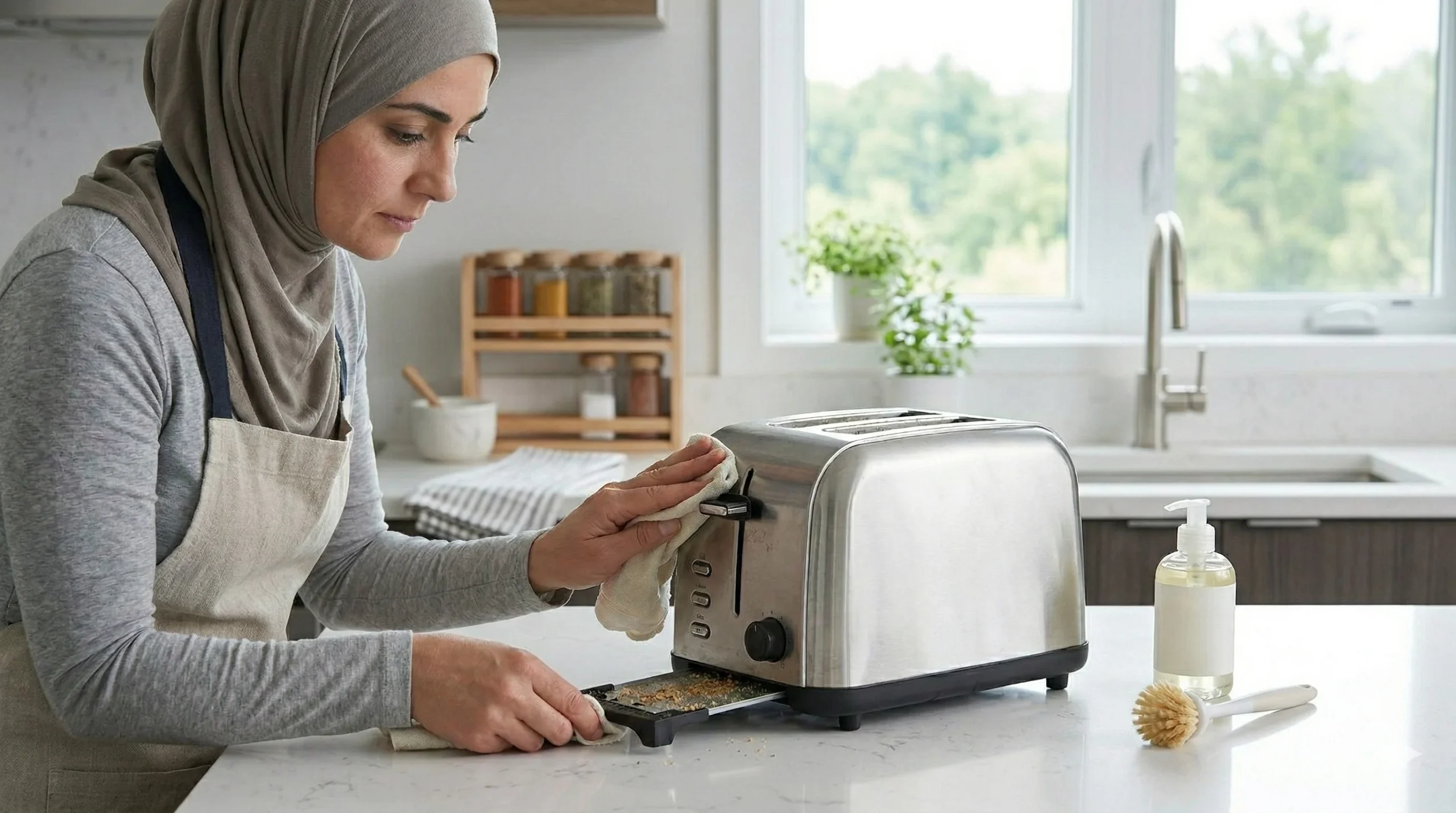
- Remove the Crumb Tray: Slide out the removable crumb tray located at the very bottom or back of the unit.
- Wash and Dry: Empty the loose crumbs into the bin. Wash the tray in your sink with warm soapy water to cut through any melted butter or grease. Dry it 100% with a towel and leave it to the side. Never slide a wet tray back into the machine.
Step 2: Clearing the Internal Heating Elements
The inside of a toaster contains fragile mica cards and thin heating wires. You must remove the trapped debris without breaking these components.
- The Shake: Turn the toaster completely upside down over your kitchen bin. Give the sides of the casing a few gentle taps. Gravity will dislodge the heavy carbon buildup and loose seeds trapped inside the slots.
- The Brush Technique: Take a soft pastry brush or a clean, dry toothbrush. Gently reach into the top slots and lightly sweep the crumbs off the internal heating wires.
- The Strict Warning: Never stick a metal knife, fork, or screwdriver inside the slots. Yahan koi metal tools allow nahi hain (No metal tools are allowed here). Metal will instantly snap the fragile heating wires, permanently ruining the appliance.
Step 3: Cleaning the Exterior Housing
Kitchen appliances naturally collect a sticky layer of airborne cooking grease. You need to remove this without frying the internal circuit board.
- The Wipe: Use a lightly damp microfiber cloth with a single drop of mild dish soap. Wipe down the plastic or metal casing to cut through the grease. Follow up with a plain damp cloth to remove any soap residue.
- The Stainless Steel Rule: If you have a stainless steel toaster, you must wipe horizontally or vertically in the exact direction of the metal grain. Scrubbing in aggressive circles will leave permanent micro-scratches on the finish.
- The Water Warning: Never immerse the toaster in water, and absolutely never spray cleaning chemicals directly onto the casing. If liquid drips down into the slots, it will short-circuit the appliance the next time you plug it in.
The Fire Safety Maintenance Schedule
You do not need to deep clean your toaster every single day, but ignoring it for months is a safety risk.
For a standard household, a quick dry clean and crumb tray empty every one to two weeks is sufficient. Just as understanding how to reduce the pressure on a boiler is critical for your central heating’s safety, performing this routine mechanical maintenance on your toaster is the only guaranteed way to prevent localized kitchen fire hazards and stop smoke alarms from ruining your morning.
FAQs on Toaster Maintenance
Can I use a hairdryer to blow crumbs out of a toaster? No. A hairdryer will simply blow the loose crumbs deeper into the hard-to-reach electrical components at the base of the machine. Turning the toaster upside down and letting gravity do the heavy lifting is the only mechanically correct method.
Why does my toaster smell like burning plastic? This usually indicates one of two things: a bread wrapper or plastic bag has accidentally melted onto the hot metal exterior, or there is a severe internal crumb buildup that is actively carbonizing on the heating wires. Unplug the machine immediately, let it cool, and inspect the inside with a flashlight.