




If your radiator feels hot at the bottom but cold at the top, or your heating system makes strange gurgling noises, trapped air inside the radiator may be preventing hot water from circulating properly. Learning how to bleed radiators is a simple home maintenance task that can improve heating efficiency and make your home warmer.
Quick Answer
Bleeding radiators releases trapped air from your heating system so hot water can circulate properly. Turn off the heating, open the bleed valve with a radiator key, release the air until water flows steadily, then close the valve and check your boiler pressure.
With a few simple tools and careful steps, most homeowners can complete this task in just a few minutes.
What Does Bleeding a Radiator Mean?
Bleeding a radiator means releasing trapped air from the heating system. When air becomes trapped inside a radiator, it prevents hot water from filling the entire radiator panel.
Because air rises to the top, the upper part of the radiator stays cold while the bottom becomes warm.
Removing this trapped air allows hot water to circulate freely again, improving heating efficiency and ensuring your radiator heats evenly.
Signs Your Radiator Needs Bleeding
There are several clear signs that indicate your radiator needs bleeding.
Radiator Cold at the Top
If the top section of the radiator feels cold while the bottom remains warm, trapped air is likely blocking water circulation.
Gurgling or Bubbling Noises
Air pockets inside the radiator can create bubbling or gurgling sounds when hot water flows through the pipes.
Uneven Heating in Rooms
Rooms may take longer to heat up or feel colder than usual when radiators are not working efficiently.
Higher Energy Bills
When radiators are not heating properly, the heating system must work harder to warm the home.
Tools You Need to Bleed a Radiator
Bleeding a radiator requires only a few basic tools.
- Radiator key (most common tool)
- Flat-head screwdriver (for some valves)
- Small bowl or container
- Towel or cloth
The towel and bowl help catch any water that may drip from the bleed valve.
Step-by-Step Guide: How to Bleed Radiators
Follow these simple steps to safely remove trapped air from your radiator.
Step 1: Turn Off the Heating System
Before bleeding radiators, turn off the central heating completely and allow the system to cool down.
Bleeding radiators while the system is hot can be dangerous because hot water may escape from the valve.
Step 2: Locate the Bleed Valve
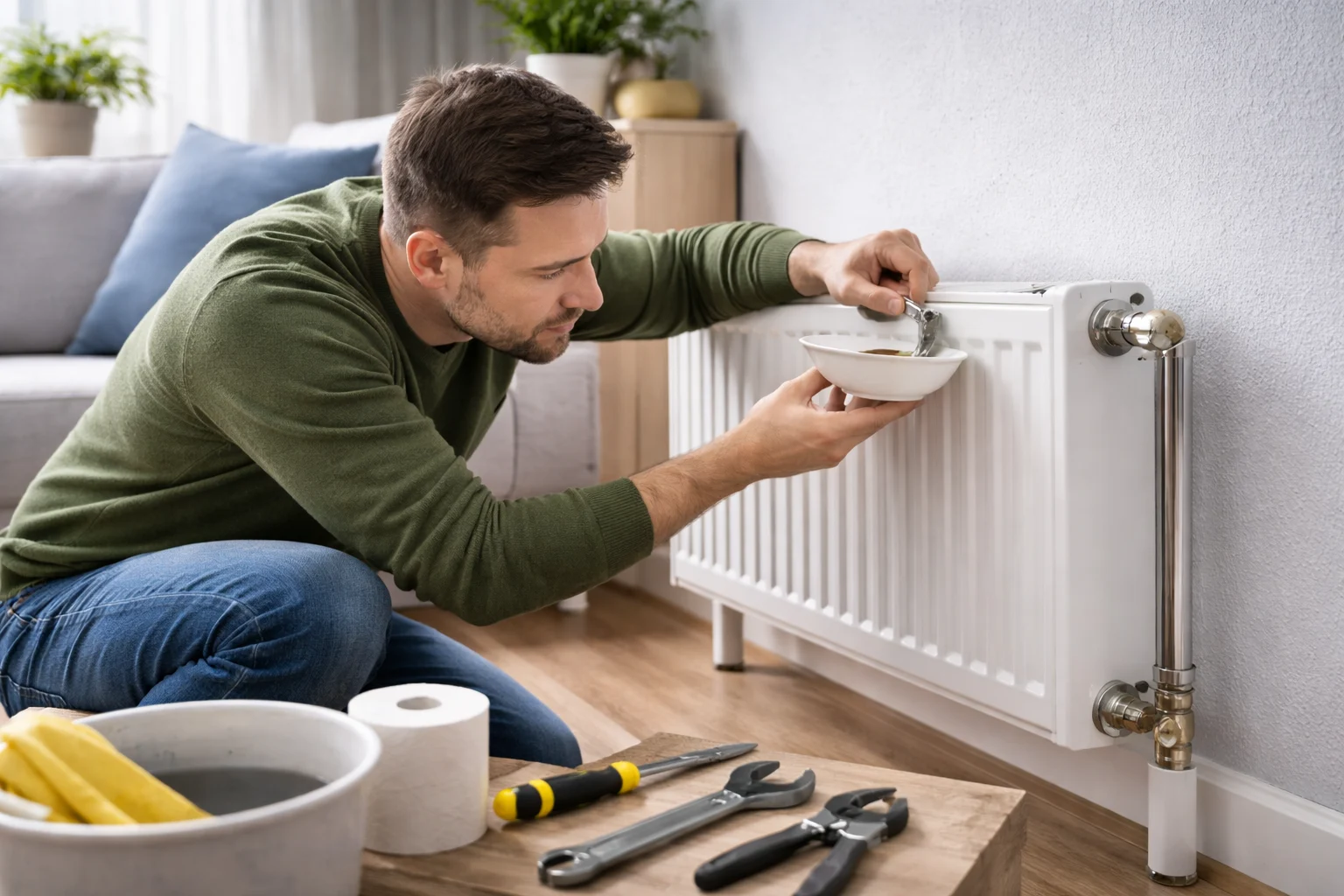
The bleed valve is usually located at the top corner of the radiator.
It looks like a small metal screw with a square slot designed for a radiator key.
Step 3: Place a Bowl and Towel Under the Valve
Before opening the valve, place a towel and a small bowl underneath it.
This catches any water that may drip during the process.
Step 4: Insert the Radiator Key
Insert the radiator key into the bleed valve and turn it slowly counterclockwise.
Do not open the valve too quickly.
Step 5: Release the Trapped Air
As you turn the valve, you will hear a hissing sound.
This sound indicates trapped air escaping from the radiator.
Allow the air to release slowly.
Step 6: Close the Valve When Water Appears
Once the hissing stops and water begins to flow steadily, close the valve by turning the key clockwise.
Do not overtighten the valve.
Step 7: Repeat for Other Radiators
Bleed all radiators in your home using the same process.
It is best to start with the radiator furthest from the boiler and work your way toward it.
Should the Heating Be On or Off When Bleeding Radiators?
The heating system should always be turned off before bleeding radiators.
Turning off the heating prevents hot water from circulating and allows trapped air to collect at the top of the radiator, making it easier to release.
Allow the system to cool for at least 20–30 minutes before starting.
Check Boiler Pressure After Bleeding Radiators
Bleeding radiators may cause a small drop in boiler pressure.
After finishing the process, check the boiler pressure gauge.
For most systems, the pressure should be between 1.0 and 1.5 bar when the system is cold.
If the pressure is too low, you may need to increase it using the filling loop beneath the boiler. Many homeowners learn how to increase boiler pressure when maintaining their heating systems.
What Order Should You Bleed Radiators?
Bleeding radiators in the correct order helps maintain proper system pressure.
The recommended order is:
- Start with the radiator furthest from the boiler
- Work gradually toward the boiler
- Bleed upstairs radiators after downstairs ones
This approach helps remove air efficiently throughout the heating system.
Common Mistakes When Bleeding Radiators
Although the process is simple, several mistakes can cause problems.
Opening the Valve Too Quickly
Opening the valve too fast can cause water to spray out suddenly.
Forgetting to Check Boiler Pressure
After releasing air, the system pressure may drop and require adjustment.
Bleeding Radiators While Heating Is On
This can release hot water and make the process unsafe.
Not Using a Towel or Bowl
Small amounts of water may leak when the valve is opened.
Why Radiators Sometimes Stop Heating Properly
Radiator problems are often related to trapped air, but other heating system issues can also affect temperature performance.
For example, cooling systems can also experience airflow or circulation problems similar to issues explained in guides about why an AC might be blowing hot air when airflow or pressure problems occur.
Understanding basic heating and cooling maintenance helps keep home systems working efficiently.
How Often Should Radiators Be Bled?
Most radiators only need bleeding once or twice per year.
The best times to check radiators are:
- Before winter begins
- When the heating system is first turned on for the season
Regular maintenance helps keep your heating system efficient.
Frequently Asked Questions
How often should radiators be bled?
Radiators usually need bleeding once or twice per year, particularly before the winter heating season begins.
Why is my radiator cold at the top?
A radiator that is cold at the top usually contains trapped air that prevents hot water from filling the entire radiator.
Do you need a radiator key?
Most radiators require a radiator key to open the bleed valve, although some modern radiators can be opened using a flat-head screwdriver.
What happens if you don’t bleed radiators?
If trapped air remains in the radiator, the heating system becomes less efficient and rooms may not heat properly.
Is bleeding radiators safe?
Yes, bleeding radiators is generally safe if the heating system is turned off and allowed to cool before starting.
Final Thoughts
Learning how to bleed radiators is a simple but important home maintenance skill. Removing trapped air improves heating efficiency, helps rooms warm faster, and can reduce energy costs.
With just a radiator key, a towel, and a few minutes of time, most homeowners can keep their heating systems working smoothly throughout the winter months.