





When it comes to maintaining a solid foundation for your teeth, relying only on a standard toothbrush is like cleaning the front of a building but ignoring the structural joints. A regular toothbrush only cleans about 60% of your tooth’s surface. The remaining 40%—the tight gaps in between—requires a highly specialized mechanical tool.
Maintaining the foundation of your teeth requires the exact same discipline as maintaining a property. Just as you wouldn’t rush a renovation without understanding how long it takes for plaster to dry, you cannot ignore the physical maintenance rules for your dental tools.
An interdental brush is incredibly effective for this detailed safai (cleaning), but it has a strict physical lifespan. It is subject to daily wear and tear, and using a worn-out brush is completely ineffective. Here is your factual, structural guide to the exact lifespan of interdental brushes, the physical signs of tool failure, and how to maintain them properly.
The Lifespan: How Long Do They Actually Last?
You cannot rely on a single brush for a whole month. The exact timeline depends entirely on the materials the manufacturer used to engineer the tool.
Reusable Wire Brushes (e.g., TePe, GUM Proxabrush)
Standard interdental brushes feature a central metal wire coated in plastic, with nylon bristles woven throughout. These are strictly designed for multiple uses. With proper care and a standard daily routine, a high-quality wire brush will last for about one week (roughly 7 to 10 daily uses). After a week, the nylon bristles compress and the metal core weakens, meaning the tool is structurally spent.
Disposable Silicone Picks (e.g., GUM Soft-Picks)
Soft-picks are entirely different. They are made of flexible rubber or silicone and do not have a metal wire core. Because the soft silicone bristles wear down and snap off almost instantly under friction, these are strictly single-use only. Use them once to clear out food debris and throw them away immediately. Yahan hygiene par koi compromise nahi (There is no compromise on hygiene here)—do not attempt to wash and reuse a silicone pick.
3 Physical Signs It Is Time to Replace Your Brush
You should not just count the days to decide when to throw a brush away. You need to look for the physical signs of structural failure. If your brush shows any of these three signs before the 7-day mark, it belongs in the bin.
1. Metal Fatigue (The Bent Wire)
This is simple physics. The central wire of an interdental brush is incredibly thin so it can fit between your teeth. If that wire bends sharply during use, the structural integrity of the metal is permanently compromised. If you try to bend it back straight, you cause metal fatigue. A weakened wire can easily snap off and get stuck wedged between your teeth. The builder’s rule is simple: if the wire bends, bin it.
2. Frayed Bristles
The nylon bristles do the actual heavy lifting. They are designed to create gentle mechanical friction against your tooth enamel to sweep away sticky plaque. If you look at the brush and the bristles appear flattened, splayed out, or frayed, the tool is dead. A frayed brush is just smoothly sliding through the gap without actually sweeping the plaque away.
3. Loss of Friction (Loose Fit)
An interdental brush only works if it fits snugly against both teeth at the same time. Over several days, the bristles will naturally compress and flatten. If you push the brush between your teeth and it slides straight through with absolutely zero resistance, its cleaning power is completely gone. It must have that slight friction to scrub the surfaces clean.
How to Clean and Maintain Your Brush
To actually get that full 7-day lifespan out of a wire brush, safai ke baad proper maintenance zaroori hai (proper maintenance after cleaning is essential).
- The Rinse: After you have finished cleaning the gaps between all your teeth, hold the brush under hot running water. Use your fingers to thoroughly rub the bristles, washing away all the microscopic plaque, trapped food debris, and bacteria.
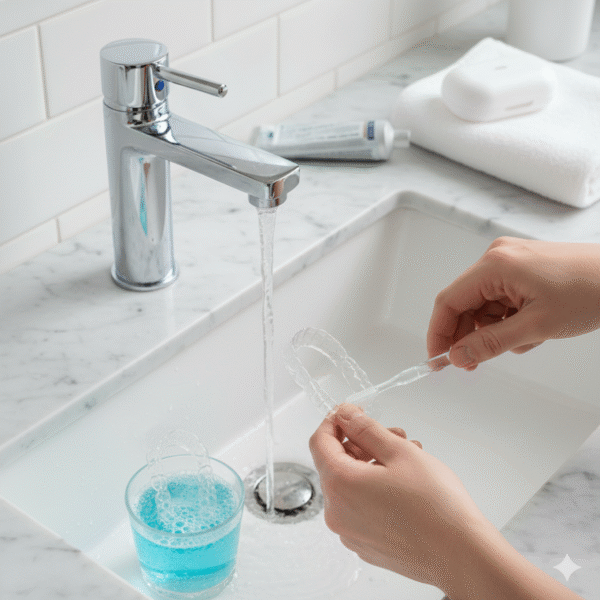
- The Dry: Give the brush a firm shake to remove the excess water and stand it upright in a clean, open space to air dry. Do not immediately put the plastic travel cap back on while the bristles are wet. Trapping moisture inside a dark cap creates the perfect environment for bacteria to multiply.
The Engineering Fit: Choosing the Correct Sizes
One of the most common beginner mistakes is trying to buy one single pack of brushes and forcing them to fit every gap in the mouth. Your mouth is not uniform. The gaps between your bottom front teeth are much tighter than the wide gaps between your heavy back molars.
- The Rule: You will likely need two or three entirely different sizes to do the job properly.
- Never Force It: Never try to force a large, thick brush into a tight gap. This will instantly buckle the metal wire, severely damage your gum tissue, and cause unnecessary bleeding.
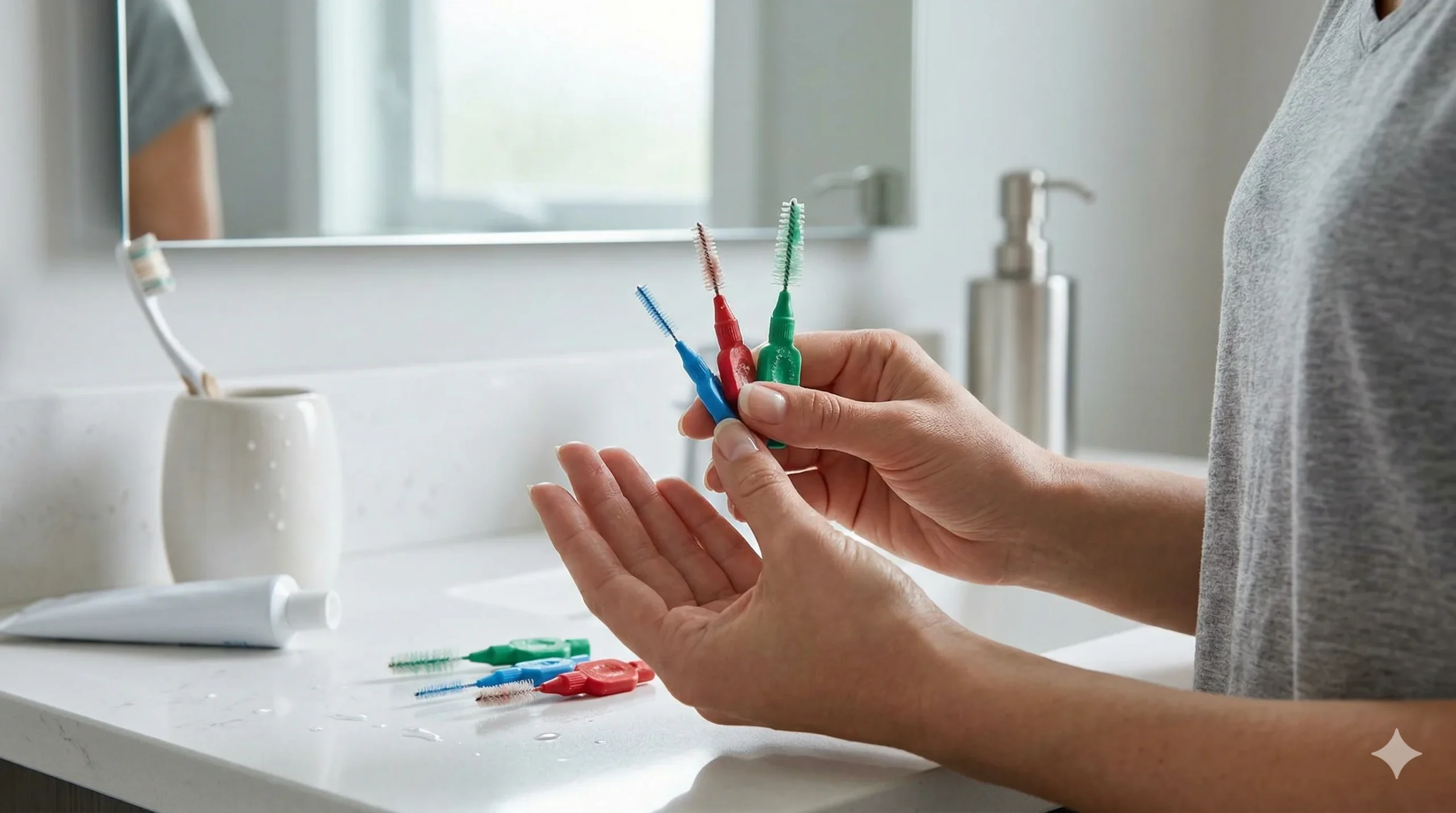
Interdental brushes are universally color-coded by size (from tiny pink 0.4mm brushes up to large green 0.8mm ones). The smartest approach is to ask your dental hygienist during your next scale and polish to map out exactly which color fits which part of your mouth.
FAQs on Interdental Brushes
When is the best time to use an interdental brush? Dental professionals strongly recommend using them once a day, before you brush your teeth. By mechanically loosening and sweeping away the physical plaque blockages between your teeth first, you open up the gaps. This allows the fluoride from your toothpaste to easily flow in and coat the hidden enamel when you use your main toothbrush.
Should I put toothpaste on the interdental brush? No. Standard toothpaste is deliberately formulated with micro-abrasives (like silica) to scrub the tough flat surfaces of your teeth. The roots of your teeth exposed in those interdental gaps do not have hard enamel protecting them; they are covered in a much softer material called cementum. Scrubbing abrasive toothpaste directly into these gaps will permanently wear away the root surface and cause severe sensitivity.
Maintaining your teeth is all about consistency and using the right tool for the job. Keep your tools clean, never force a structural fit, and replace your wire brushes every single week. Handling these chhoti details (small details) daily is the only way to ensure your teeth remain solidly anchored for decades.