




Walking out to your vehicle in the morning, turning the key, and hearing nothing but a rapid clicking sound is a universally frustrating experience. When you are faced with a dead car battery, your immediate priority is getting it charged and getting back on the road. But how long does that process actually take?
Many drivers assume a quick 15-minute charge is enough to solve the problem. However, there is no single, universal charging time. The time it takes to recharge a car battery depends entirely on how dead the battery is, its overall capacity (measured in Amp-hours), and the specific power output of the charger you are using.
Let’s break down the math, the mechanics, and the safety rules so you can get your car started without permanently damaging your vehicle’s electrical system.
The Short Answer: Charging Times by Charger Type
If you have a standard 12-volt car battery (roughly 60 Ah capacity) that is completely flat, here are the average charging times you can expect based on the equipment you are using:
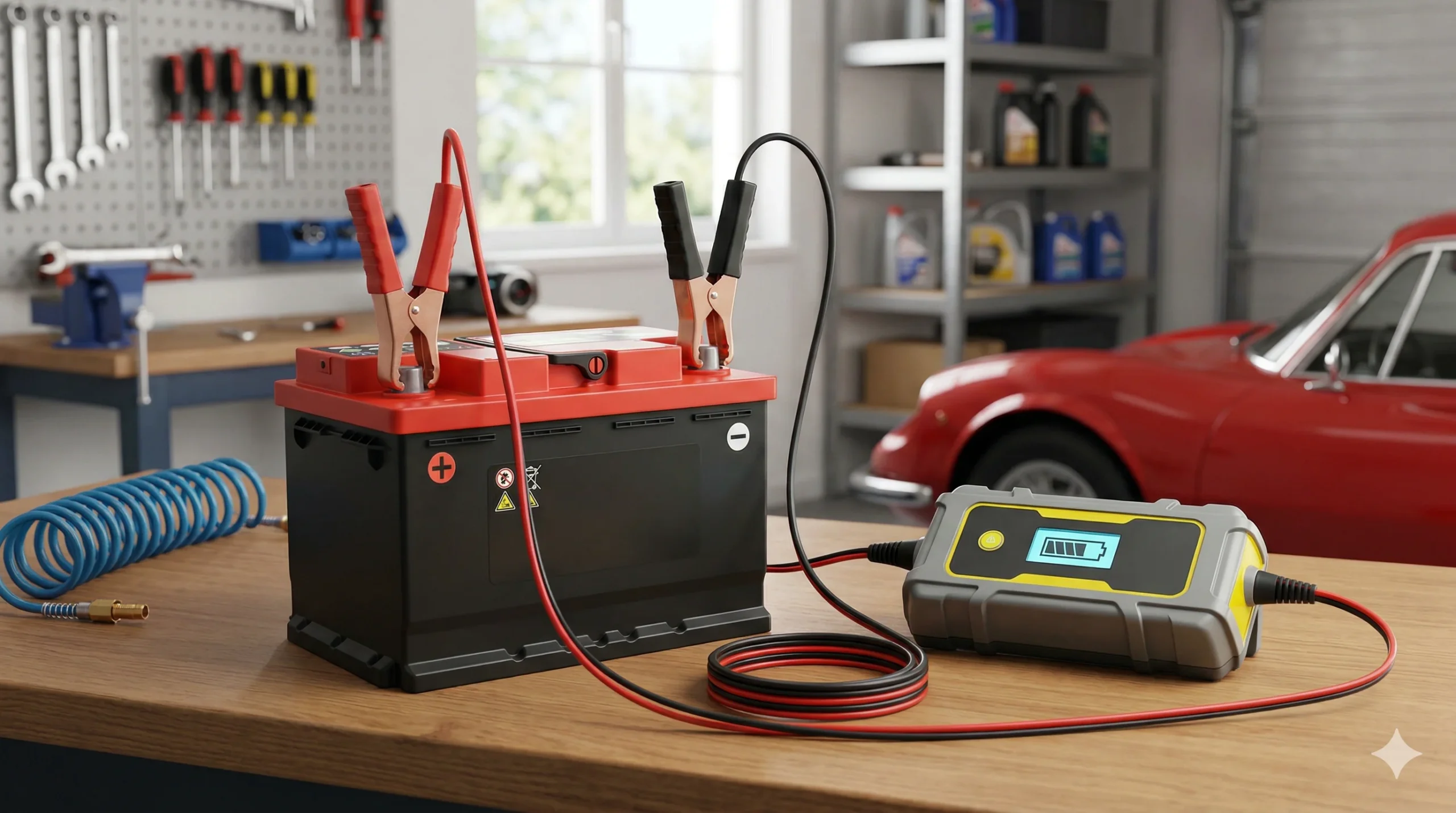
- 10-Amp Smart Charger: 4 to 8 hours. This is the industry standard for safely reviving a standard lead-acid battery without overheating it.
- 2-Amp Trickle Charger: 15 to 24 hours. This is the slowest method, but it is incredibly gentle on the internal battery plates, making it ideal for maintaining a charge on vehicles in long-term storage.
- Fast Chargers (15A to 20A+): 2 to 4 hours. While quick, blasting a battery with high amperage generates excessive heat and should only be used in emergencies, as frequent use will shorten the battery’s lifespan.
- Alternator (Driving): 20 to 30 minutes of continuous highway driving after a successful jump-start.
3 Factors That Determine Your Charging Time
To understand why a battery takes hours to charge properly, you need to understand the chemical process happening under the hood. Here are the three main variables that dictate your timeline.
1. The Charger’s Amperage Output
Think of your car battery as a water tank and the charger as the hose filling it. The higher the amperage of the charger, the wider the hose, and the faster the tank fills.
However, you cannot simply blast a battery with infinite power. When you force electricity into a lead-acid battery too quickly using a high-amp fast charger, the internal electrolytes begin to boil, releasing highly flammable hydrogen gas and warping the delicate lead plates inside. For a standard car, a 10-amp smart charger is the perfect balance—it pushes enough current to charge the battery in half a day, but operates slowly enough to prevent thermal damage.
2. The Battery’s State of Discharge
Topping up a battery that is only slightly sluggish takes a fraction of the time compared to reviving one that is completely flat (deeply discharged).
If you left your headlights on overnight and the voltage dropped to 11.5 volts, it will take several hours to recover. Warning: Lead-acid car batteries are not designed to be fully depleted like a smartphone. If you repeatedly let your vehicle sit until it dies, you will severely compromise the internal cells and drastically reduce how long do car batteries last, forcing an expensive early replacement.
3. The Type of Car Battery
Modern vehicles, especially those with automatic Start-Stop technology, no longer use basic flooded lead-acid batteries. They use AGM (Absorbent Glass Mat) or EFB (Enhanced Flooded Batteries).
Because of their dense internal structure, AGM batteries require a specific, highly regulated charging voltage. A flat AGM battery can take anywhere from 5 to 10 hours to recharge safely. You must use a modern “smart” charger that has a dedicated AGM setting; using an old, manual charger on an AGM battery will aggressively overcharge it and permanently destroy the cells.
How Long to Drive After a Jump-Start?
This is the most common emergency scenario: your car is dead, a neighbor gives you a jump-start, and the engine is finally running. But the battery is still virtually empty. How long do you need to drive it to ensure it starts again tomorrow?
You must drive the car for at least 20 to 30 minutes at highway speeds. Your vehicle’s alternator is responsible for recharging the battery while the engine runs. However, contrary to popular belief, simply letting the car idle on your driveway does not spin the alternator fast enough to push a meaningful electrical charge back into the battery. Once you have safely followed the steps on how to jump start a car, keeping the engine running at higher RPMs on an open road is the only reliable way to restore a functional charge.
Signs Your Battery Needs Replacing (Not Charging)
A battery charger is a maintenance tool, not a miracle worker. It cannot fix a mechanically broken battery. If you are experiencing any of the following, your battery is beyond saving:
- It won’t hold a charge: If you leave the battery on a 10-amp smart charger for 12 hours, the charger says it is “Full,” but the car still won’t start an hour later, the internal cells have collapsed.
- Rapid voltage drop: If you test the battery with a multimeter immediately after taking it off the charger and watch the voltage visibly drop from 12.6V down to 10V in a matter of minutes, it has a dead cell.
- Bulging or leaking: If the plastic casing of the battery looks swollen, cracked, or is leaking battery acid, disconnect it immediately. It is a severe fire hazard and must be replaced.
FAQs on Charging Car Batteries
Can I leave a car battery charging overnight? Yes, but only if you are using an automatic “smart” charger. Modern smart chargers constantly monitor the battery’s voltage and automatically switch to a low-power “float” or “maintenance” mode once the battery hits 100%. If you are using a cheap, old manual charger, leaving it on overnight will continuously pump electricity into a full battery, causing it to overcharge, overheat, and potentially burst.
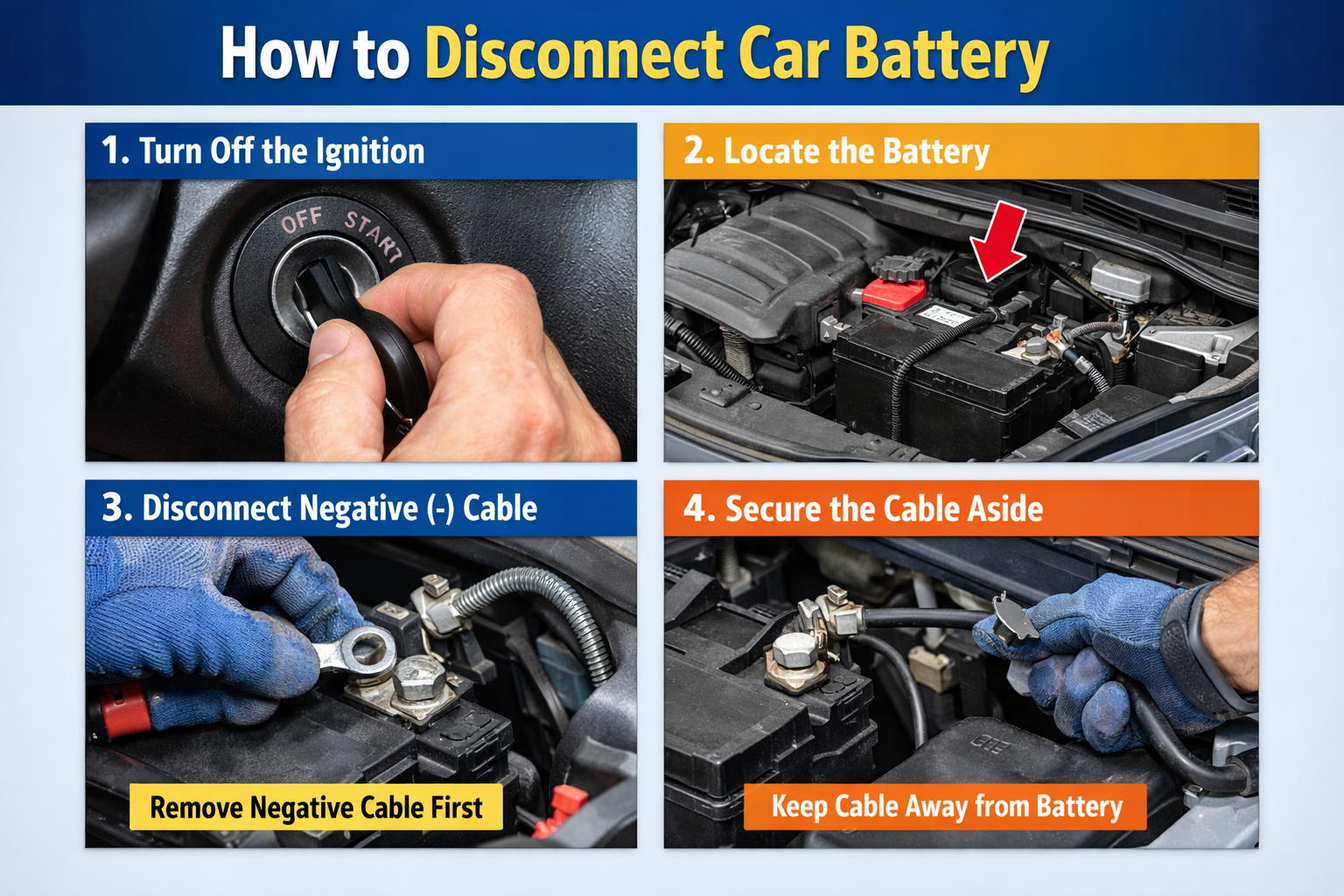
Do I need to disconnect the battery from the car to charge it? If you are using a high-quality, modern smart charger, you can usually connect the clamps directly to the battery while it is still wired to the car without causing damage. However, if you are unsure about the safety of your charger, or if you are dealing with a heavily corroded battery, disconnecting the negative (black) terminal first is always the safest route to protect the car’s sensitive onboard computers from voltage spikes.
Ultimately, patience is the key to battery maintenance. Slow and steady wins the race. Hooking your car up to a 10-amp smart charger overnight is the safest, most effective way to restore a flat battery to full health without risking damage to the internal cells.