




Making jelly (or Jell-O) is a simple kitchen task, but the “wait time” can be agonizing, especially if you’re prepping for a party. Whether you’re using a classic Hartley’s jelly cube, powdered gelatin, or making a fruit preserve, the setting process is a delicate balance of chemistry and temperature.
In this guide, we’ll break down exactly how long jelly takes to set in the fridge, freezer, and at room temperature, plus the “hacks” used by pros to speed up the process.
How Long Does Jelly Take to Set? (The Quick Answer)
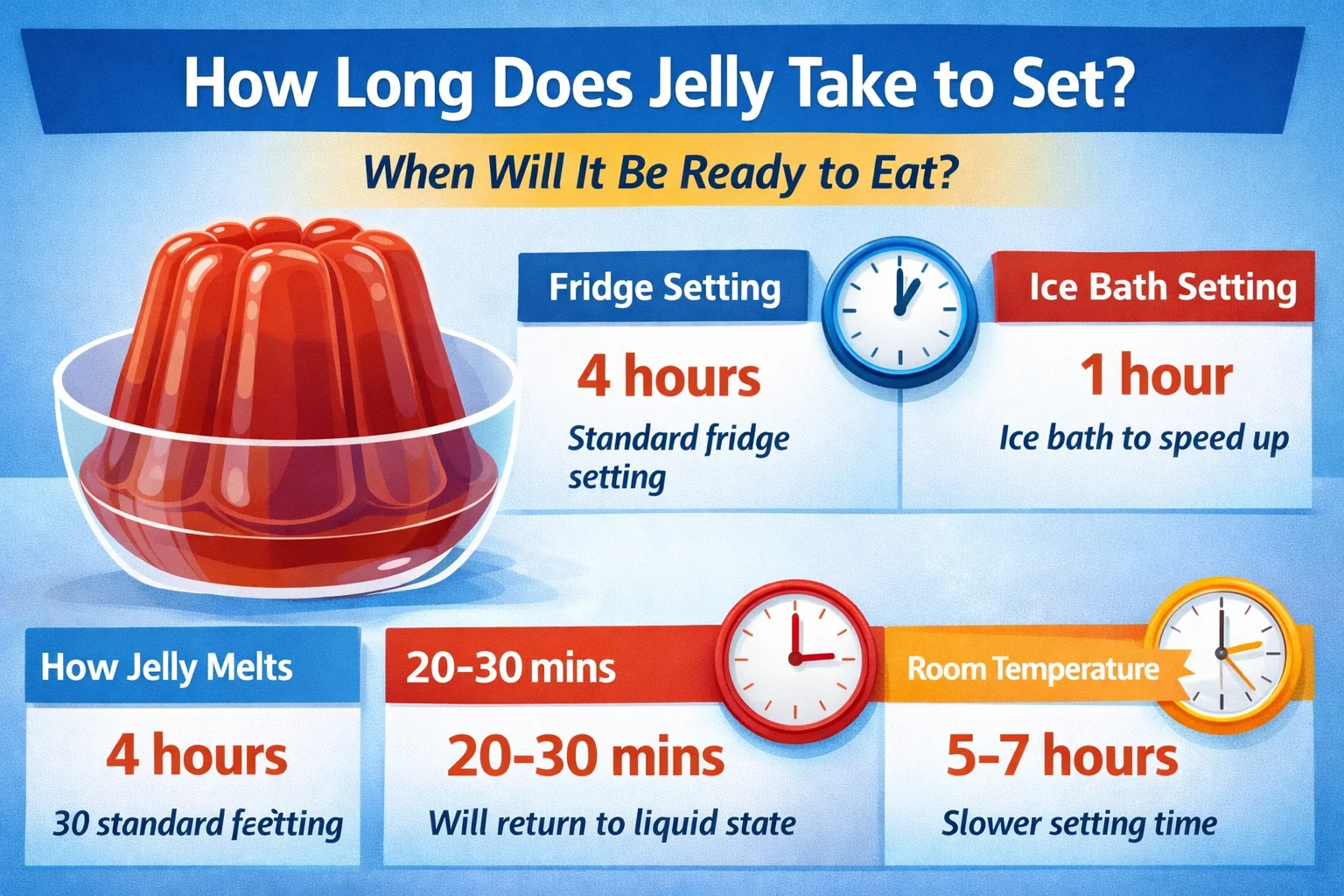
For a standard bowl of gelatin-based jelly, expect a wait time of 2 to 4 hours in a refrigerator set to $5°C$.
However, the exact time depends on the volume and the container:
- Small individual pots: 1 to 2 hours.
- Large decorative moulds: 4 to 6 hours (or overnight for stability).
- Freezer method: 60 to 90 minutes (requires careful monitoring).
1. Setting Times by Method and Environment
The Refrigerator (Recommended)
The fridge is the most reliable environment because it allows the gelatin proteins to form a stable, uniform network.
- Standard Setting Time: 3 hours on average.
- Pro Tip: Place your jelly on the bottom back shelf of the fridge. This is typically the coldest spot and will help the mixture reach the “set point” faster.
The Freezer (The Emergency Shortcut)
You can cut the setting time in half by using the freezer, but there is a catch. If the jelly actually freezes, the gelatin bonds will break, and you’ll be left with a syrupy mess once it thaws.
- Setting Time: 1 to 1.5 hours.
- The Strategy: Put the jelly in the freezer for 20-minute bursts, checking the consistency each time. Once it has a noticeable “wobble” but isn’t frozen, move it to the fridge to finish.
Room Temperature
Standard gelatin jellies will rarely set firmly at room temperature unless your kitchen is very cold (under $20°C$). However, vegan jellies made with Agar-Agar are different—they can set at room temperature within 60 minutes.
2. How to Make Jelly Set Faster: 3 Kitchen Hacks
If you’re in a rush, don’t just follow the box instructions. Use these professional adjustments:
- The Ice Cube Method: Instead of adding the full amount of cold water required by the recipe, replace half of it with ice cubes. Stir the ice into the hot, dissolved mixture until it melts. This drops the temperature of the liquid instantly before it even hits the fridge.
- Metal vs. Glass: Use a metal bowl or mould. Metal is a better conductor of heat than glass or plastic, allowing the jelly to lose its warmth and chill much faster.
- Pre-Chill Your Moulds: Before you even start making the jelly, put your empty serving dishes or moulds in the freezer. Pouring the warm liquid into a frozen container jumpstarts the cooling process.
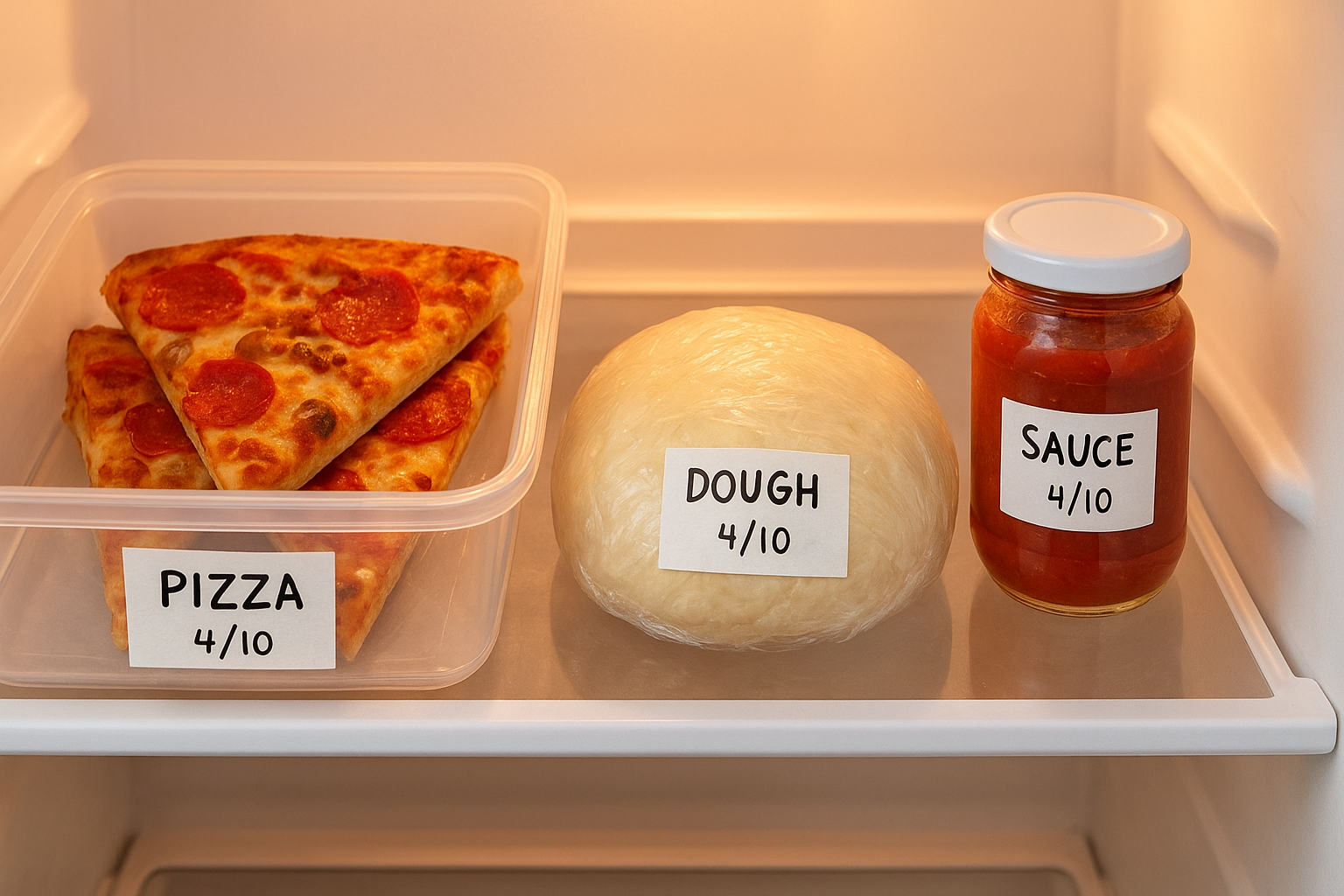
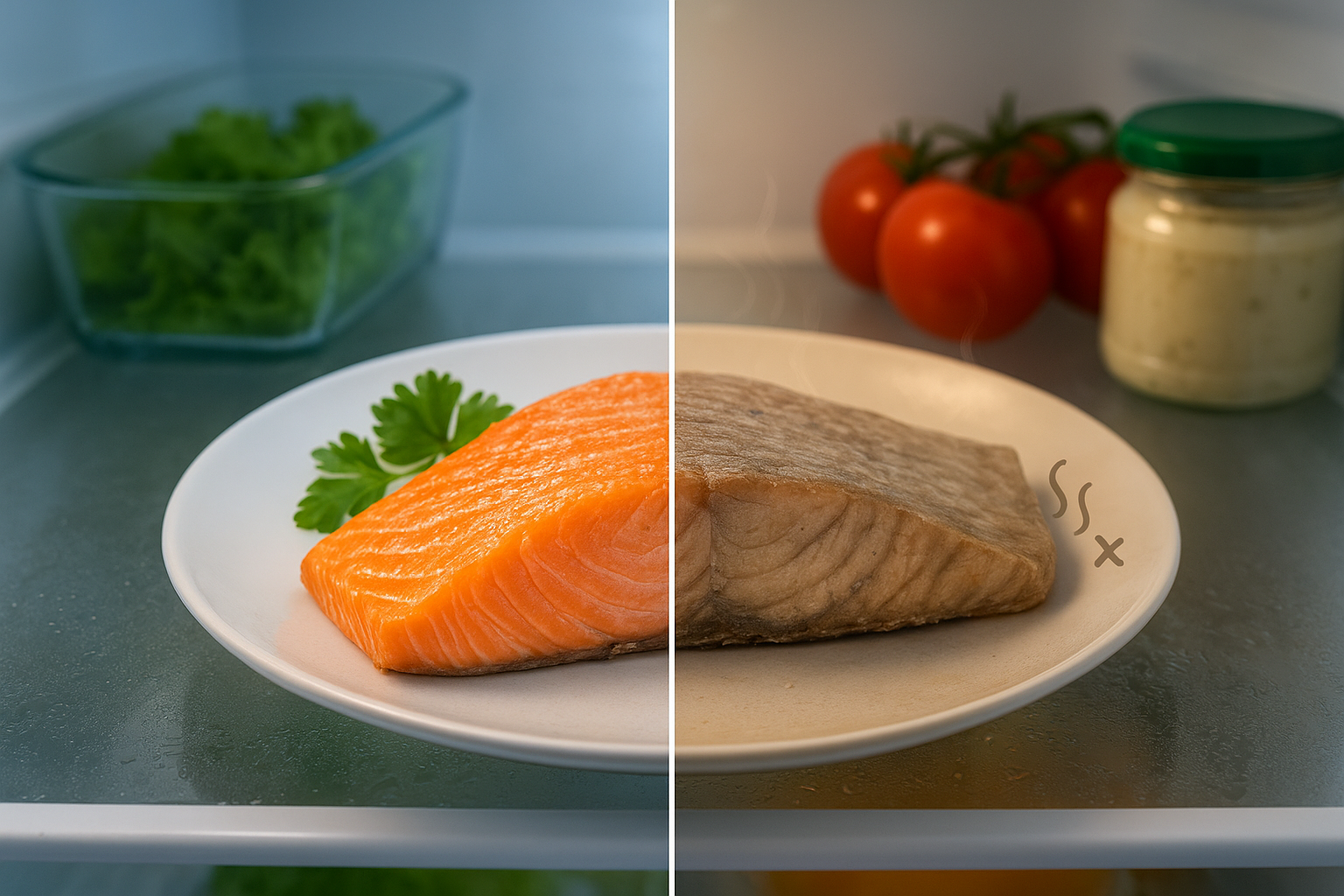
While waiting for your dessert to firm up, you might find yourself managing other kitchen tasks, such as storing leftovers safely in the fridge. Proper temperature control is just as vital for food safety as it is for the perfect jelly wobble.
3. Troubleshooting: Why Won’t My Jelly Set?
If your jelly is still liquid after 4 hours, one of these “jelly killers” might be the culprit:
- Fresh Tropical Fruit: Fruits like pineapple, kiwi, papaya, and mango contain an enzyme called bromelain. This enzyme literally eats the protein in gelatin, preventing it from ever setting.
- The Fix: Use canned fruit instead; the heating process during canning neutralizes the enzyme.
- Too Much Water: Diluting the gelatin too much weakens the structural bonds. Always measure your liquid precisely.
- Boiling the Gelatin: While you need hot water to dissolve the cubes or powder, boiling the mixture for too long can “cook” the gelatin and destroy its thickening power.
For those interested in the science of homemade staples, learning these ratios is a great stepping stone to other projects, like making fresh dairy products at home, where temperature and acidity are equally critical.
4. How to Thicken Jam and Preserves
“Jelly” can also refer to fruit spreads. If you are making a fruit jam and it remains runny, the rules change. Since jams rely on pectin rather than gelatin, you can fix them by:
- Re-boiling: Adding a splash of lemon juice (acidity helps pectin bond).
- Adding Chia Seeds: A modern hack to thicken fruit spreads without extra heat.
- The Plate Test: Put a saucer in the freezer. Drop a spoonful of hot jam onto it; if it wrinkles when you push it with your finger, it has reached its setting point.
5. Storage: How Long Does Jelly Last?
Once your jelly has successfully set, you need to store it correctly to maintain that perfect texture.
- Plain Jelly: 5 to 7 days in the fridge (covered to prevent it from absorbing fridge odors).
- Jelly with Fruit/Cream: 2 to 3 days. Fresh fruit releases moisture over time, which can make the jelly go watery.