





If you have ever watched a beloved fiddle leaf fig drop its leaves in November or struggled to keep herbs alive in a north-facing apartment, you know the frustration of low-light gardening. Winter gloom and dim corners shouldn’t dictate which greenery survives in your home. The solution is simpler than remodeling for more windows: installing grow lamps for house plants.
Modern plant lighting has evolved far beyond the clunky, energy-draining purple industrial fixtures of the past. Today’s options are sleek, energy-efficient, and capable of mimicking the sun’s full spectrum to keep your indoor garden thriving year-round. Whether you are a novice looking to screw a simple bulb into a desk lamp or a collector building a greenhouse shelf, this guide will help you navigate the world of indoor photosynthesis.
How to Choose the Best Grow Lights for Indoor Plants
Before buying the first light you see online, it is crucial to understand what your plants actually “see.” Human eyes are sensitive to yellow and green light, but plants primarily use red and blue wavelengths for photosynthesis.
Understanding the Spectrum
- Blue Light: Essential for vegetative growth. It promotes strong stems and leafy green foliage.
- Red Light: Critical for the flowering and fruiting stages.
- Full Spectrum: The best grow lights for indoor plants today are “full spectrum.” They appear white to the human eye but contain the necessary peaks of red and blue. Unlike the old “blurple” (blue + red) lights that turned living rooms into neon nightclubs, full-spectrum LEDs display your plants in their natural colors while providing the energy they need.
Why LED is the Industry Standard When shopping, you will encounter Fluorescent (CFL) and High-Intensity Discharge (HID) lights, but grow LED lights for indoor plants are the superior choice for 90% of home gardeners. They run cool, meaning you won’t scorch your delicate ferns, and they are incredibly energy-efficient, keeping your electric bill low even if you run them for 12 hours a day.
Types of Plant Lights: Bulbs vs. Fixtures
Your setup depends entirely on your space and the number of plants you own.
1. Grow Bulbs for Plants (The “Stealth” Option) If you only have one or two struggling plants, you don’t need a complex rig. You can purchase specialized grow bulbs for plants that screw into standard E26 light sockets.
- Best For: A single monstera in a dark corner or a desk lamp over a succulent.
- Advantage: They blend seamlessly into your existing decor. You can put a high-quality grow bulb in a stylish architect lamp, and no one will know it’s agricultural equipment.
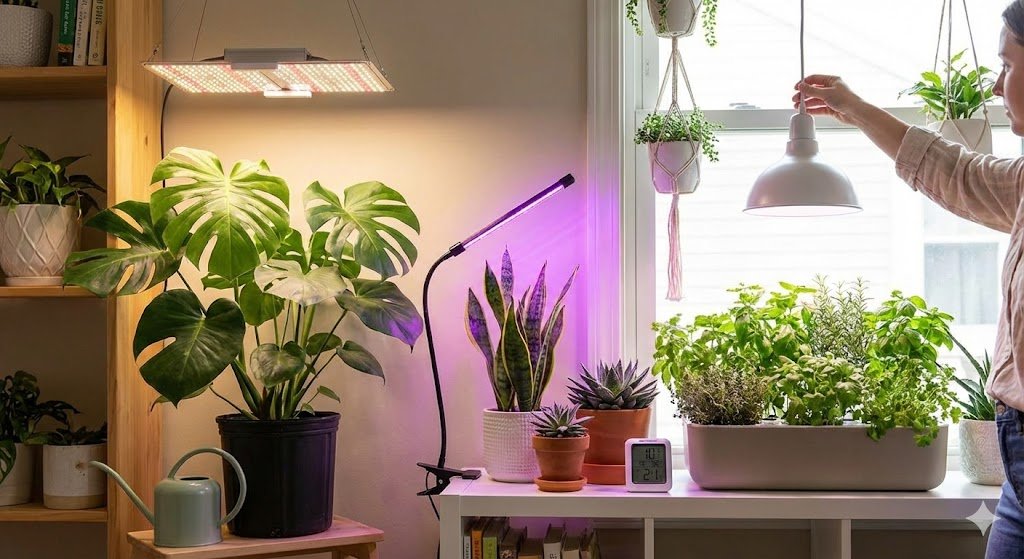
2. Dedicated LED Fixtures and Strips For those with shelving units (like an IKEA greenhouse cabinet), led plant lights that come in flat panels or adhesive strips are ideal.
- Best For: Seed starting trays, herb gardens, or multi-shelf displays.
- Advantage: They provide uniform light distribution across a wide area, ensuring plants on the edge get as much energy as those in the center.
Setting Up Your Grow Light Station
Buying the light is only step one; positioning it correctly is where the magic happens. The Inverse Square Law applies here: light intensity drops off dramatically as you move the source away.
Distance Guidelines
- High-Light Plants (Succulents, Cacti): Place the light 6–12 inches above the canopy.
- Medium-Light Plants (Pothos, Philodendrons): Maintain a distance of 12–24 inches.
- Low-Light Plants (Snake Plants, Ferns): Can tolerate 24–36 inches away.
Dealing with Large Specimens If you are growing tall, statement trees in heavy containers, such as large flower pots (terracotta), clip-on lights often aren’t strong enough or tall enough to reach the upper canopy effectively. For these heavy setups, consider a suspended pendant light directly above the pot or an adjustable floor lamp with a high-wattage grow bulb to ensure light penetrates deep into the foliage.
Duration: How Long to Leave Them On? Plants need rest just like humans. Leaving a light on 24/7 disrupts their respiration cycle.
- Standard Rule: 12 to 16 hours on, 8 hours off.
- Pro Tip: Use a simple mechanical timer or a smart plug to automate this. Consistency is key to tricking your plants into thinking it is eternal summer.
Creative Ways to Use Plant Lights
Grow lights don’t have to be purely utilitarian. With the rise of “aesthetic” gardening, lighting can become a design feature.
The Halo Light Small, ring-shaped lights that stake directly into the soil are perfect for small, focused displays. For example, if you have built a whimsical house fairy garden with mosses and miniature ferns, a massive overhead panel would ruin the scale and enchantment. A small, halo-style LED provides the necessary photons to keep the moss lush without overwhelming the delicate visual arrangement.
Under-Cabinet Lighting Kitchen herbs often suffer because they are placed on counters far from windows. Installing thin grow led lights for indoor plants under your kitchen cabinets can turn unused counter space into a productive culinary garden, keeping basil and mint within arm’s reach while cooking.
Conclusion
Investing in grow lamps for house plants is the single most effective way to upgrade your indoor gardening game. It liberates you from the constraints of window direction and seasonal shifts, giving you total control over your plants’ environment. Start small with a single full-spectrum bulb, observe how your plants perk up within a week, and you will soon understand why light is the ultimate fertilizer.