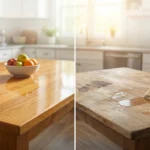








The era of the sterile, all-white “laboratory” kitchen is fading. In 2025, designers and homeowners are craving warmth, texture, and organic materials. Enter the butcher block kitchen island.
Unlike cold quartz or granite, a wood island invites you to touch it. It serves as the heart of the kitchen—a soft landing place for elbows during coffee chats and a durable workhorse for meal prep. But is it practical? Can it really handle water and knives?
This comprehensive guide covers everything you need to know about choosing, building, and maintaining a butcher block kitchen island, ensuring it lasts for decades.
Pros and Cons: Is Wood Right for You?
Before you fall in love with the aesthetic, you must understand the commitment. A butcher block island is a “living” surface. It reacts to its environment in ways that stone does not.
The Pros
- Warm Aesthetic: Wood adds instant character and breaks up the monotony of painted cabinets.
- Knife Friendly: If you choose an unsealed, oiled finish, you can chop directly on the surface. Wood is softer than stone, meaning it won’t dull your expensive chef’s knives.
- Sound Dampening: Clattering pots and pans are significantly quieter on wood than on granite.
- Repairable: This is the biggest advantage. If you scratch quartz, it’s permanent. If you scratch, burn, or stain butcher block, you can simply sand it down and re-oil it.
The Cons
- Maintenance Required: You cannot install it and forget it. It requires regular oiling to prevent drying and cracking.
- Water Sensitivity: Standing water is the enemy. If a wet glass sits overnight, it can leave a ring (though this can be sanded out).
- Softer Surface: Heavy impact can dent the wood.
Choosing Your Wood: Maple, Walnut, or Oak?
Not all wood is created equal. When selecting a butcher block kitchen island, you are technically looking for a hardwood with a high score on the Janka Hardness Scale. This scale measures the resistance of wood to denting and wear.
1. Hard Maple (The Gold Standard)
- Janka Score: ~1,450
- Look: Light, creamy, consistent grain.
- Why choose it: It is incredibly dense and flavor-neutral. This is why professional chopping blocks are almost always Maple. It resists abrasion better than almost any other domestic wood.
2. Black Walnut (The Luxury Choice)
- Janka Score: ~1,010
- Look: Dark, rich chocolate tones that patina over time.
- Why choose it: It hides stains better than Maple and looks stunning in modern or farmhouse kitchens. However, it is slightly softer, so it may show knife marks more easily.
3. White Oak (The Rustic Texture)
- Janka Score: ~1,360
- Look: Prominent grain patterns and golden hues.
- Why choose it: It fits perfectly in traditional or cottage-style kitchens.
- Warning: Oak has “open pores.” If you plan to cut raw meat on it, you must ensure it is sealed perfectly, or bacteria can hide in the grain texture.
The 3 Types of Construction: Grain Matters
This is the most technical part of your purchase, and the one most people get wrong. The durability of your butcher block kitchen island depends entirely on how the wood pieces are glued together.
1. End Grain (The “Checkerboard”)
- Construction: Short pieces of wood stood vertically, so the “ends” of the board form the surface.
- Durability: Highest. When you cut on end grain, the knife blade slips between the wood fibers rather than cutting them. When you lift the knife, the fibers close back up. It is “self-healing.”
- Cost: Most expensive due to the labor involved.
2. Edge Grain (The “Stripes”)
- Construction: Long boards turned on their side and glued. You see long, parallel lines.
- Durability: High. This is the standard for most kitchen islands. It is stable, strong, and significantly cheaper than end grain.
- Cost: Moderate.
3. Face Grain (The “Planks”)
- Construction: Wide boards laid flat, like a tabletop.
- Durability: Low. You should not chop directly on face grain. It will show every cut and scratch.
- Best Use: Dining tables or bar tops where you plan to use a cutting board on top.
Installation & Seating: Getting the Dimensions Right
A kitchen island often doubles as a dining table. If you plan to add stools, you need to consider the overhang and the height.
The Overhang Rule
For comfortable seating, you need at least 10 to 12 inches of overhang (the part of the countertop that sticks out past the cabinets).
- Support: unlike stone, which is heavy and rigid, wood can warp if unsupported. If your overhang exceeds 8-10 inches, you should install steel L-brackets or decorative corbels underneath to keep it flat.
Height Considerations
Are you designing a prep station or a breakfast bar?
- Standard Counter Height: 36 inches.
- Bar Height: 42 inches.
- Table Height: 30 inches.
Choosing the right stool is critical for comfort. A common mistake is buying bar stools (30″ seat) for a counter-height island (36″ high), leaving no room for your legs. Before you buy furniture, check our detailed guide on how tall are kitchen counters to ensure you match your seating to your island height perfectly.
DIY vs. Buying Pre-Made: The Cost Breakdown
One of the reasons the butcher block kitchen island is trending is accessibility. You can spend $4,000, or you can spend $400.
The “Buy It” Route
Custom furniture makers can build stunning end-grain islands with integrated storage.
- Cost: $1,500 – $5,000+.
- Pros: Delivered ready to use, furniture-grade finish.
The DIY Route
Many homeowners buy a standard butcher block slab (from vendors like Floor & Decor or IKEA) and mount it on top of base cabinets.
- Cost: Slabs range from $200 (Birch/Beech) to $800 (Walnut). Base cabinets can be stock units.
- The Challenge: You need to secure the top correctly. Wood expands and contracts with humidity. You cannot just screw it down tight; you need to use slotted holes or “L” brackets that allow the wood to move slightly.
- Getting Started: If you are building the base yourself using stock cabinets, read our step-by-step tutorial on how to install kitchen cabinets to ensure your foundation is level and secure before adding the heavy wood top.
How to Seal and Maintain Your Island
If you want to chop food on your island, you cannot use polyurethane or varnish. You must use a food-safe oil finish.
The “Do Not Use” List
- Olive Oil / Vegetable Oil: Never use these. They will oxidize and turn rancid, making your kitchen smell like old fry grease.
The Correct Method
Use Food-Grade Mineral Oil or a Mineral Oil + Beeswax blend (often called “Butcher Block Conditioner”).
- Sand: If the wood is rough, sand with 220-grit paper.
- Flood: Pour a generous amount of oil onto the wood.
- Soak: Let it sit for 20–30 minutes. The wood will drink it up.
- Wipe: Wipe off the excess with a clean rag.
- Repeat: Follow the rule of thumb: Once a day for a week, once a week for a month, once a month forever.
Conclusion
A butcher block kitchen island is more than a trend; it is a return to utility and warmth. Whether you choose a high-end Walnut end-grain block or a budget-friendly Maple DIY project, the key is understanding that wood is a relationship. Treat it well with regular oiling, and it will reward you with a beautiful, forgiving surface that ages gracefully alongside your home.
How We Clean & Maintain Our Butcher Block Countertops (4-Year Update) This short video provides a realistic look at the long-term maintenance of butcher block, demonstrating the oiling process and how the wood holds up after years of daily use.