



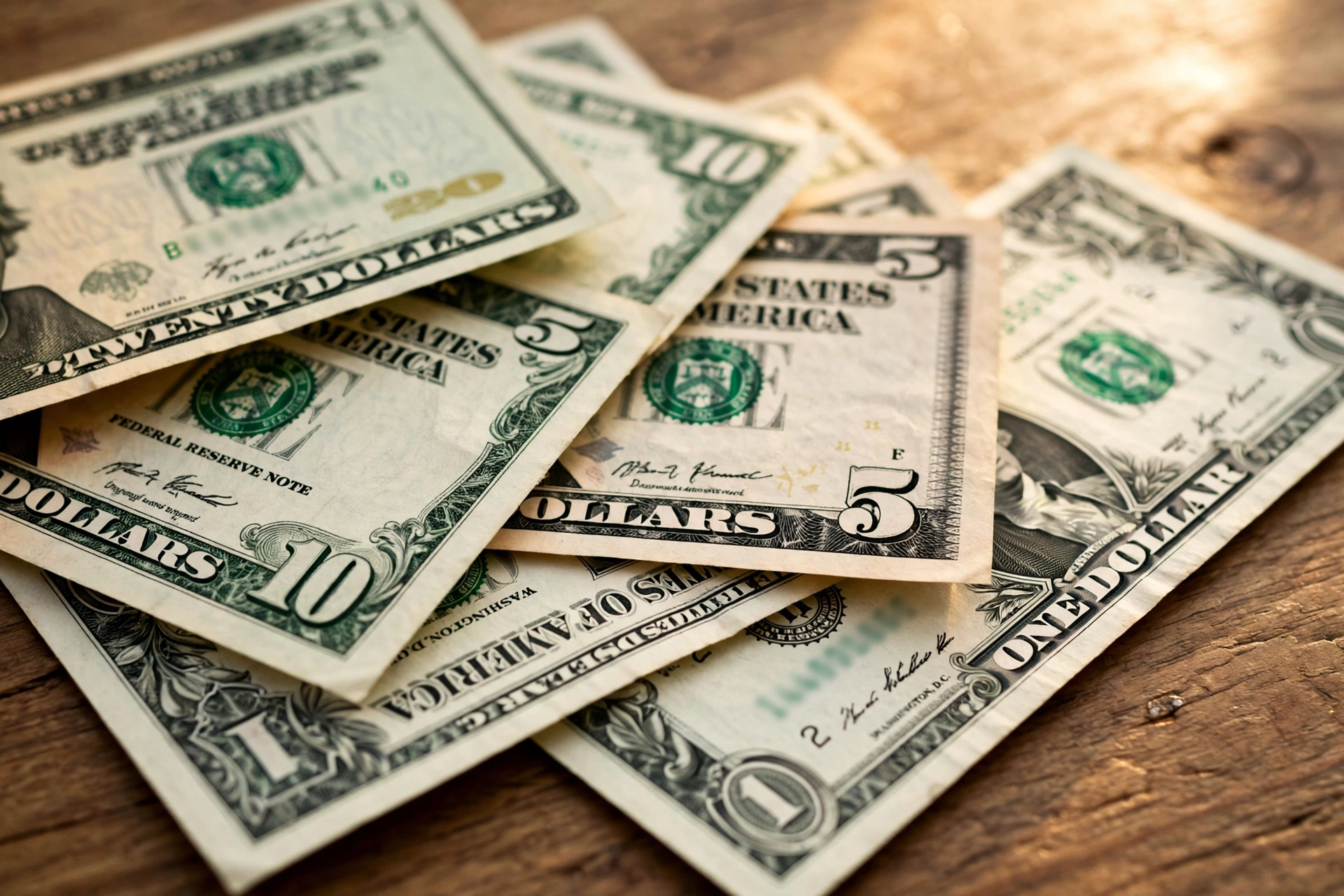
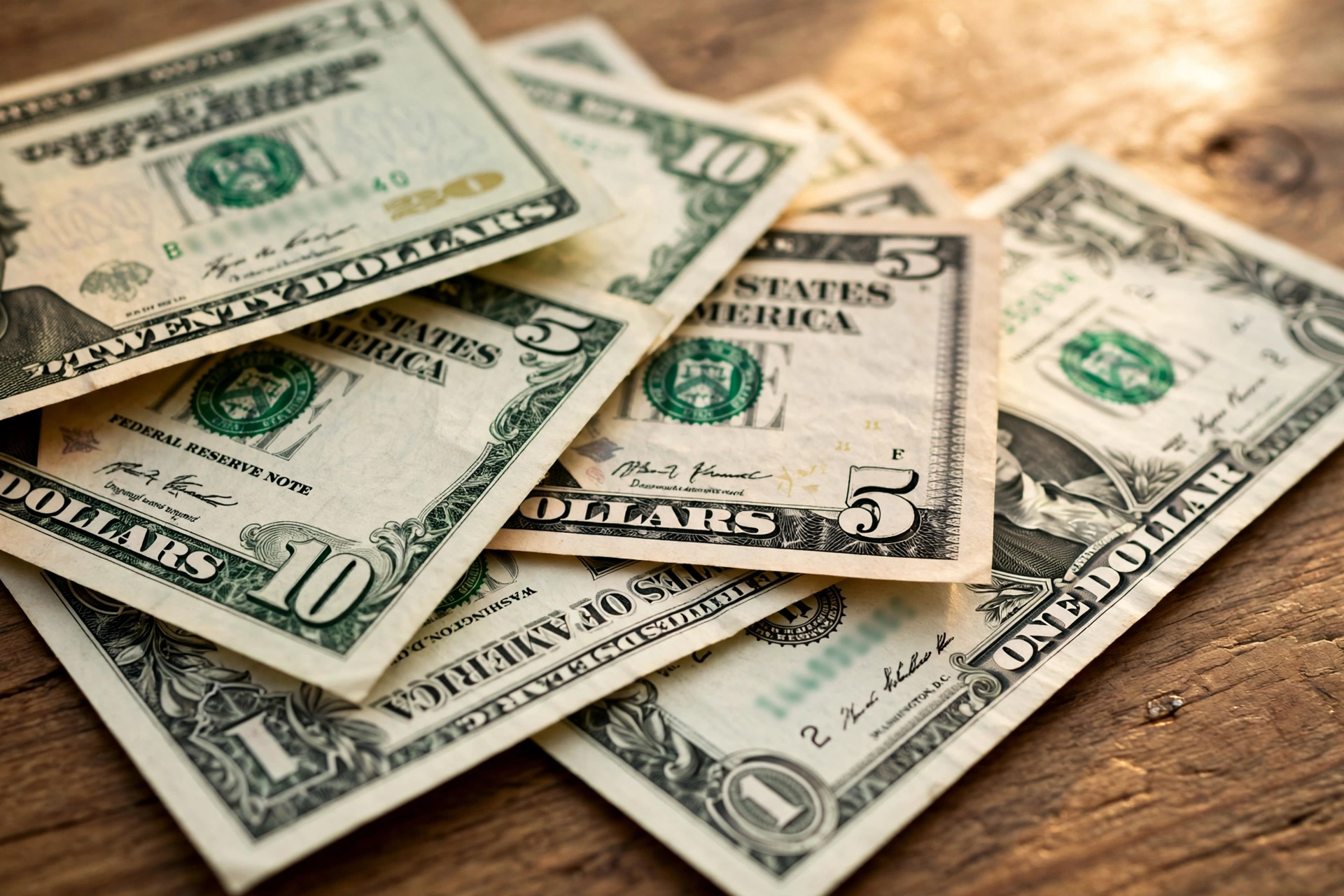
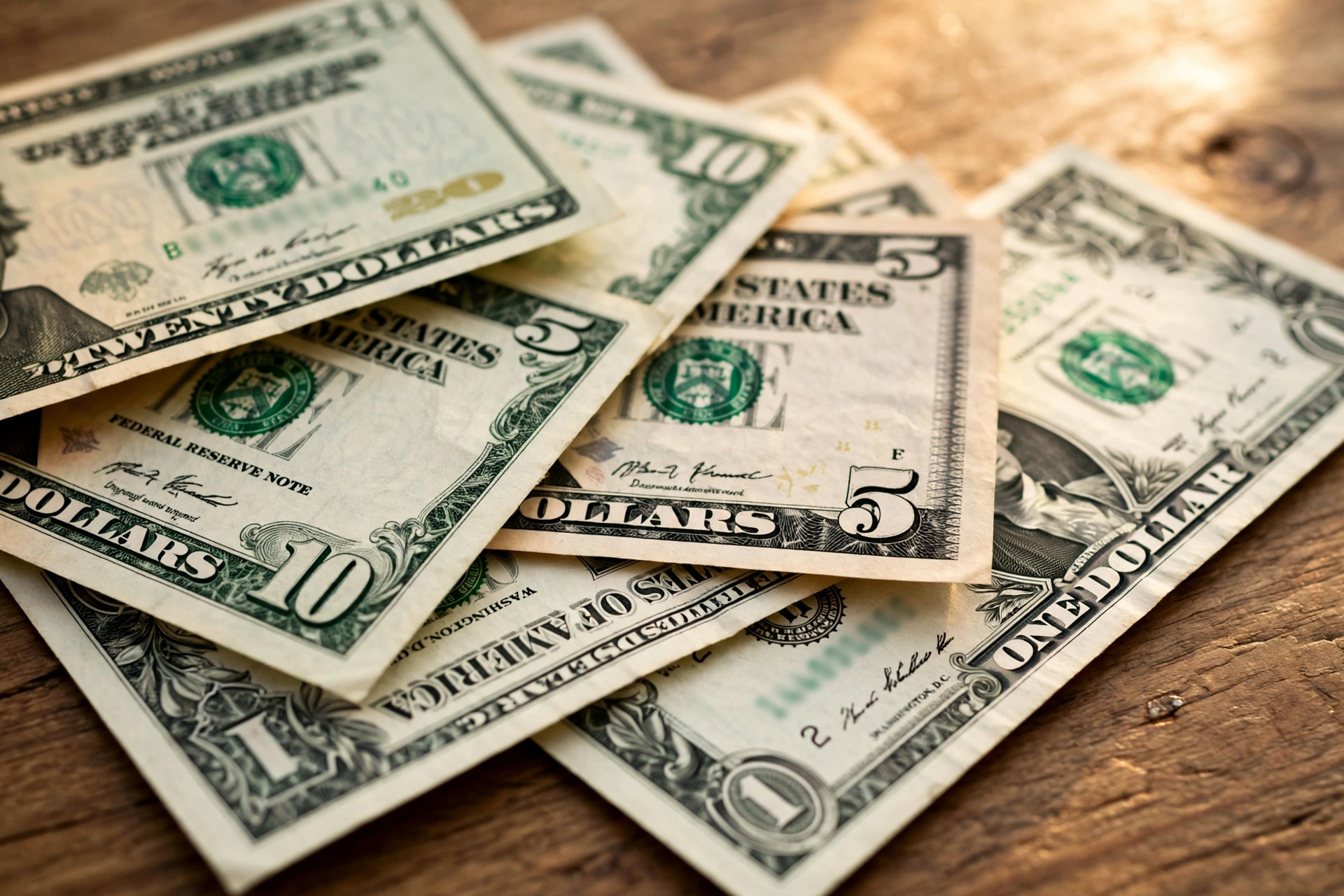

The person on the 1 dollar bill is George Washington, the first President of the United States and the commander of the Continental Army in the Revolutionary War. His portrait has appeared on the $1 bill since 1869, and the back of the note shows the Great Seal of the United States — an eagle on one side and an unfinished pyramid with the Eye of Providence on the other. The $1 is the most common American banknote, and its design has barely changed in nearly a century.
Quick Facts
- Face on the $1 bill: George Washington, 1st US President (1789–1797)
- First appeared on the $1: 1869, on the first $1 United States Notes
- Born: 22 February 1732, Westmoreland County, Virginia; died 14 December 1799, Mount Vernon, Virginia
- Back of the bill: The Great Seal of the United States (eagle and pyramid), added in 1935
- Design date: the current design has been used since 1963 for Federal Reserve Notes, and the portrait layout since 1929
- Nickname: the $1 is called a “buck” or a “single”
- Portrait source: an engraving based on Gilbert Stuart’s 1796 portrait of Washington
Who Was George Washington?
George Washington was born in Virginia in 1732, became a surveyor and soldier, and commanded the Continental Army through the Revolutionary War from 1775 to 1783, winning independence from Britain. In 1789 he became the first President of the United States, serving two terms until 1797, and he set most of the precedents the presidency still follows — including stepping down after two terms, which later became law in the 22nd Amendment. He is called the “Father of His Country”, and his face is on the most-handled piece of paper money in America.
How Did Washington End Up on the $1 Bill?
Washington was the obvious choice for the smallest note. He had already appeared on American money before the $1 existed — on coins and on larger notes — and when the first $1 United States Notes were issued in 1869, his portrait was put on them. It has never left. When paper money was standardised in 1929, Washington stayed on the $1, and when the $1 became a Federal Reserve Note in 1963, he stayed again. No other portrait on American money has been so stable for so long.
What Is on the Back of the $1 Bill?
The reverse of the $1 bill is the most symbolic of any American banknote. It shows both sides of the Great Seal of the United States, added to the note in 1935. On the left is the reverse of the seal: an unfinished pyramid with 13 steps for the original 13 states, topped by the Eye of Providence, with the Latin phrases “Annuit Coeptis” (He has favoured our undertakings) and “Novus Ordo Seclorum” (New Order of the Ages). On the right is the front of the seal: a bald eagle holding an olive branch and arrows, with a shield and the motto “E Pluribus Unum” (Out of many, one). The two images are the only place on American money where the full Great Seal appears, and they have made the back of the $1 one of the most studied designs in the world.
Why the $1 Bill Never Changes
Every other US banknote has been redesigned with colour, larger portraits and new security features — except the $1. It has no watermark, no security thread and no colour-shifting ink, because it is worth so little that counterfeiting it is barely profitable. The Treasury has considered replacing it with a $1 coin several times, and Congress has debated it for decades, but the paper note survives: Americans prefer it, vending machines and cash registers are built for it, and the cost of changing would be enormous. More than 12 billion $1 notes are in circulation, and the average one lasts about 6–7 years before it wears out — the shortest life of any denomination, because it changes hands so often.
FAQs
Who is on the 1 dollar bill right now?
George Washington, the first President of the United States.
When did Washington first appear on the $1 bill?
In 1869, on the first $1 United States Notes.
What is on the back of the $1 bill?
The Great Seal of the United States — an eagle on the right and an unfinished pyramid with the Eye of Providence on the left.
What does the pyramid on the $1 mean?
The unfinished pyramid has 13 steps for the original 13 states, and the eye above it represents Providence watching over the new nation.
Why is the $1 bill green?
All US paper money is printed in green ink, a tradition from the Civil War era, when green ink was chosen because it was hard to copy with the photography of the time.
Will the $1 bill be replaced by a coin?
No plan is in place. The Treasury and Congress have debated a $1 coin for decades, but the paper $1 remains in circulation.
Read more on The Red News: Who Is on the 10 Dollar Bill? and Who Is on the 20 Dollar Bill?
For further background, see United States one-dollar bill — Wikipedia and George Washington — Wikipedia.