



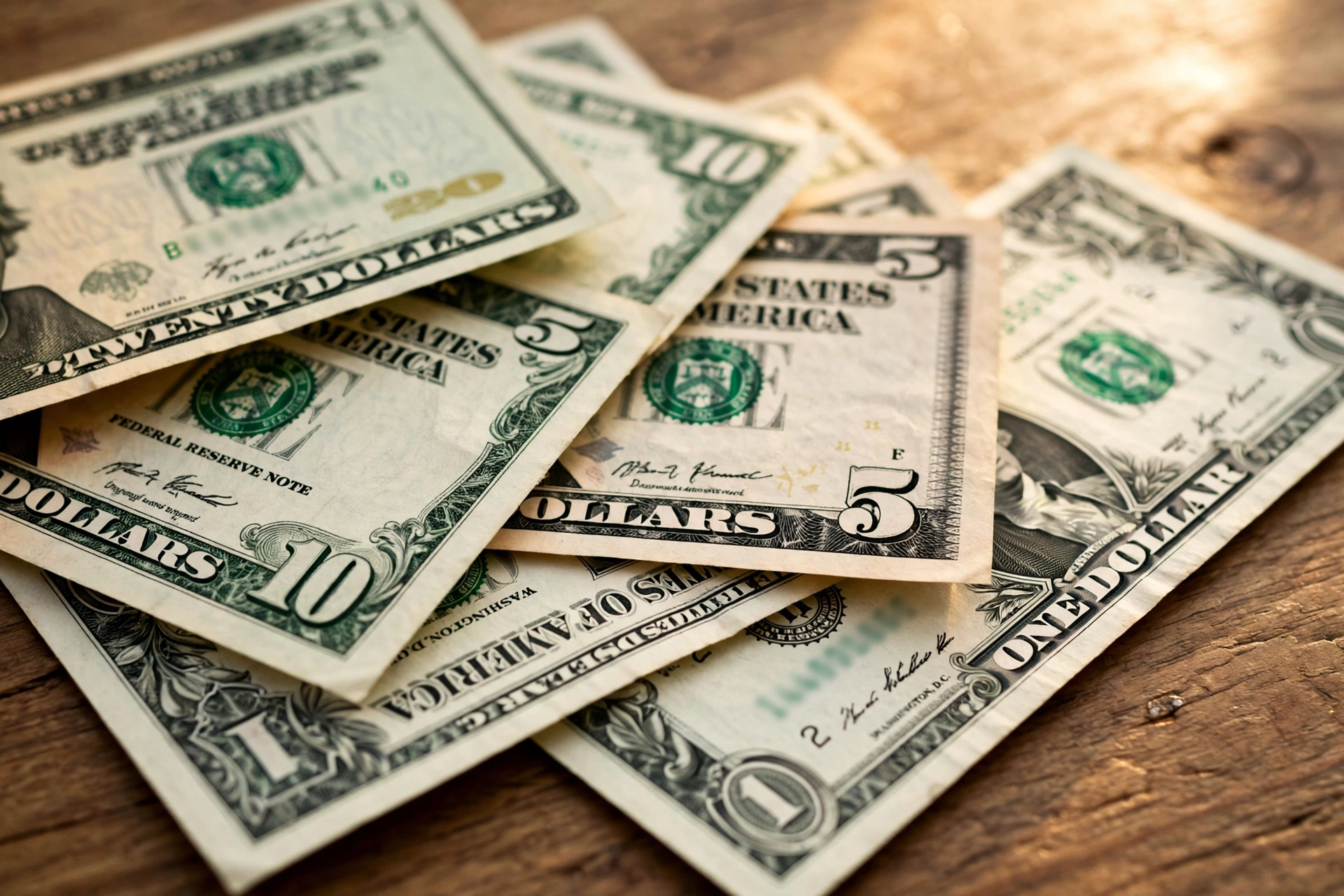
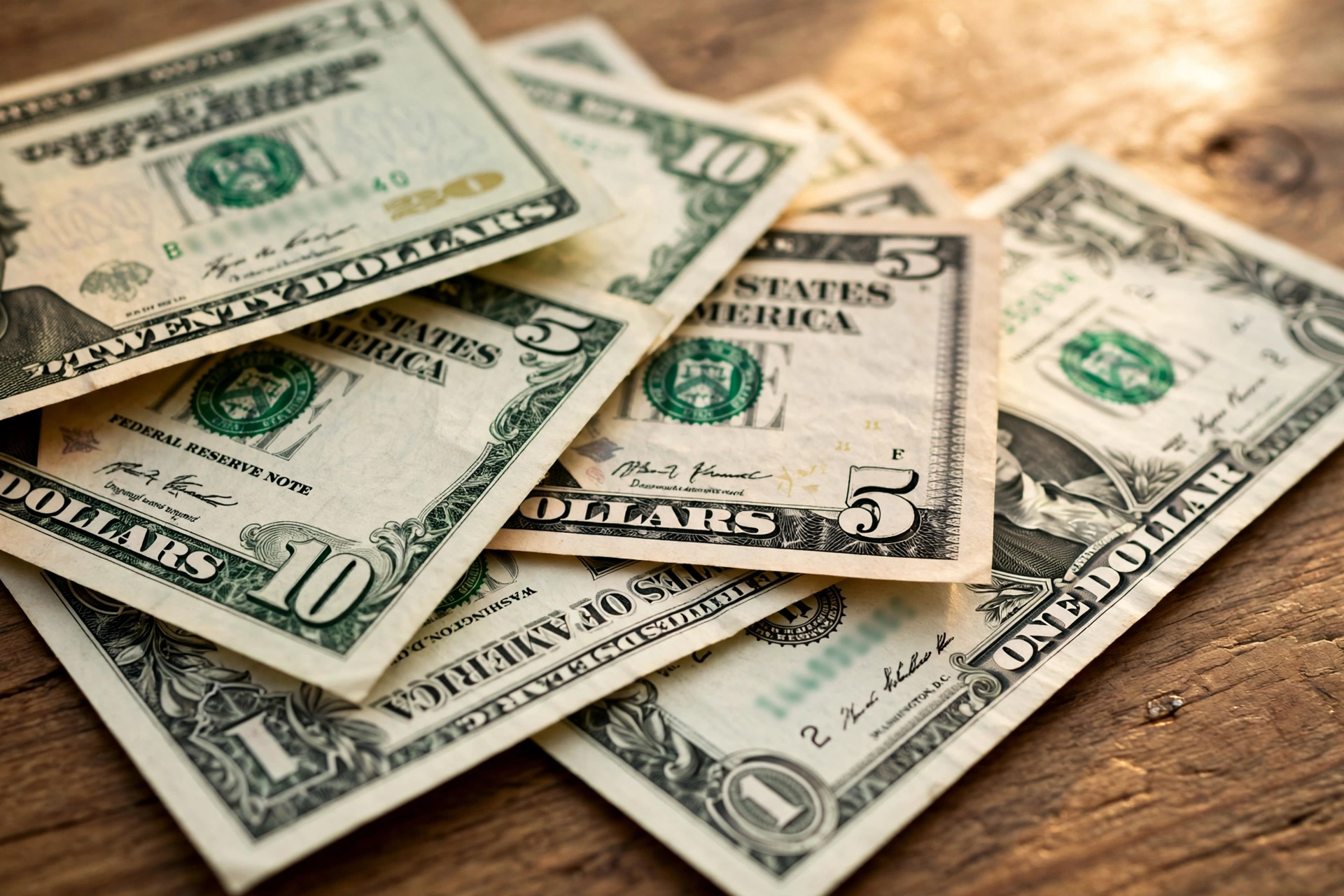
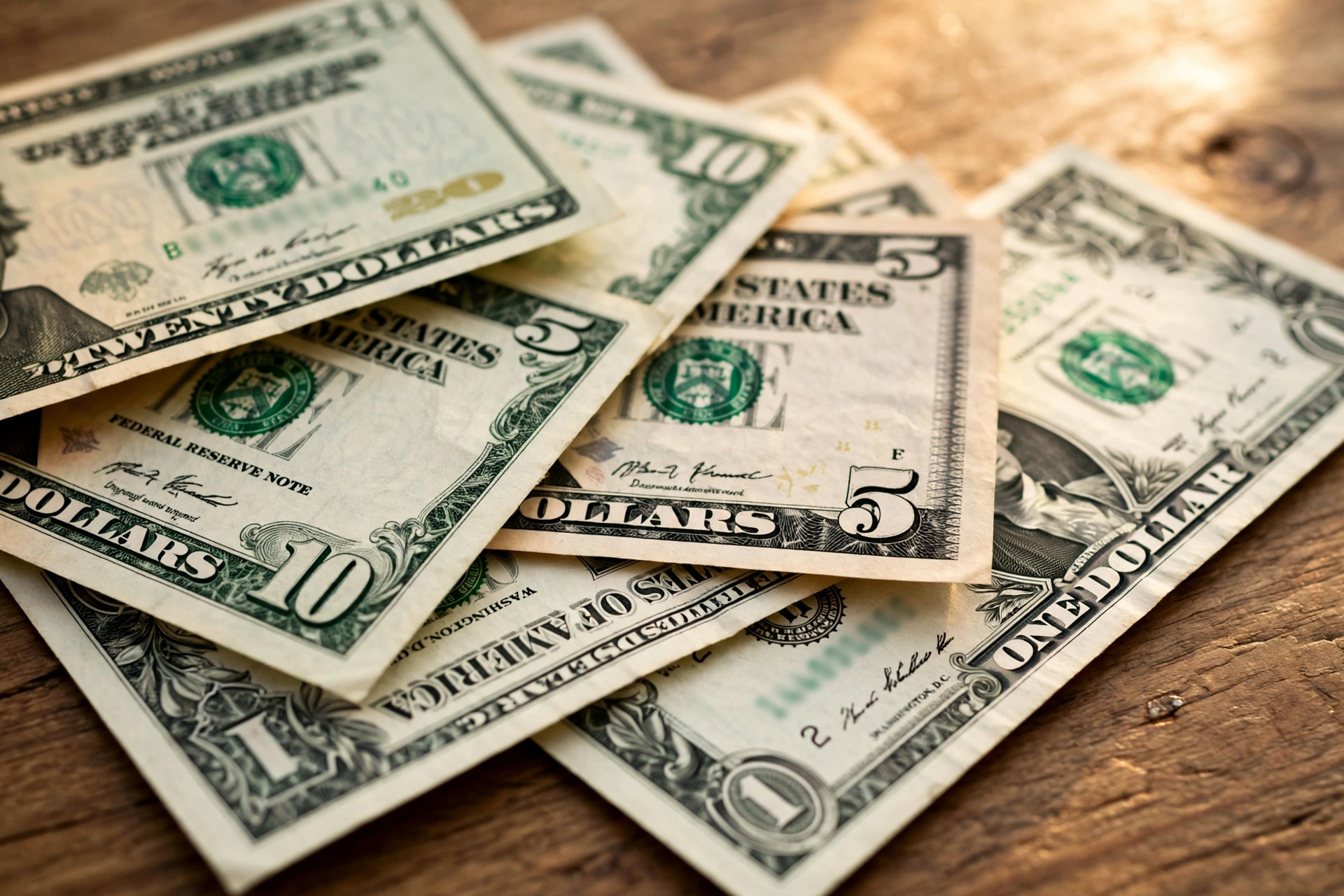

The person on the 5 dollar bill is Abraham Lincoln, the 16th President of the United States, who led the country through the Civil War and abolished slavery. His portrait has appeared on the $5 bill since 1914, on the first Federal Reserve Notes, and the back of the note shows the Lincoln Memorial in Washington, D.C. Lincoln is the only president whose memorial, rather than a government building, appears on the back of his own banknote.
Quick Facts
- Face on the $5 bill: Abraham Lincoln, 16th US President (1861–1865)
- First appeared on the $5: 1914, on the first $5 Federal Reserve Notes
- Born: 12 February 1809, Hodgenville, Kentucky; died 15 April 1865, Washington, D.C.
- Back of the bill: The Lincoln Memorial in Washington, D.C.
- Latest major redesign: Series 2006, issued 13 March 2008, with a purple tint and a large purple “5”
- Portrait source: an engraving based on a photograph of Lincoln by Mathew Brady
- Before Lincoln: Alexander Hamilton, Andrew Jackson and Ulysses S. Grant appeared on earlier $5 notes
Who Was Abraham Lincoln?
Abraham Lincoln was born in a log cabin in Kentucky in 1809, grew up in Indiana and Illinois, and taught himself law. He served in the Illinois legislature and one term in Congress, then lost a famous Senate race to Stephen A. Douglas in 1858 — a campaign remembered for the Lincoln-Douglas debates on slavery. Elected president in 1860, he led the Union through the Civil War (1861–1865), issued the Emancipation Proclamation in 1863 freeing enslaved people in the Confederate states, and pushed through the 13th Amendment abolishing slavery. He was assassinated on 14 April 1865, five days after the war ended, by John Wilkes Booth at Ford’s Theatre in Washington. Historians consistently rank him among the greatest American presidents.
How Did Lincoln End Up on the $5 Bill?
Lincoln did not appear on the $5 straight away. The first $5 notes, issued during the Civil War, featured Alexander Hamilton, and later 19th-century versions carried portraits of Andrew Jackson and Ulysses S. Grant. When the first Federal Reserve Notes were issued in 1914, Lincoln was put on the $5, and he has been there ever since. The choice was natural: Lincoln was the president who saved the Union, and by 1914 he was already the most revered figure in American history. His portrait on the note is based on a photograph by Mathew Brady, the Civil War photographer — one of the few banknote portraits taken from a photograph rather than a painting.
What Is on the Back of the $5 Bill?
The reverse of the $5 bill shows the Lincoln Memorial, the white marble temple in Washington, D.C. where Lincoln sits in a giant statue. The memorial was completed in 1922, and it has been on the back of the $5 since the 1929 standardisation. Look closely at the engraving and you can read the names of the states carved around the top of the memorial — all 48 states that existed when it was built. The pairing is unique among US banknotes: the man on the front and his own memorial on the back. The memorial is also where Martin Luther King Jr. gave his “I Have a Dream” speech in 1963, which gives the back of the $5 a second layer of history.
The Modern $5 Bill and Its Security Features
The $5 bill was redesigned in the Series 2006 issue, released on 13 March 2008. It was the first US note to use a light purple tint in the centre, with a large purple “5” on the back to help people with low vision tell it apart from other notes. Its security features include a watermark of Lincoln visible when the note is held to the light, a security thread that glows blue under ultraviolet light, and microprinting. The portrait of Lincoln was also made larger and moved off-centre, as on the other modern notes. The $5 is one of the most-used notes in everyday life — the note people get back as change more than any other — which is why its security features matter: it passes through more hands than almost any other denomination.
Why the $5 Matters
The $5 bill sits in the middle of American cash: bigger than the $1 everyone carries, smaller than the $20 cash machines dispense. It is the note of small purchases, tips and change, and it is also the note that carries the face of the president Americans admire most. Lincoln’s presence on it is a reminder of the Civil War and the end of slavery every time someone pays for a coffee — a piece of history that circulates in millions of pockets every day.
FAQs
Who is on the 5 dollar bill right now?
Abraham Lincoln, the 16th President of the United States.
When did Lincoln first appear on the $5 bill?
In 1914, on the first $5 Federal Reserve Notes.
Who was on the $5 bill before Lincoln?
Several people appeared on earlier versions, including Alexander Hamilton, Andrew Jackson and Ulysses S. Grant.
What is on the back of the $5 bill?
The Lincoln Memorial in Washington, D.C.
Why is the $5 bill purple?
The 2008 redesign added a light purple tint and a large purple “5” to make the note easier to identify and harder to counterfeit.
Was Lincoln on any other bill?
Yes — Lincoln appeared on the $100 bill from 1869, on $100 United States Notes, before Franklin took that spot in 1914.
Read more on The Red News: Who Is on the 10 Dollar Bill? and Who Is on the 20 Dollar Bill?
For further background, see United States five-dollar bill — Wikipedia and Abraham Lincoln — Wikipedia.