







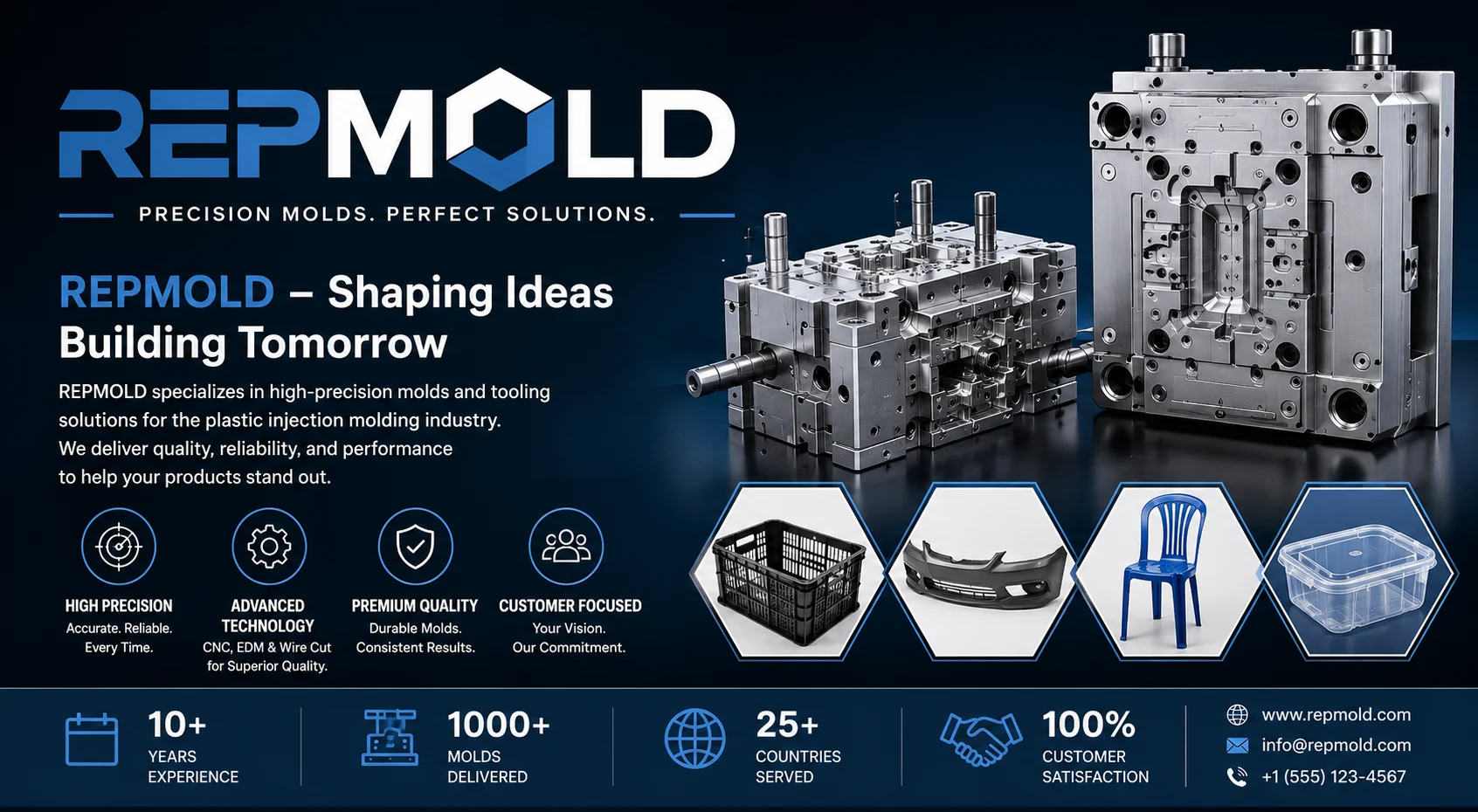
Featured Answer: RepMold technology is an advanced manufacturing and rapid prototyping process designed to create high-precision, adaptable molds for complex product designs. By leveraging flexible tooling materials, advanced composites, and streamlined CAD integration, RepMold allows industrial designers to produce intricate components faster, iterate designs seamlessly, cut material waste, and significantly lower setup downtime compared to traditional rigid metal molding.
Quick Overview: Key Benefits of RepMold Manufacturing
In modern manufacturing, speed, adaptability, and cost control are vital. Traditional molding practices—such as high-volume injection molding utilizing CNC-machined steel or aluminum dies—require significant upfront capital, long fabrication lead times, and costly modifications whenever a design change occurs.
RepMold technology bridges the gap between digital CAD designs and physical short-run production. By employing adaptable tooling materials and dynamic mold-making workflows, RepMold simplifies design validation and shortens time-to-market across multiple industries. As part of broader innovative industrial technology trends, RepMold represents a shift toward agile manufacturing.
RepMold vs. Traditional Tooling & Molding
| Feature / Metric | Traditional Metal Tooling | RepMold Rapid Tooling |
| Initial Tooling Lead Time | 4 to 12 Weeks | Hours to a Few Days |
| Setup & Overhead Cost | High ($10,000 – $100,000+) | Low to Moderate |
| Design Flexibility | Very Low (Requires expensive re-machining) | High (Rapid digital & physical adjustment) |
| Best Suited For | Mass Production (100,000+ units) | Prototyping & Low-to-Medium Batches |
| Material Scrap & Waste | Moderate to High | Low (Uses optimized material volumes) |
| Complex Geometries | Limited by CNC tool reach & draft angles | High (Supports complex undercuts & fine details) |
How RepMold Technology Works in Product Design
The RepMold framework operates by uniting digital modeling tools with dynamic physical casting media. The workflow follows a streamlined, highly repeatable path from concept to finished prototype.
Plaintext
[ 3D CAD Model ] ──► [ Digital Tooling Prep ] ──► [ RepMold Tooling Fabrication ]
                                                              │
[ Finished Part Inspection ] ◄── [ Curing & Demolding ] ◄──────┘
From CAD Model to Flexible Tooling
- Digital CAD Generation: Engineers create a 3D computer-aided design (CAD) model of the intended part, specifying draft angles, wall thicknesses, and tolerance limits.
- Mold Volume Calculation: RepMold software calculates the exact negative volume required for the mold, ensuring zero excess material is consumed.
- Tooling Creation: Using rapid additive manufacturing or re-configurable matrix materials, the RepMold system creates a flexible female mold cavity designed to withstand casting pressures.
- Casting & Resin Infusion: The mold is filled with chosen production-grade materials—ranging from polyurethane resins and elastomeric polymers to carbon-fiber-reinforced composites.
Understanding the specific chemical setting and curing times for molding materials helps production managers optimize turnaround cycles, ensuring parts achieve full mechanical strength before demolding.
Core Advantages of Adopting RepMold in Modern Production
1. Accelerated Iteration & Rapid Prototyping
Product development often stalls during physical testing phases. RepMold enables engineers to manufacture functional, load-bearing prototypes in days rather than months. If a prototype fails structural testing, designers can alter the digital geometry and output a revised mold instantly without throwing away thousands of dollars in hard metal tooling.
2. Cost Efficiency and Downtime Reduction
Machine setup time and tooling costs represent major expenditures for short-run production. RepMold eliminates the need for expensive multi-axis CNC milling of hardened dies. Furthermore, the adaptability of RepMold allows factories to quickly shift lines from one product revision to another without extensive line shutdowns, maintaining high operational throughput.
3. Sustainable, Eco-Friendly Manufacturing
As global industrial regulations prioritize environmental sustainability, reducing raw material waste is a key objective. RepMold systems use only the precise amount of material required for each molding cycle. Additionally, many RepMold tooling matrices utilize reusable or recyclable compounds, lowering the overall carbon footprint of product development.
Real-World Applications Across Industries
RepMold technology is applied across a variety of demanding commercial sectors:
- Sports Equipment & Lightweight Composites: A notable application of RepMold technology is in the production of high-performance lightweight bicycle frames. Utilizing advanced composite materials inside RepMold tooling, manufacturers produce rigid, lightweight structural frames that preserve tensile strength without adding unnecessary mass.
- Automotive & Transportation: Automotive engineers utilize RepMold to fabricate custom interior trim panels, specialized ducting, and low-volume exterior body components for prototype vehicles or low-volume supercars.
- Consumer Electronics: Tech companies leverage RepMold to rapidly prototype ergonomic enclosures, wearable technology housings, and water-resistant rubberized seals prior to investing in mass-production steel dies.
- Medical Devices & Custom Orthotics: RepMold allows medical equipment manufacturers to create patient-specific orthotic molds, prosthetic interfaces, and specialized surgical handles tailored to exact ergonomic dimensions.
Frequently Asked Questions (FAQ) About RepMold
What is RepMold technology?
RepMold technology is an advanced rapid tooling and molding method designed to generate flexible, highly accurate molds for rapid prototyping and short-run manufacturing.
How does RepMold save costs compared to traditional molding?
RepMold eliminates the need for expensive CNC-milled metal dies and cuts setup downtime. It allows manufacturers to make rapid design changes digitally without discarding costly hard tooling.
Is RepMold suitable for production-grade materials?
Yes. RepMold tooling can be used with a wide variety of production-grade resins, elastomers, polyurethanes, and carbon-fiber composite materials.
How does RepMold contribute to sustainable manufacturing?
RepMold optimizes material consumption so that only necessary resin amounts are used per cycle, minimizing industrial scrap and promoting eco-friendly manufacturing practices.