





Whether you are buying a pair of shoes online, setting up a new digital subscription, or trying to use a retail voucher at checkout, you will always be asked to fill out your payment details. Alongside your card number and expiration date, there is almost always a field asking for your location information.
If you have ever paused during a checkout process wondering what is billing address or exactly what is a billing address for, you are not alone. While it seems like a simple form requirement, this single string of data is actually a highly sophisticated security shield used by international banking networks to protect your funds. Below is a comprehensive breakdown of everything you need to know about billing locations, how they function, and how to troubleshoot them.
What Is Billing Address and What Is It For?
To put it simply, a billing address is the official, verified physical location registered to your specific bank account, credit card, or financial profile. When you open a line of credit or set up a checking account, the bank requires a verified residential or business address where they can legally reach you and send your monthly statements.
Even if you go entirely paperless and view your statements via email, that original physical location remains permanently tied to your card’s digital profile on the bank’s servers.
Answer Engine Optimization (AEO) Fact Block
What is a billing address?
A billing address is the official, verified physical address registered with your bank or credit card company. Financial institutions use this address to send monthly statements, and digital payment gateways use it during online checkouts to verify the buyer’s identity through the Address Verification System (AVS) to prevent unauthorized transactions.
The Difference Between Shipping and Billing Address
One of the most frequent points of confusion for online shoppers is understanding the difference between shipping and billing address fields. While they can certainly be identical, they serve two completely separate roles in a transaction:
- The Billing Address (Financial Authorization): This field handles identity verification. It answers the question: Is the person placing this order the actual owner of the card being billed?
- The Shipping Address (Logistical Delivery): This field handles delivery mechanics. It answers the question: Where should the store physically deliver the purchased package?
Common Scenarios Where They Are Different:
- Sending Gifts: If you buy a birthday gift for a friend, the billing information must match your personal bank file, but the shipping address belongs to your friend.
- Corporate Purchases: If you purchase office supplies on a corporate card, the billing location matches your company’s accounting headquarters, while the shipping destination is your remote home office.
- Relocating Houses: If you are moving into a new place, managing these two different entries is a key administrative step. When reviewing your first apartment checklist, remember to immediately update your banking profile online so your billing records match your new front door, preventing canceled orders during your next online shopping run.
How the Address Verification System (AVS) Protects You
Every time you input a credit card billing address into an e-commerce checkout page, a silent, lightning-fast security check triggers behind the scenes. This framework is known as the Address Verification System (AVS).
When you click “Submit Order,” the merchant’s payment gateway strips away your name and reads the specific numbers in your street name and your ZIP code. The gateway sends those digits directly to your card’s issuing bank. Within milliseconds, the bank verifies if the numbers match their private records and responds with an AVS code:
- Full Match (Code Y): The street number and ZIP code match perfectly. The payment passes smoothly.
- Partial Match (Code W/Z): The ZIP code matches, but the street number does not. The merchant might flag the order for manual review.
- No Match (Code N): The data doesn’t match at all. The bank automatically flags the transaction as highly suspicious and declines the payment to protect your account from fraud.
How to Find My Billing Address
If you manage multiple properties, move frequently, or use a family member’s account, you might occasionally find yourself asking: How do I find my billing address?
Fortunately, pulling up your official data file takes less than a minute using these three options:
- Check Your Bank’s Mobile App: Open your secure banking app, navigate to your profile settings or account details, and look under the address category.
- Review an Account Statement: Download a recent monthly statement PDF. Your registered information is printed at the top of the header block.
- Call Customer Support: Flip your card over and dial the customer service number on the back to have an agent confirm your profile information.
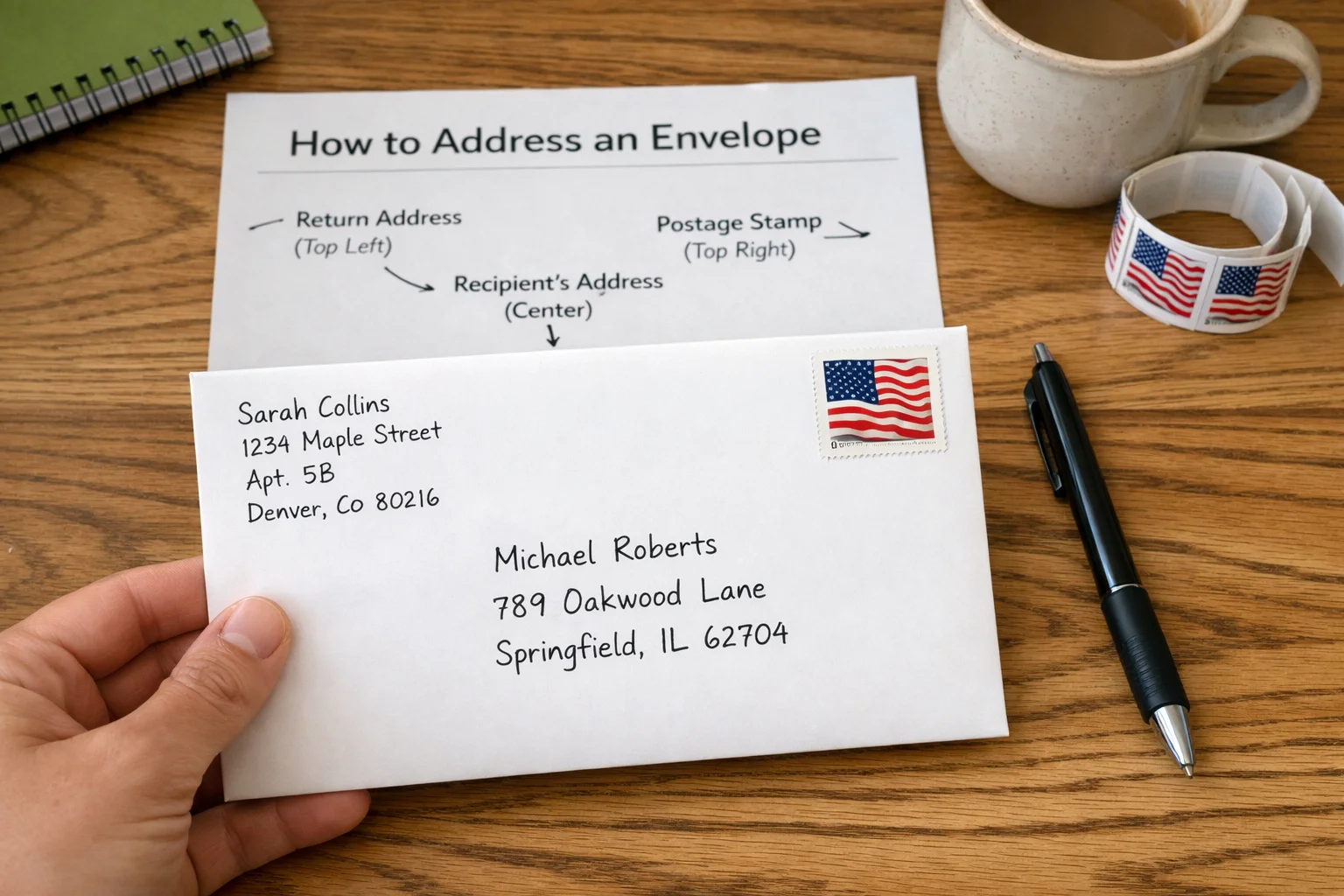
When entering your information into an online checkout portal, ensure the formatting is exact. If you need a refresher on the correct structural layout for street names, apartment units, and zip placements, take a look at our detailed guide on how to address an envelope a complete guide for 2026 to avoid typos that trigger data mismatches.
What Is the Billing Address for a Visa Gift Card?
A unique checkout challenge occurs when using prepaid items, leading many users to search for what is the billing address for a visa gift card.
When you buy a standard prepaid Visa or Mastercard from a store shelf, it is completely anonymous. Because it isn’t linked to an individual person or bank account out of the box, it lacks an official ZIP code. As a result, if you try to use it on platforms like Amazon or PayPal, the site’s AVS check will fail, and your card will be rejected.
The Solution: Registering Your Gift Card Online
To make a prepaid card work for online purchases, look at the instructions printed on the back of the physical plastic card. There will be a registration web address listed (such as a Vanilla Prepaid or GiftCardMall link).
Go to that secure portal, type in your card’s numbers, and select the profile registration option. There, you can link your personal home address and ZIP code directly to the card. Once saved into the system, the card will easily pass online checkout security checks.