







A cluttered workspace, whether it is a workshop, warehouse, laboratory or office, can slow down even the most experienced team. Small components, tools and materials often get misplaced, damaged or forgotten simply because there is no proper system in place to hold them. Over time, this leads to wasted hours, unnecessary purchases and a general sense of disorganisation that affects productivity.
The good news is that with the right approach, this problem is easy to solve, and the solution usually comes down to choosing suitable storage systems that match the way a business actually works.
The Importance of Small Parts Storage Products
Every industry, from manufacturing to healthcare, relies on small components that need to be kept safe, visible and easy to access. This is exactly where small parts storage products come into play, offering practical ways to keep nuts, bolts, instruments, samples and other compact items in order.
Instead of digging through drawers or shelves filled with mixed items, a well organised storage system allows staff to locate what they need within seconds, reducing downtime and improving overall efficiency. These products are designed with durability in mind, since many workplaces involve constant handling, movement and exposure to dust or moisture. A good storage solution should therefore be sturdy, easy to clean and capable of withstanding daily wear without losing its shape or function.
Common Types of Storage Solutions for Small Items
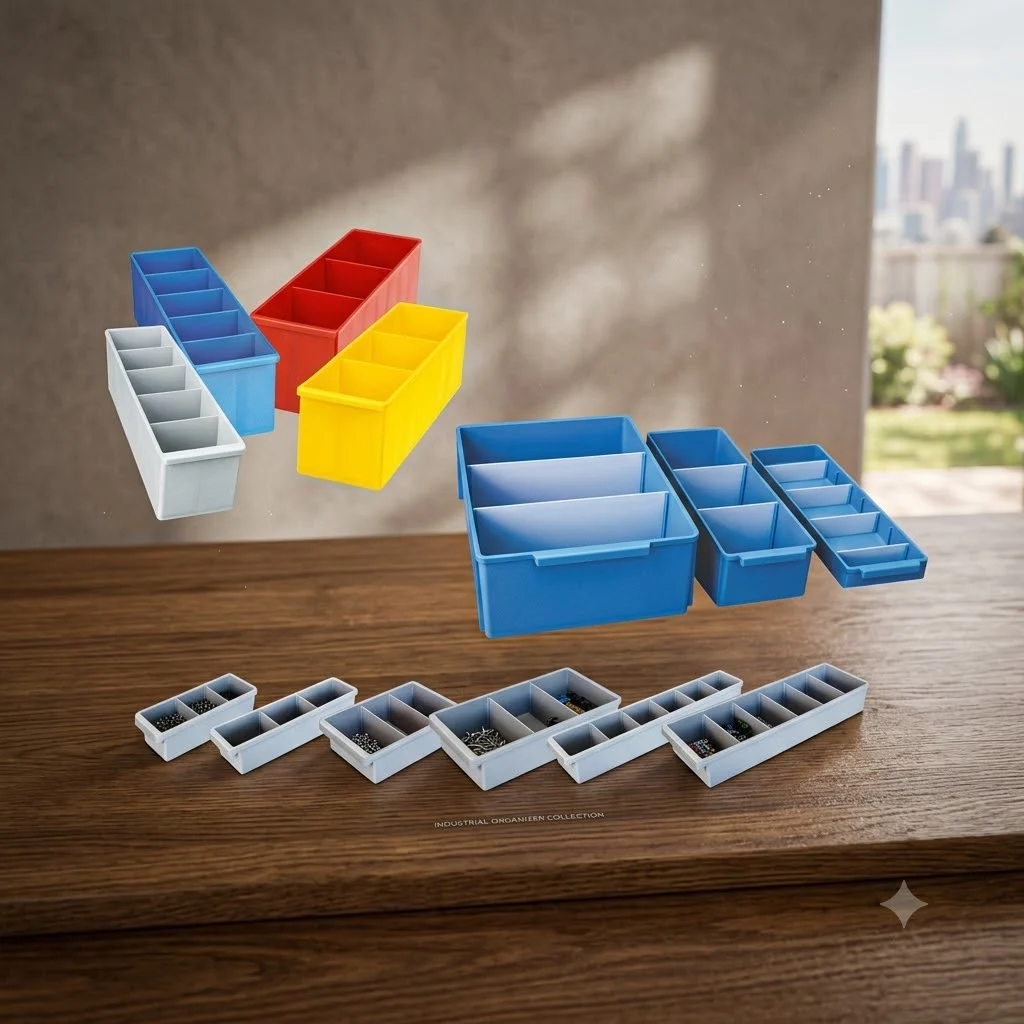
There is no single storage solution that fits every business, which is why manufacturers offer a wide variety of options suited to different needs. Stackable bins, for instance, are popular in workshops and warehouses because they can be mounted on walls or arranged in a compact system that saves floor space while keeping components visible and accessible. Plastic parts trays serve a similar purpose, allowing smaller items to be grouped together neatly, which is particularly useful in assembly lines or laboratories where speed and accuracy matter.
For businesses that need to protect stock from humidity, dust or corrosion, heavy duty fibreboard boxes are often preferred, since they combine strength with the ability to shield sensitive materials from environmental damage. Louvre panels, available in both metal and plastic, offer another flexible option, as they can be mounted on walls to hold a range of bins and trays, making the most of vertical space in busy work areas.
Some environments require mobility as well as organisation. Hanger rack systems and mobile trolleys allow tools and components to move along with staff, whether on an assembly line, in a hospital or across a large warehouse floor. Similarly, carry cases with interchangeable dividers are ideal for professionals who need to transport instruments or tools between different locations while keeping everything secure and in place.
Choosing the Right System for Your Industry
Different sectors have different storage priorities, and understanding these needs helps in selecting the most suitable option. In healthcare settings, for example, accessory boxes and drawer organisers are often used to keep instruments protected and easy to sanitise, since hygiene and quick access are essential. In manufacturing or engineering workshops, high density parts cabinets and tall drawer cabinets are more common, as they allow a large number of small components to be sorted and stored without taking up excessive floor space.
Retail and logistics businesses often benefit from modular shelving systems that can be adjusted as inventory changes, while agricultural or mining operations may prioritise rugged, weather resistant containers that can handle outdoor conditions. Regardless of the industry, the goal remains the same: to reduce clutter, protect valuable items and make daily operations smoother for everyone involved.
The Role of Labelling and System Design
Even the best storage containers will not deliver their full benefit without a proper labelling system. Clear labels on bins, drawers and shelving units make it easier for staff to identify contents at a glance, which becomes especially important in larger facilities where dozens or even hundreds of storage units are in use. A thoughtful labelling approach, combined with a logical layout, can significantly cut down the time spent searching for items and helps new employees learn the system quickly.
When designing a storage layout, it is worth considering how frequently certain items are used. Components that are needed daily should be placed within easy reach, while less frequently used items can be stored further away or in less accessible areas. This kind of planning, paired with the right containers and shelving, creates a workspace that feels intuitive rather than chaotic.
Long Term Benefits of Investing in Quality Storage
Investing in reliable storage systems is not just about tidiness, it is also about protecting the value of the items being stored. Durable containers reduce the risk of damage from dust, moisture or accidental impact, which in turn lowers replacement costs over time. A well organised space also contributes to workplace safety, since scattered tools and materials are a common cause of trips, falls and other avoidable accidents.
Beyond the practical advantages, an organised environment tends to improve staff morale as well. Employees generally feel more comfortable and focused when they are not constantly searching for misplaced items or working around cluttered surfaces. This can lead to better concentration, fewer errors and a more professional impression for anyone visiting the facility, whether they are clients, inspectors or new team members.
Conclusion
Keeping a workspace organised is an ongoing process that benefits from thoughtful planning and the right equipment. Whether the setting is a busy warehouse, a hospital storeroom, a laboratory or a small workshop, the underlying challenge is often the same, finding a practical way to store and access small items efficiently. By exploring a range of small parts storage products, businesses can identify solutions that suit their specific layout, budget and daily operations, ultimately creating a workspace that runs more smoothly and safely for everyone involved.