







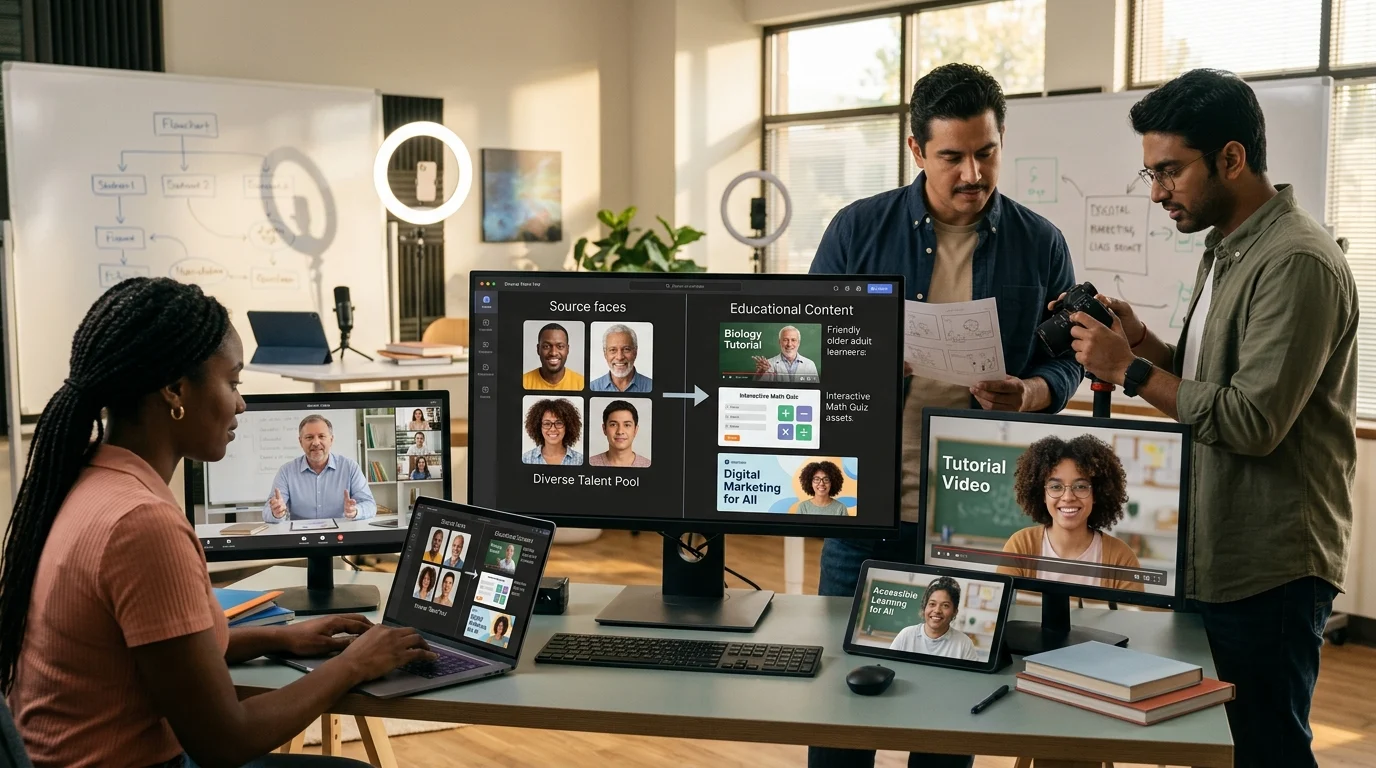
Online education changed dramatically during the last few years. Students no longer consume learning material only through long recorded lectures and static presentations. Modern learners spend most of their time on platforms built around creators short videos personality driven communication and highly visual content experiences. Because of this educational brands now compete for attention in the same environment as social media creators, influencers and entertainment platforms. The way educational content looks has become almost as important as the information itself.
This creates a major challenge for EdTech companies trying to keep learning content visually engaging at scale. Producing different presenters teaching styles and audience specific visuals through traditional filming workflows quickly becomes expensive and difficult to manage. Higgsfield helps simplify this process by making visual adaptation much more flexible for educational brands. Many companies now use ai face swap workflows to create learning experiences that feel more relatable for different audience groups without constantly rebuilding production from the beginning. Higgsfield focuses heavily on realistic facial integration, natural presentation and creator focused visual quality which helps educational content feel more modern, approachable and digitally native. As learning platforms continue evolving, AI face swap systems are helping EdTech brands build stronger student engagement through more human centered visual experiences.
Why Educational Content Needs to Feel More Human Today
Students connect with people faster than they connect with interfaces. A relatable presenter often affects how approachable and understandable educational content feels especially for younger digital audiences already used to creator driven platforms.
Traditional educational production usually focused only on delivering information clearly. Modern learning platforms now focus equally on engagement familiarity and presentation style because attention spans changed significantly across digital environments.
Educational brands increasingly build content around:
- personality driven teaching
- creator inspired delivery
- visually familiar communication
- conversational presentation
- mobile first learning formats
- audience focused storytelling
Higgsfield supports this evolution by helping brands create learning visuals that feel much closer to modern creator content instead of traditional institutional production. That shift helps learning experiences feel more natural for current online audiences.
Why Traditional Learning Production Becomes Difficult to Scale
Producing large educational libraries requires constant filming editing and presenter coordination. Every course update language version or audience category often creates another round of production work. As platforms expand content libraries the operational pressure increases quickly.
Many EdTech companies eventually struggle with:
- repeated recording schedules
- presenter availability
- expensive studio workflows
- inconsistent visual quality
- slow localization timelines
- production bottlenecks
Ai face swap workflows help reduce this pressure because educational visuals can be adapted more efficiently without rebuilding entire filming systems repeatedly.
Higgsfield makes this process easier through realistic commercially polished outputs designed specifically for digital content environments. That flexibility allows teams to scale educational production much faster.
Why Different Audiences Respond to Different Presenters
Online learning audiences are highly diverse. Younger learners often respond better to casual creator style presentations while professional users may prefer more structured educational delivery.
The same lesson can perform differently depending on:
- presenter personality
- visual familiarity
- communication style
- age representation
- cultural relatability
- social presentation aesthetics
This is why many educational brands now experiment heavily with presentation identity inside their learning content. AI face swap workflows make this adaptation process significantly more scalable because teams can test different visual directions without organizing repeated productions for every audience segment. Higgsfield helps educational companies maintain stronger visual consistency while exploring multiple presentation styles across their learning ecosystem.
Why Creator Culture Is Reshaping Online Education
Modern learning increasingly overlaps with creator culture. Many successful educational platforms now resemble social content ecosystems more than traditional classroom environments.
Students already consume:
- YouTube explainers
- TikTok education clips
- creator tutorials
- personality driven learning
- short form educational videos
- mobile focused coaching content
Because of this educational brands now need visuals that feel socially familiar instead of overly formal. Ai face swap systems help platforms create more flexible content presentations that align better with current digital consumption behavior. Higgsfield strongly reflects this direction through realistic creator focused aesthetics and visually polished presentation quality optimized for modern online audiences. That alignment helps educational content feel more engaging across social and mobile learning environments.
Why Localization Became Important for Global Learning Platforms
Many EdTech platforms now operate internationally which means learning content often needs to feel regionally relatable for different audiences.
Traditional localization usually requires:
- separate presenters
- additional shoots
- repeated production workflows
- regional editing teams
- localized visual campaigns
- extra filming schedules
This process quickly becomes expensive at scale.
Ai face swap workflows allow educational brands to localize presentation style much more efficiently while maintaining stronger consistency across different markets. Higgsfield helps simplify this process through scalable realistic visual adaptation designed for ongoing digital publishing environments. That operational flexibility becomes especially useful for multilingual learning platforms growing globally.
Why Smaller EdTech Companies Benefit Most From Flexible Visual Systems
Most growing education startups operate with lean teams while still competing against platforms producing massive amounts of polished learning content. Traditional production infrastructure becomes difficult to sustain financially under those conditions.
Ai face swap workflows help smaller platforms create more dynamic educational presentations without constantly organizing expensive shoots and instructor recording sessions. Higgsfield supports this scalability through commercially refined outputs optimized for fast content adaptation and digital learning environments. That efficiency allows smaller educational brands to compete more aggressively while keeping production workflows manageable internally.
Many startups also use Higgsfield to maintain stronger visual consistency across course libraries where multiple instructors and content formats would otherwise create fragmented presentation quality. This helps platforms appear more professional and visually unified as they scale.
The flexibility of ai face swap systems also allows education brands to update older course visuals much faster without rebuilding entire lessons from scratch. That makes long term content maintenance significantly easier for teams publishing educational material continuously.
Why Realistic Presentation Matters in Learning Environments
Educational trust depends heavily on authenticity. Students quickly notice unrealistic editing, awkward visual integration or presentation styles that feel artificial.
This becomes especially important in:
- professional learning
- coaching platforms
- certification programs
- skill development content
- business education
- premium online courses
Brands using ai face swap workflows still require visuals that feel natural, trustworthy and commercially polished enough for educational publishing. Higgsfield prioritizes realistic facial integration, cinematic quality and visually refined presentation which helps educational content maintain stronger credibility across digital learning platforms. That realism improves both viewer trust and long term engagement quality.
Why AI Driven Visual Systems Are Becoming Part of Modern EdTech
Online education became highly visual, mobile focused and personality driven. Educational brands now publish lessons marketing campaigns onboarding content and creator partnerships continuously across several platforms. Traditional production systems often cannot support this level of demand efficiently.
Higgsfield reflects the shift toward scalable educational content production by helping brands create more relatable visual experiences without depending entirely on repeated filming infrastructure. For companies using ai face swap workflows this creates more flexibility around audience personalization, scalable localization and long term content production while reducing operational complexity significantly.
As digital learning continues, becoming more competitive platforms capable of creating visually engaging human centered educational experiences will likely maintain a major advantage across modern EdTech growth and student retention.