






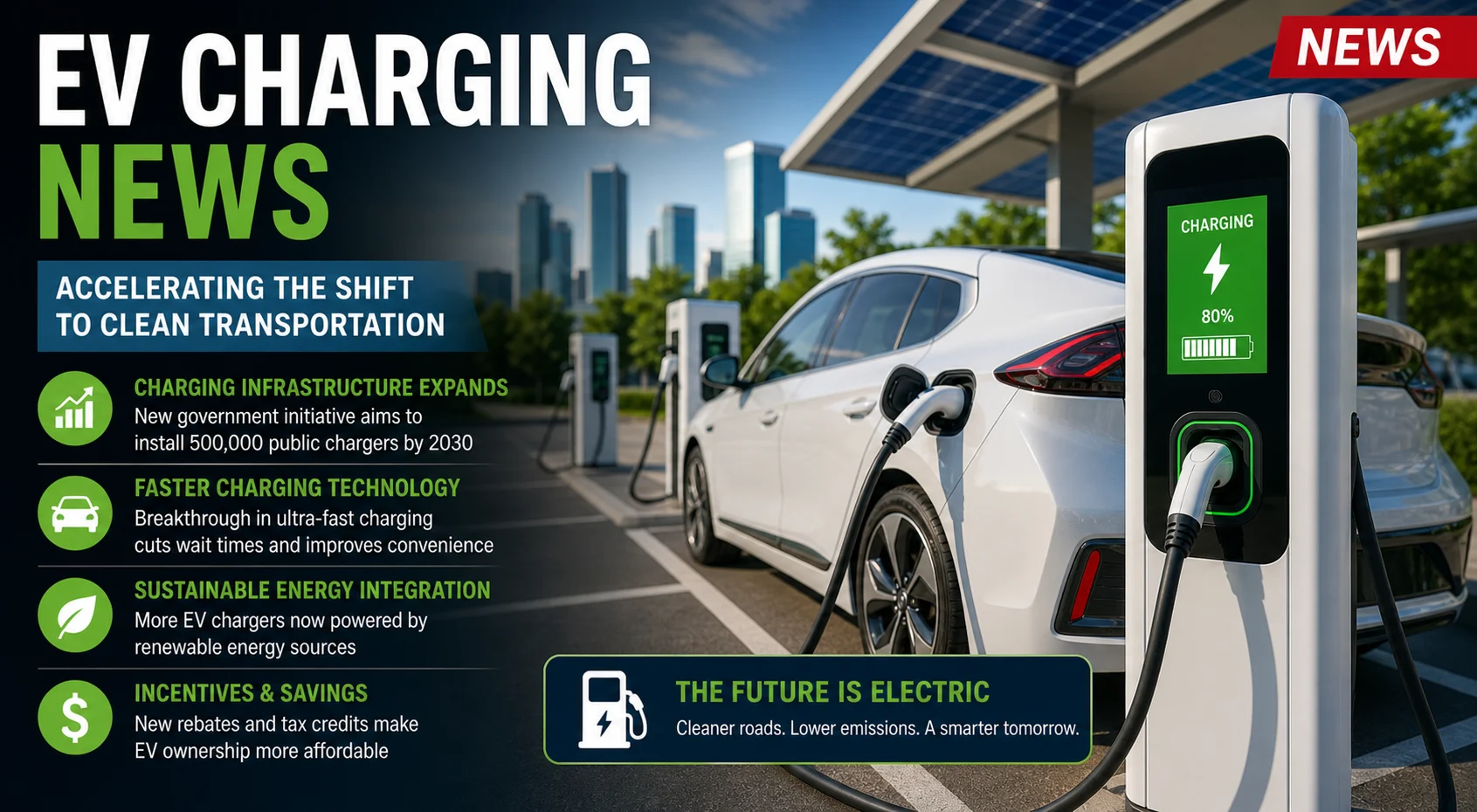
The electric vehicle landscape of 2026 is no longer defined by rapid, unchecked expansion but by a shift toward regulatory enforcement, standardization, and ultra-high-power infrastructure. As the market matures, the focus has moved to ensuring that the millions of public charging points globally are reliable, transparent, and capable of supporting everything from passenger cars to heavy-duty logistics fleets.
What is the Latest EV Charging News Today?
As of May 2026, the most critical EV charging news centers on the full enforcement of the Alternative Fuels Infrastructure Regulation (AFIR) across Europe. This regulation has moved from being a set of guidelines to a binding legal framework that mandates price transparency and ad-hoc payment options at public stations.
In the United States, utility giant Con Edison made waves with a significant update to its PowerReady program:
- Application Pause: As of April 22, 2026, the program stopped accepting new applications for Level 2 (L2) projects.
- DCFC Status: Applications for DC Fast Charging (DCFC/Level 3) projects have been paused until further notice.
- Waitlist Management: Existing projects currently on the waitlist will remain in queue based on their original submission date.
The Rise of 350kW+ Ultra-Fast Charging Infrastructure
The year 2026 marks a turning point for charging speeds, as ultra-fast charging systems delivering 350 kW and above move from premium novelties to mainstream necessities.
- Market Growth: The 350 kW+ segment is projected to grow at a staggering 30.1% CAGR through 2034.
- Reduced Charge Times: These high-power solutions enable rapid battery replenishment, often reaching substantial charge levels within 10 to 20 minutes.
- 800V Architecture: Automakers are increasingly introducing 800V platforms and high C-rate batteries specifically to exploit these 350 kW+ speeds.
With these speeds becoming common, the practical answer to how long to charge a car battery is increasingly approaching the 15-minute mark for the latest vehicle models.
Europe and Germany: Leading the “Enforcement Era”
Europe has transitioned into what industry experts call the “Enforcement Era”. While the first half of the decade was about building “plugs in the ground,” national watchdogs are now investigating market conduct to protect consumers.
- Standardization: Starting January 8, 2026, all newly installed publicly accessible AC charging points in the EU must support the EN ISO 15118-2:2016 standard.
- Plug & Charge: This requirement enables Plug & Charge capabilities, allowing vehicles to authenticate and pay automatically without cards or apps.
- Italian Investigation: Italy’s competition authority recently opened an investigation into domestic utility group A2A, signaling that national regulators are now actively applying AFIR principles to market conduct.
Megawatt Charging (MCS) and Logistics Electrification
The electrification of heavy-duty transport is accelerating with the arrival of Megawatt Charging Systems (MCS).
- Tesla Expansion: In early 2026, Tesla updated its network to include 64 additional Megacharger sites across 15 states, capable of 1.2 MW DC fast charging for the Tesla Semi.
- Ionity Validation: European network Ionity has begun validating megawatt-ready chargers built by Alpitronic, designed to deliver up to 1 megawatt of total site power.
- 100 MW-Scale Stations: Future logistics hubs are trending toward hundred-megawatt-scale stations to support high-throughput commercial operations.
The Future of Interoperability and Reliability
As these massive networks scale, reliability has become the industry’s biggest challenge. This complexity necessitates advanced IT crisis management strategies for operators to prevent downtime in high-throughput hubs.
Liquid-cooled technology is also becoming a fundamental requirement for 2026 networks. Unlike traditional air-cooled systems, liquid-cooled chargers provide superior heat dissipation, allowing for reliable performance in extreme environments like high-heat or coastal areas. These advancements, combined with the upcoming 2027 mandate for bidirectional power transfer (V2G), ensure that EV charging infrastructure is finally built for a fully electric age.