






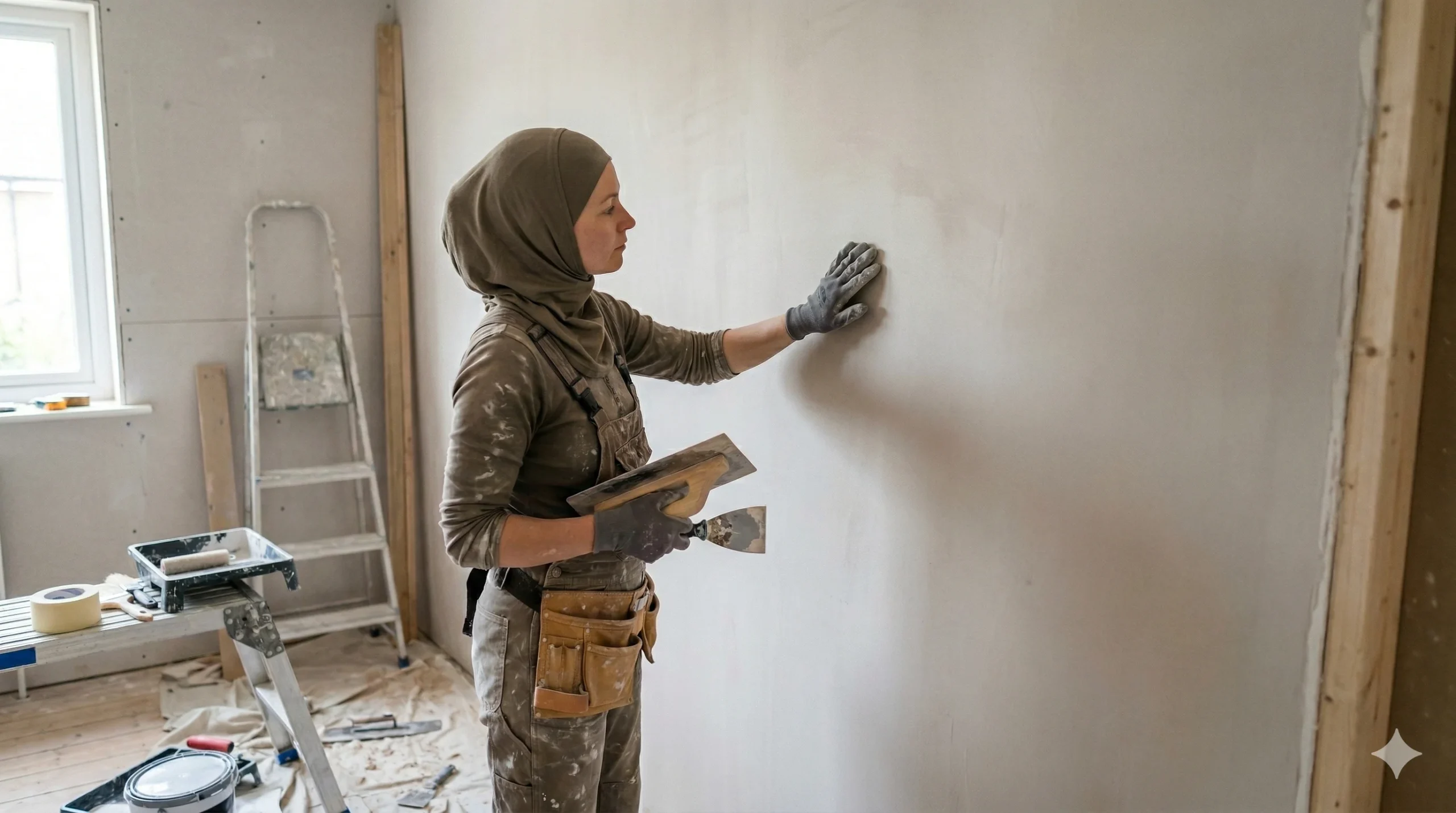
Looking at a freshly plastered, perfectly smooth wall is incredibly satisfying. Naturally, the immediate temptation is to grab a roller and start painting to finish the room. However, you must respect the harsh builder’s truth: plaster is essentially wet mud applied to your masonry.
Painting a wall before it has completely expelled its internal moisture is the fastest way to ruin an expensive plastering job. If you do not let the chemical and physical drying process finish, your new paint will blister, peel, and fail within weeks. Here is your definitive, structural guide to the plaster drying timeline, how to visually check if it is ready, and why the first coat of paint you apply requires a specific scientific ratio.
The Plaster Drying Timeline (What to Expect)
Understanding the difference between plaster that has “set” and plaster that has “dried” will save you from making a catastrophic decorating mistake. The timeline depends heavily on the thickness of the application and the environment.
1 to 4 Hours: Dry to the Touch (Set)
Within the first few hours, the chemical reaction of the gypsum takes place. The plaster has hardened enough that you can lightly touch the wall without leaving a fingerprint or dent. However, this only means the wall is structurally set. It is still holding gallons of internal water and is nowhere near ready for paint.
3 to 5 Days: Standard Skim Coat
In the vast majority of modern home renovations, a plasterer will apply a thin “skim coat” (usually 2mm to 3mm thick) over existing plasterboard (drywall). In a well-ventilated room with moderate weather, a standard skim coat requires 3 to 5 days to dry completely.
Up to 2 Weeks: Backing Plaster and Deep Fills
If you have taken a room back to bare brick, the plasterer must apply a thick base coat (known as browning or bonding plaster) before applying the smooth top skim. Because this backing layer is thick and heavy, it holds a massive volume of water. If you are dealing with deep fills, or if the room is naturally cold and humid (such as during winter renovations), the drying time can easily extend to 14 days or more.
How to Tell When Plaster is Fully Dry (The Visual Test)
You do not need specialized moisture meters to know when your walls are ready. Plaster gives you a highly accurate, built-in visual indicator: its colour.
- Wet Plaster: When first applied, wet plaster is a dark, damp, and usually deep reddish-brown colour.
- Dry Plaster: As the water evaporates, the wall will gradually turn a uniform, pale, light pink (or entirely white, depending on the specific brand of finishing plaster used).
- The Warning Sign: Do not be fooled by the center of the wall drying first. If the wall is mostly pale pink but still has dark brown, damp-looking patches in the corners, near the ceiling, or down by the skirting boards, it is not ready. The colour must be 100% uniform across the entire surface area.
Why You Must Never Force Plaster to Dry
Staring at wet walls delays a project, leading many DIYers to try and speed up the process. Never use portable heaters, industrial fans, or dehumidifiers in a freshly plastered room.
It all comes down to basic physics. If you aggressively blast heat at a wet wall or use a dehumidifier to aggressively extract moisture from the air, the very top surface of the plaster will shrink and dry rapidly while the base layer against the brick remains wet and expanded.
This sudden, unequal tension causes the plaster to “craze”—developing hundreds of interconnected hairline cracks—or completely “blow” off the wall, requiring the entire job to be chipped off and redone. If you removed your heating units before the plasterer arrived—perhaps by following a guide on how to remove a radiator to ensure a clean finish behind the pipes—do not rush to turn the central heating system back on high. Keep the room at a normal, ambient temperature and simply open a window slightly to let the moisture escape naturally.
The Crucial Next Step: Applying a Mist Coat
Once your wall is perfectly pink and dry, you still cannot open a tin of premium paint and start rolling.
Fresh, dry plaster is incredibly porous, acting like a giant, solid sponge. If you apply thick, expensive top-coat paint directly to bare plaster, the wall will instantly suck all the water out of the paint. The paint will dry too fast, sitting loosely on the dusty surface rather than bonding to it, and will peel off in large, rubbery sheets as soon as you touch it.
The Solution: You must seal the pores by applying a “mist coat.” A mist coat is simply a watered-down solution of cheap, matte white emulsion paint. The standard builder’s ratio is roughly 70% paint to 30% clean water. Mix it thoroughly in a bucket. This thin, watery liquid soaks deep into the microscopic pores of the plaster, sealing the wall and creating a highly stable, bonded primer layer for your expensive final top coats.
FAQs on Drying Plaster
Can I wallpaper over fresh plaster? No. Just like painting, you must wait the full 3 to 5 days for the skim coat to dry completely. Furthermore, you cannot apply wallpaper paste directly to bare plaster. You must “size” the wall first—applying a diluted paste or a specific plaster primer to seal the porous surface. If you don’t, the dry plaster will aggressively absorb the moisture from the wallpaper paste, and your paper will peel off the wall the next day.
What happens if I paint damp plaster? If you apply a waterproof layer of paint over a dark, damp patch of plaster, the moisture gets permanently trapped behind the paint film. Because water will inevitably try to evaporate and escape, the resulting hydrostatic pressure will cause your new paint to bubble, blister, and flake off. Trapped moisture inside masonry is also the leading cause of toxic black mold growth.
Patience is the cheapest and most important tool in home improvement. Wait for the uniform pink colour, avoid the temptation of artificial heaters, and always seal the porous surface with a mist coat. Respect the drying timeline, and your new walls will remain flawless for decades.