







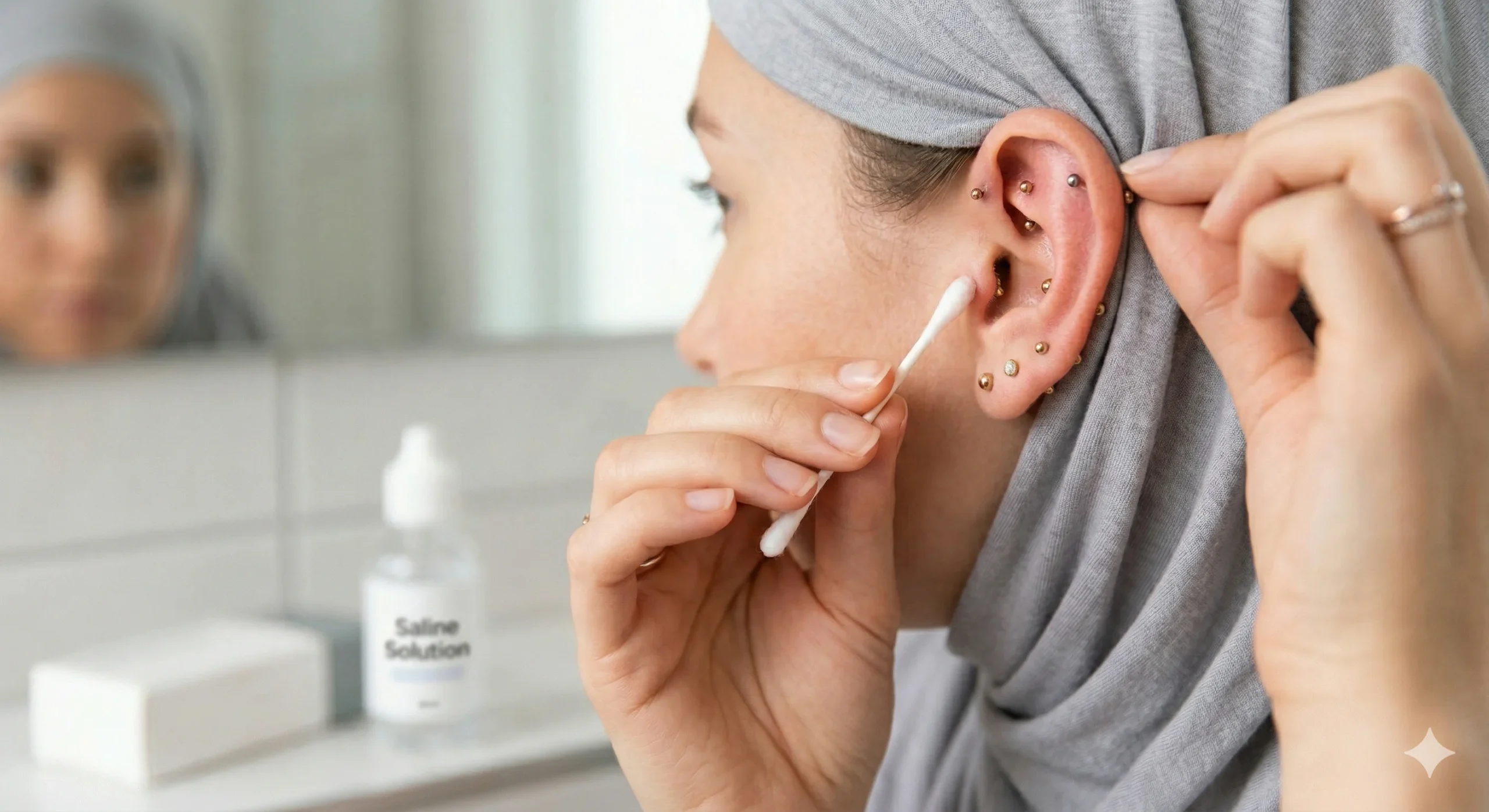
Walking out of a piercing studio with a new piece of jewelry looks great, but it is critical to remember exactly what just happened: you have sustained a controlled puncture wound. Your body does not view the new earring as a fashion statement; it views it as a foreign object embedded in the skin.
To heal, your body must build a delicate, microscopic tunnel of scar tissue—called a fistula—completely around the metal post. This biological process cannot be rushed, and the time it takes varies drastically depending on the exact anatomy of the ear being pierced. Here is the definitive, biological guide to ear piercing healing timelines, the strict aftercare required, and the common myths that actually delay the healing process.
Healing Timelines: Earlobe vs. Cartilage
Not all ear tissue is created equal. The location of your new piercing dictates exactly how long you will be managing the aftercare routine.
Earlobe Piercings (6 to 8 Weeks)
The fleshy lobe at the bottom of your ear is highly vascular, meaning it has a rich, dense blood supply. Because of this high blood flow, the body can rapidly deliver oxygen, white blood cells, and healing nutrients directly to the wound. Consequently, standard earlobe piercings heal the fastest, typically taking 6 to 8 weeks with proper aftercare.
Cartilage Piercings (6 Months to 1 Year)
The upper and inner parts of the ear—including the helix, conch, tragus, daith, and industrial—are made of cartilage. Cartilage tissue is avascular, meaning it has virtually no blood vessels of its own. It relies entirely on the surrounding tissues to slowly diffuse nutrients into the area.
Because the body cannot quickly flush the wound with healing agents, cartilage piercings take a significantly longer time to heal. You must expect a minimum healing window of 6 months to a full year. During this extended period, the piercing remains highly susceptible to bumps, snags, and infections.
The Strict Aftercare Routine (Do’s and Don’ts)
Treating a new piercing requires the exact same discipline as treating a minor medical wound. Success relies entirely on keeping the environment sterile and allowing the body to do its job without interference.
The “Do’s”
- Clean Twice Daily: Spray the front and back of the piercing strictly twice a day using a sterile saline solution (0.9% sodium chloride). Do not mix your own salt water at home, as it is impossible to perfectly balance the salinity and keep the container sterile.
- Dry with Paper: After spraying, gently pat the area completely dry using a disposable paper towel or unwoven gauze. Never use a cloth bath towel; standard towels harbor high levels of bacteria and contain loops of thread that can easily snag the jewelry.
- Protect While Sleeping: Pressure is the enemy of a new piercing. Sleeping directly on a fresh helix or conch piercing will cause it to heal at an angle. Sleep on your opposite side, or use a U-shaped travel neck pillow, positioning your ear inside the empty center hole to suspend it in the air while you sleep.
The “Don’ts” (Debunking Piercing Myths)
- Do Not Twist or Turn the Jewelry: This is the most damaging piece of outdated advice still circulating. Remember the fistula (the tunnel of new skin) your body is trying to build? Every time you twist the earring, you physically tear those fragile new skin cells away from the metal. Twisting resets the healing clock and drastically increases the risk of hypertrophic scarring (healing bumps).
- Do Not Use Harsh Chemicals: Keep rubbing alcohol, hydrogen peroxide, surgical spirits, and tea tree oil far away from your ear. These substances are incredibly harsh. While they kill bacteria, they also cause severe chemical burns to your own newly forming, healthy skin cells, effectively destroying your body’s healing progress.
Identifying an Infection vs. Normal Healing
Because cartilage takes months to heal, it is common to experience flare-ups. You must be able to distinguish between a natural biological reaction and a dangerous infection.
Normal Healing: For the first few weeks, it is completely normal to experience slight tenderness, minor localized swelling, and a clear or pale white fluid oozing from the hole. This is lymph fluid (blood plasma). It will dry on the jewelry post, forming a hard, yellowish crust. This is not pus; it is simply a healthy scab. Clean it away gently with your saline spray.
Signs of Infection: An infection occurs when harmful bacteria enter the wound and overwhelm the immune system. You need to look for these four red flags:
- Persistent, spreading redness that expands well beyond the puncture site.
- The ear feels distinctly hot to the touch.
- Severe, throbbing pain that worsens rather than improves.
- Thick, opaque, foul-smelling discharge that is dark yellow or green.
If you experience these symptoms, do not take the jewelry out (which can trap the infection inside the closing hole). Seek immediate medical advice from a doctor.
The Role of Metal in the Healing Process
Your body is remarkably intelligent. If it detects a toxic or low-quality material embedded in the skin, it will actively fight to reject it, meaning the piercing will never heal.
Cheap fashion jewelry often contains nickel, which causes severe contact dermatitis (allergic reactions) in a massive percentage of the population. An allergic reaction mimics an infection, causing severe swelling, itching, and blistering.
To ensure your body accepts the jewelry, initial piercings must only be performed with highly biocompatible, hypoallergenic metals:
- Implant-Grade Titanium (Ti6Al4V ELI): The gold standard for initial piercings. It is lightweight, completely nickel-free, and exactly what is used for medical joint replacements.
- Surgical Steel (316L or ASTM F138): A highly polished, durable metal.
- 14k or 18k Solid Gold: An excellent option provided it is solid, not plated. Gold plating will chip and flake away inside the wound, causing severe irritation.
FAQs on Piercing Aftercare
When can I swim after getting a piercing? You must avoid submerging the piercing entirely until it is fully healed. Swimming pools, hot tubs, lakes, and the ocean are breeding grounds for bacteria, harsh chemicals, and parasites. If you swim with a fresh, open wound, you are almost certainly guaranteeing an infection.
When can I change my earrings? Patience is critical. For earlobes, wait at least 6 to 8 weeks before swapping the jewelry. For any cartilage piercing, you must wait a minimum of 6 months. If you remove the jewelry too early, the immature fistula will instantly collapse, and the hole can shrink and close within minutes, forcing you to have it painfully re-pierced.
Healing an ear piercing is a test of patience, not action. Treat the site strictly as a medical wound, rely solely on sterile saline spray, keep your hands off the jewelry, and allow your body’s natural biological timeline to do the heavy lifting.